Thursday, 2 October 2008

20 Movies to enjoy at midnight!

Just realised this title sounds like an invitation to watch porn, rather than a reference to cult movies. Sounds like it should be followed by "with a fresh box of tissues in your hand". Which was certainly not my intention. Oh well...

Defining what -if anything- constitutes a "cult" movie is a near-impossible task. The idea of a cult movie varies pretty much from person to person. For some, it's a film that federates a whole generation or so, with thousands able to quote lines back and forth to one another. Good examples would be the Star Wars movies (I think most straight men aged 40 and under have often fantasized about Princess Leia and her gold bikini), The Godfather or comedies like The Full Monty and 4 Weddings and a Funeral. For others, a cult film is one that has languished forever in near-total obscurity, save for the attentions of a few devoted and lucky souls, who therefore venerate every second of said movie. A lot of horror films would enter this category, or the early works of John Waters and Russ Meyer. It was this that led to the Midnight Movies and Grindhouse trends of the early seventies, whilst Britain's "Video Nasties" governmental ruling in the eighties drove so many horror films into obscurity that they of course gained instant cult status among gore-thirsty cinephiles. In the era of the DVD, of course, more and more of these films are getting re-released, meaning the likes of Cannibal Holocaust and El Topo are no longer swathed in quite the same mystery as before. Which, for me at least, who came along too late to see them in their glory days (or not so glorious, in the tasteless Cannibal Holocaust's case), is really a good thing.

So, no matter what sort of films you choose for a silly list such as this one, you're always going to get someone expressing outrage at such and such a film's omission. "What, no Mad Max!? Are you mad? (har har, geddit?). It's soooo a cult movie!". How can you not include When Harry Met Sally!???" (the answer to this one seems pretty obvious to me, but I have actually had this asked of me. To each their own tastes, I guess). So, I'm just going to have to be 100% subjective and go with my gut (as it were). Basically, the films below just feel like they're cult movies.

The one trait that binds them is a rather odd one: all these films, as arrestingly brilliant as they are, seem to be, for a lack of a better word, flawed. Which makes sense really. These are films that push back the boundaries of contemporary cinema, something which has never been much of a selling point for major film production studios... Which invariably means that the films below were made by very skint, albeit visionary, people. So, you sometimes get shaky production values, occasionally mediocre acting, or dated special effects.

For example, Phantom of the Paradise, featured below, may be a stunning visual piece, resplendent in its use of colour, lighting and studio trickery. It's funny, with stirring music and some great acting from Paul Williams as the devilish Swan. However, his counterpart, William Finley (The Phantom) is downright poor, a ham of the worst order, whilst the script's denouement features such a ludicrous Deus Ex Machina, you sometimes wonder if it wasn't written by a student filmmaker rather than the much-lauded Brian de Palma. And yet, it works. Its rather implausible ending is in keeping with the garish beauty of the whole piece, whilst Finley's camp affectations become quite effective once he's in Phantom mode. It's obvious time was tight and that de Palma and co. were limited in their means, and this ends up giving the film a frenetic, over-the-top energy quite in keeping with the glam rock environment it is set in. Hence, it is perhaps the most out-there and irresistible of de Palma's movies, and is truly deserving of cult status.

And it's the same with the rest of these films, from the dodgy production values of Pink Flamingos to the somewhat thin script of Shortbus. And yet all 20 are irresistible, unique and fascinating films, defining moments in cinema history (despite often getting completely ignored by audiences and critcs alike upon their release). Without further ado, blah, blah, blah, okay will shut up now...


1) VAMPYR - Carl Theodor Dreyer - 1932

Not sure if a film this old can qualify as being a "cult" film. Certainly at the time, the absence of video formats to view films kind of reduced the chance of any picture gaining cult status. But, over the years, this dreamy and oniric answer to Murnau's Nosferatu, that disappeared quite quickly at the time, has slowly edged its way into the consciousness of more and more cinephiles, who all have become enthralled by its strange beauty and creepy atmosphere.

It's a loose adaptation of J.Sheridan Le Fanu's Carmilla, starring producer Baron Nicolas de Gunzberg as a wandering traveller who stumbles on a village being plagued by an ageing female (!) vampire and her doctor slave. The script may be simple, with little by the way of character development, but this just gives Dreyer full freedom to dazzle with some stunning effects, that help create a deperately bleak and creepy atmosphere. Shadows dance across a deserted warehouse, despite there being no people attached to them, a door appears to unlock itself, and skulls move seemingly of their own accord. Not to mention the scene where our hero finds himself buried alive in a glass coffin.

Vampyr is truly unique, a ghostly film that relies more on atmosphere and a sense of unease than adventure and gruesome shocks. The surreal effects and gothic sets are perfect for creating a latent tension that few films of the time achieved. In many ways that puts it as a precursor to the creepy, suggestive masterworks of the Val Lewton/Jacques Tourneur duo in the forties (Cat People, I Walked with a Zombie).


2) NIGHT OF THE HUNTER - Charles Laughton - 1955
Charles Laughton's sole film as a director was an unmitigated disaster. Critics savaged it, so the public stayed well away. Which is the sort of tragedy that renders redundant any "if people like it, it must be good" arguments when it comes to movies or art or music (although, Ronan Keating's success is also a strong counter-argument in itself. If ever you needed proof that the public doesn't always know best, his hit songs are it!). Because Night of the Hunter is a masterpiece of Southern Gothic horror/fantasy, and features one of the best acting performances of all time from Robert Mitchum. He plays a machiavellian and murderous preacher who learns that one of his fellow inmates has stashed a huge lump of money on his property, which could be the preacher's if he can seduce the man's "widow in the making", as Mitchum's preacher says in a devilish internal conversation with God. So, he woos the mourning woman, and sets about trying to find the money, which he gradually realises is in the hands of one of the dead man's children. Cue a nail-biting pursuit across a dream-like nocturnal landscape as the children flee the murderous preacher (who in the meantime has slit their mother's throat).

With very little budget, Laughton managed to create that most unique of movies: one that does not fall into any particular genre or style. It's a crime movie, complete with murderous psychopath, but it's also a fairy tale, with the children's trip down a foggy river evoking the Styx from Greek mythology, whilst an aging Lilian Gish plays a friendly rescuer seemingly straight out of a Grimm fairy tale. It has elements of German expressionist horror, with dark, arching shadows and bold ciaroscuro lighting. The scene where the preacher murders the widow under a lofty celing, knife-wielding arm raised high with almost pious zeal, is as haunting as the shadow image of Nosferatu clambering the stairs to Mina Hutter's room. Likewise the scene when the children are cowering in a barn, only to hear the sound of the preacher's creepy singing resonate from the distance, followed by the heart-stopping vision of him appearing, silhouetted against the night, along the horizon. "Kneeeeling", he keens, a pure embodiment of evil. And there are countless more scenes like these.

Sadly, it all fell on deaf ears. The controversial decision to have a preacher as the incarnation of ultimate evil in the film, in such a puritanical country as the USA, probably played a part. And there's the fact that, as noted, this is a film that just doesn't fit into any category. Critics and audiences were baffled by this, and put off by the pure evil that radiated out of Mitchum's preacher, despite the magnificence of the great actor's performance. His chillingly cold, yet handsome, gaze, staring out of the screen as he explains the tattoos of HATE and LOVE that adorn his knuckles, is one of the most arresting images in the history of the cinema.


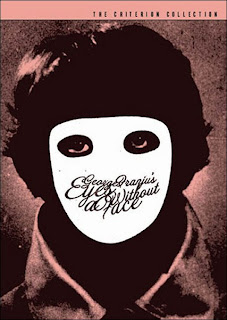
3 - LES YEUX SANS VISAGE / EYES WITHOUT A FACE- Georges Franju - 1959

Kind of cult just by being a good French horror film! In the year of Hiroshima, Mon Amour and A bout de Souffle, those staples of the Nouvelle Vague, Les Yeux Sans Visage must have stood out like a sore thumb. It's a gruesome and macabre tale of a guilt-ravaged doctor, who kidnaps young women to drug them, remove their faces and graft them onto his badly disfigured daughter's, his way of making ameans for causing her injuries in the first place.

The result is one of the finest psychological chillers of all time. Pierre Brasseur is superb as the machiavellian doctor, so obsessed with finding success that he is willing to commit the most heinous acts (aided by his creepily devoted mistress, who disposes of the corpses and watches with fixed adoration as he cuts a girl's face off). The graft sequence is truly stomach-churning, and provoked outrage at the time due to its graphic details and deadpan, realistic tone. Yet perhaps the most gripping scenes as those involving the daughter, whose face remains hidden by am expressionless pearly white mask. Despite this, actress Edith Scob carries across a perfect mix of quiet desperation and hopeless melancholy. She hates herself and her father for the murders, but is desperate to get a new face and reclaim the life she has lost by being hidden away. So she drifts, ghost-like, through the house, dead features lit up by her pained gaze, and Franju's superb cinematography. And the scene where she removes her mask to show her disfigured face to one of the girl prisoners is as chilling as the operation scene itself.

Given its oniric nature and graphic scenes, Les Yeux sans Visage was probably doomed to failure. To my knowledge, it's still unavailable in France and most of Europe, but luckily the Criterion Collection released a sumptuous DVD package in the USA. If you can get a copy, you will discover one of the greatest, and most moving, horror films of all time.

4 - PEEPING TOM - Michael Powell - 1960

A film so loathed, it effectively ruined the career of the man who created it. Phew! That's some intro! But it's true. Up until Peeping Tom, Michael Powell had been one of Britain's most successful and respected director's, thanks to such memorable films as The Red Shoes and Black Narcissus. Granted, his career had slowed down a tad since his split with scriptwriter Emeric Pressburger, but his reputation as one of the country's leading cinematographic lights remained intact.

And then he did Peeping Tom. The critics were united in reviling this "immoral", "disgusting" and "sick" film. Here's just one snippet, from The Observer: "It's a long time since a film disgusted me as much as Peeping Tom". Another critic suggested it would be best to flush it down the toilet. And why such anger? Well, in fairness, Peeping Tom takes an angle that few films had dared up until then: the "hero" of the film is a murderous, sex-obsessed psychopath. Carl Bohm plays creepy cameraman Mark Lewis who, in his spare time between working on sets and taking nude photographs for the local pornographer, stalks young women and then films them as he stabs them with a concealed knife in his tripod. The opening scene, filmed through Mark's camera lense as he follows a prostitute home before killing her, sets the tone: this is a dark, unflinching study in murder and obsession.
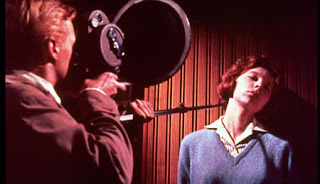

The obsession is fear. Traumatised by his childhood, Mark is determined to capture on-screen a picture of absolute terror, befitting the experiments his own father did on him. But what Peeping Tom captures even better is the grim line that exists between the art form that is the cinema and voyeurism. And this was what the critics completely missed. It has taken decades of championing by the likes of Martin Scorsese and Roger Ebert to finally see this psychological masterpiece get the recognition it truly deserves. To watch it today is to marvel at the complex psychological issues on display (aided by a superb Norman Bates-ish performance by Bohm), as well as at Powell's gorgeously garish cinematography, where every shot is drenched in neon red, evoking both dripping blood and the seedy tints of London's red-light district.

5 - CARNIVAL OF SOULS - Herk Harvey - 1962

A bona fide gem, this, as it might just be the very earliest true cult film! Predictably, it's a horror (most cult films can be grouped into one of three categories: comedy, sci-fi and, most often, horror). It's also one of the best horrors of its age, one that is still stunningly effective over 40 years on. And this despite its minimal budget (somewhere in the realm of $30 000 - a pittance even back then). The very fact that it has survived earns it cult status as far as I'm concerned.

Herk Harvey, more than Ed Wood, surely deserves the title of "Orson Welles of B Movies", as he produced, directed, wrote and starred in Carnival of Souls. His turn as the creepy ghoul-like figure who pursues accident survivor Mary Henry into a netherworld of darkness and fear under the decaying ruins of a dilapidated pavilion, is terrifying. It's a theme that would later crop up numerously in films, from The Others to Final Destination: the idea of being trapped on this earth after "death", living a soul-less existence in the shadows. And Herk Harvey was one of the first to approach it. He used clever tricks and effects to convey the supernatural events that bring unease and fear into Mary's life. People become deaf to Mary's voice, whilst all surrounding sounds go dead, leaving her alone with just the sound of her footsteps and despairing cries to be heard. And as the film progresses, more and more ghoulish spectres with pale faces and mad staring eyes begin to chase the heroine, appearing on the buses she tries to take out of town, all leading her inexorably to the pavilion by the lake...
Like I said, Carnival of Souls is basically budget-less, yet Harvey masterfully dodges this hurdle with his simple yet effective effects, characters and production tricks. The ghouls are particularly terrifying, walking with arms outstretched, cackling menacingly, faces locked in a grimace of pure malevolence. Surely an influence on Romero's zombies or Carpenter's Michael Myers.


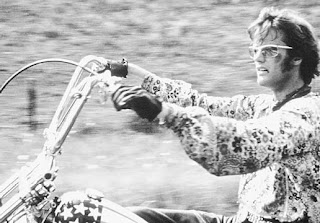
6 - EASY RIDER - Dennis Hopper - 1969

A truly generational film, one that enshrined the hippy dream -and fatality- into the collective consciousness with such brio and swagger that it made icons of Dennis Hopper, Peter Fonda and Jack Nicholson, and probably would have done even if they'd never made anything else of note (almost the case for Fonda!).

Few films have seemed so guaranteed for success, apart from maybe Titanic or Jurassic Park. And Easy Rider was made on a fraction of those films' budgets, hastily shot, edited and released by a bunch of Hollywood hippies and catapulted to fame at the Cannes Film Festival. And what a triumph. Easy Rider pretty much launched a genre, the "road movie", and had audiences head-banging to the thrilling chords of emblematic soundtrack centrepiece 'Born to be Wild' as they watched two cooler-than-anyone-else bikers glide along the American highway, the symbols of the new society's freedom.

But Easy Rider was no simple hippy trippy fun ride. It eventually showed the peaceniks' dreams come smashing into a wall of prejudice, conservatism and narrow-mindedness, underlining the severe cultural and social divide that was gripping the USA at the time. This was '69, and Altamont and Kent State were mere months away. Manson had already tipped the dream into his own version of horror and gore, and the Vietnam War showed no sign of relenting. As the tag line on the film's posters read, "A man went looking for America, and couldn't find it anywhere". As such, Easy Rider is the ultimate film of its age: it defined the hippy generation's dreams, but also their limits. So much more than just a "road movie".


7 - EL TOPO - Alejandro Jodorowsky - 1971

Not sure they can get much weirder than this. El Topo is the cinematographic equivalent of a Samuel R. Delany novel: all peculiar time shifts, fractured dialogue and hidden mysticism. It's a spiritual, haunting and intelligent film, and a disturbing one.

The director himself plays 'El Topo', a black-clad gunslinger in some unknown, Spanish-speaking desert, who rides through the desert with his nude son, cutting a bloody swathe through gangsters, bandits and rival gunslingers. Slowly, his journey becomes a spiritual one, as he has to confront three gun masters and deal with betrayal, faith and a life underground with a bunch of deformed renegades. Does any of that make sense? No, thought not. El Topo needs to be seen to be believed, to be understood, yet I think most will pretty much see, believe and understand what they like. Surely that's the mark of great cinema, a film that means something different to everyone.

El Topo's main significance would be as the first "Midnight Movie" (hence my title!). Ignored when it was first released, it became a staple of New York's art-house scene, with 12 o'clock screenings every week attended by the likes of John Lennon and Yoko Ono. The trend would continue to grow, encompassing such greats as Pink Flamingos, Eraserhead and The Texas Chainsaw Massacre, plus leading to a revival for Freaks, Night of the Living Dead and Targets. A fitting legacy for one of the weirdest and most iconoclastic movies ever made.


8 - PINK NARCISSUS - James Bidgood - 1971

Pink Narcissus is part of perhaps the most obscure and limited cinematographic current around: gay underground cinema. Yeah, not just gay cinema, this stuff is gay and underground!

As one of the community, discovering that gay cinema was not just limited to ridiculously cliched Hollywood comedies (you know, where the gays are funny and basically sex-less, most often some neurotic girl's best friend and played by Rupert Everett) or the odd hilariously camp foreign comic gem such as La Cage aux Folles or Priscilla, Queen of the Desert, has had a major impact on my life. For there are countless superb films that deal with gay issues (sex, coming out, homophobia) in an intelligent, realistic and artful way. Although, in most cases (Boys Don't Cry was a notable exception), they are pushed to the sidelines, left to the obscurity of LGBT film festivals and rare DVD releases.

Pink Narcissus was one of the first films I saw that showed the potency of the gay underground. It's a pure art-movie, which will put some off, and it's 100% gay, which will put even more off. It has no dialogue (still reading?), and virtually no plot. But it is sublime, gorgeous, and moving. It features the exquisite Bobby Kendall as a, you guessed it, narcissistic male prostitute who fantasizes his way around his fancy loft appartment, picturing himself as a field-dwelling fawn, a roman slave, a harem keeper and a matador in a series of self-indulgent and erotic vignettes. At the end, however, the real world of New York's decadent underbelly encroaches onto his dreams in a final nightmarish vision.

Pink Narcissus was shot entirely on 8mm in a single location, Bidgood's New York appartment, which the former set designer had gloriously kitted out to represent each fantasy universe. The imagery is stunning, with gorgeous sets that seamlessly transport you from one imaginary world to another. Of course, the highlight is the beautiful Kendall, whose turn as the self-absorbed gigolo is stunning, his sultry good looks and effortless arrogance coming across with every glance. It's a wonder Cristiano Ronaldo isn't a fan of this movie, as he's got all the looks down to a tee!

Pink Narcissus, which remained in obscurity for eons (mainly because Bidgood rejected the completed cut forced on him by producers, and refused to have his name put to it) can be seen as one of the founding movies of the gay underground, and it would go on to influence the works of such luminaries as Derek Jarman and Bruce LaBruce. Themselves pretty obscure as well, sadly.
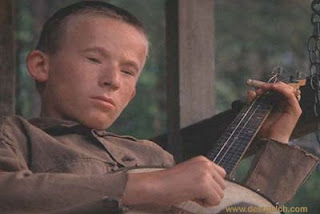

9 - DELIVERANCE - John Boorman - 1972


From the mid-sixties until the end of the next decade, a strange thing occured in American cinema, which hadn't happened before and has yet to reproduce itself. Basically, Hollywood went indie! The studios turned to the creation of low- to mid-budget dramas and comedies, often dealing with provocative, controversial and political subjects, and so gave us the true Golden Age of Hollywood cinema. For perhaps the only time in movie history, the big studios moved with the times, delivering such great counter-cultural masterpieces as M.A.S.H., Midnight Cowboy, One Flew Over the Cuckoo's Nest and Taxi Driver.

Into this wealth of creativity and originality came Deliverance, to deliver the biggest shock of the pre-Exorcist world. Based on a book by David Dickey, it told of 4 wannabe adventurers canoeing down a remote river in hillbilly country, Georgia. At first they think themselves better and smarter than the locals, and tough enough to take on the river, but soon get dragged into terrifying horror and are forced to commit drastic and criminal acts in order to survive.

Deliverance rests on a familiar concept: that of urban man descending on a remote country location only to find himself at a loss when confronted by the harsh realities of said location. It was done with less class in Straw Dogs. But Boorman takes things to the limit, with a graphic rape scene and several moments of such tension it's no wonder the film gave people of my mother's generation nightmares. It's a dark, uncompromising film, and for that it deserves more applause even than most of the other classic Hollywood "indies" that also graced our screens in that golden period.


10 - PINK FLAMINGOS - John Waters - 1972

However, miles away from Hollywood, both geographically and spiritually, in a dank corner of Baltimore, John Waters was preparing to launch his own brand of cinematic madness. Put simply, Pink Flamingos is perhaps the most disgusting film ever made!

Waters is one of the cinema's true mavericks. He made Pink Flamingos all on location in Baltimore, filming cheaply with a bunch of friends playing a rag-tag collection of freaks, perverts and lunatics. And star of the film is Divine, a 25-stone transvestite who here plays Babs Johnson, recently crowned "Filthiest Person in America". She lives with her perverted son Crackers, her Marilyn-lookalike lover Cotton and her egg-obsessed, cot-ridden mother. Between them, they rack up a number of gross antcis, from shagging with a chicken stuffed between the two bodies (Crackers and his missus), incest (Crackers and Babs) and voyeurism (Cotton). Not to mention the farting guy (complete with anal close-up!) or the mother with egg all over her tits.
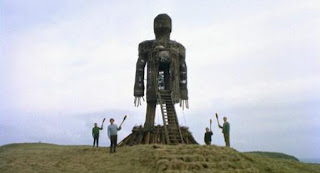
And those are the good guys! For Babs' nemesises are The Marbles, an even more degenerate couple of freaks who are vying for the "Filthiest Person" title and so kidnap young ladies whom they impregnate forcibly to sell their babies to child-less lesbian couples. When they openly attack Babs, war is declared, with horrendous consequences.

Pink Flamingos is not for the squeamish, the politically correct or the easily-offended. It's cheaply made, with camp performances, poor-quality production values and a bonkers storyline. But it's also hilarious and off-the-wall, and it's notoriety alone ensures it gets cult status. Watch for the very last scene, I won't tell you what happens, but I'm sure it's pretty much unique in the world of US cinema!


11 - THE WICKER MAN - Robin Hardy - 1973

I am not prone to what I like to call "cinematographic nationalism", where you want a film to do well or win at some festival, just 'cos it's from the same country as you. It used to reach fever pitch in France whenever Cannes came around because a French film hadn't won the Palme d'Or since 1987. Not sure I get it: I couldn't care less if the Oscars are all won by Brit films, as surely films go beyond frontiers and boundaries, touching on something universal. But, as I said before, to each their own.

However, an interesting cinematographic fact is that in the late sixties and early seventies, the UK produced a string of singular and original movies that made the country, never a powerhouse like France or the USA in movie stakes, stand out more than possibly ever before (sorry, classicists and David Lean fans!). Whether it was maverick foreign directors adopting the country for their greatest works (Kubrick with 2001 and A Clockwork Orange, Antonioni with Blow Up) or homemade films like If... and Don't Look Now, there was a creative urgency about the country that left behind some of the most peculiar and original classics ever made. Chief among them, I feel, was The Wicker Man.

The Wicker Man is unique, undefinable. It's supposedly a horror film, but it goes waaaaay beyond simple shocks and things that go bump in the night. It has musical passages, but you can't compare it to West Side Story. It features a police detective trying to find out about a disappeared girl on a remote Scottish island, but to call it a crime movie would be barking up the wrong tree big time. So what is it? A U.F.O. A film that crosses boundaries, stumps expectations and bewitches by its sheer audacity. Featuring a glorious score, fantastic performances by Edward Woodward (as the stiff, highly-Christian detective) and Christopher Lee (as the creepy island overlord) and a superb, twisting script, plus one of the most shocking endings in British film history, this is a film that deserves its legendary status tenfold.


12 - THE NIGHT PORTER - Liliana Cavani - 1974

The Night Porter, Italian director Cavani's most famous film, may just be the most controversial film on this list. That it was directed by a woman has only added to its mystique over the years, and it now stands as one of the great Italian films of the seventies, a decade that saw that country supply us with quite a few strange and controversial ones, such as Salo o le 120 Giornate de Sodom and Suspiria.

Cavani's film tells the story of a former Nazi war criminal, Maximilian Aldorfer (Dirk Bogarde) who is hiding under a false identity, working as a night porter for a seedy viennese hotel that seems to be overflowing with similar ex-Nazis all intent on staying well hidden from prosecution. But one day a gorgeous young woman (Charlotte Rempling, in a stunning performance) checks in to the hotel, and Maximilian recognises her as a former concentration camp prisoner he used to torment and torture and then ended up in a violent sexual relationship with. And she recognises him back. But, rather than denounce him, she is drawn perversely to her former tormentor and they rekindle their unholy and sadomasochistic liaison.

In 1974, The Night Porter was unbelievably controversial in its depiction not only of the horrors of World War II (remember, this was around the same time that John Cleese's Basil Fawlty character would order his staff in hushed tones: "don't mention the War!" when in the presence of their German customers), but also of the complex relationship between a torturer and his former victim. This was before anyone had ever mentioned "Stockholm syndrome". As such, the mutually destructive and violent relationship between Max and the girl was seriously shocking, and even today it will make you squirm with discomfort. The Night Porter is despairingly bleak, with grainy colour, grim lighting and a typically downbeat ending. Not for the faint of heart, but if you like films that make you think, and have superb actors, I can't recommend it enough.


13 - PHANTOM OF THE PARADISE - Brian de Palma - 1974

And rock'n'roll hit the movies, and in such a glorious fashion. I doubt this was the first proper rock movie (there were Elvis' dire ones for a start, plus the Woodstock documentary), but it did predate the awful Tommy and the even more irresistible Rocky Horror Picture Show by a full year, therefore setting the standard for garish, lushly camp glam-rock cinema.

A wonderfully over-the-top rock take on the stories of Faust and The Phantom of the Opera, Phantom of the Paradise sees gawky composer Winslow Leach sell his soul to devillish rock producer Swan (the peerles Paul Williams) in order toget the girl of his dreams and finish his magnum opus. Of course, Swan betrays him and steals his music, and Leach, horribly disfigured along the way, returns as a Phantom with black nails and teeth and a proto-futuristic costume to haunt Swan's lavish club, the Paradise.
As I say, Phantom of the Paradise paved the way for a generation of technicoloured rock movies that cashed in on the mid-seventies glam rock movement. It has fantastic tunes, gorgeous sets and a wild campness that is pure, unadulterated rock in spirit. Plus, with Brian de Palma at the helm, you also get a good dose of superb camerawork, inventive imagery and a few humorous Hitchcock references.


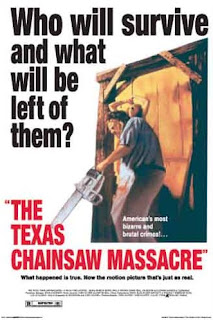
14 - THE TEXAS CHAINSAW MASSACRE - Tobe Hooper - 1974


Forget The Exorcist, this is the greatest, and most terrifying horror film of all time! I'm not one for hyperbole, but then most films don't deserve it. The Texas Chainsaw Massacre deserves every compliment and every over-the-top description, even the ones saying it's sick, cruel and bleak. It is terrifying. It is cruel. But then, it was meant to be. And in barely more than 80 minutes, Tobe Hooper revolutionised the horror genre. For good.

Consider its simplicity: 5 young people head to an abandoned farm in the Texan desert and get caught and picked off one-by-one by a family of psychopathic cannibals living nearby. It's the basis for almost every slasher film ever made since. Actually, scratch that. It's the basis for almost every horror film made since. Yet, even in that, Texas Chainsaw stands head-and-shoulders above all that followed.

Indeed, Hooper's approach is unconventional even 25 years on. Instead of splatters of gore and sensationalistic violence, he goes for a subdued, realistic tone (somehow, the film's reputation is one of extreme bloodiness, despite there being very little hemoglobin on display during the film). The picture is grainy and yellowed, heightening the oppressive atmosphere of dust and heat. Buildings are dark and sparsely furnished, with the cannibals' house decorated in all manner of grisly bric-a-brac and cadaverous remains. The camera is shaky, close to the actors, hemming them in as night and the cannibals close in. So, not just slashers, but also The Blair Witch Project and its ilk have taken their cues from Hooper's chiller.

Above all, Hooper refuses to play the audience game on this. The Texas Chainsaw Massacre is gritty and grim, with little in the way of comic relief, and no happy end. With little means at his disposal, the director uses his camera and sets to brilliant effect, the culmination being the horrific "dinner scene" and the revolutionary close-up of an imprisoned girl's terrified, bulging eye as the cadaverous cannibal grandfather is wheeled up to her to feed. It is just one of a series of scenes that have gone down in horror film history as examples of celluloid terror.


15 - THE ROCKY HORROR PICTURE SHOW- Jim Sharman - 1975

When asked to list my top ten or five favourite movies (or albums, or paintings, or books) of all time, my five or ten invariably always end up becoming 20 or 30. And the list seems to change according to my mood, current tastes and what-not (I might be going through a sci-fi phase, meaning I'm likely to go for Gattaca or Alien). But, along with Fanny and Alexander, Naked and Midnight Cowboy, you are always certain to get The Rocky Horror Picture Show in there. It may not be a very intellectual thing to say, but it's possible The Rocky Horror Picture Show is my favourite film of all time!
I mean, what's not to love? For me, I was entranced from the first nano-seconds, as delicate piano floated out of my clapped-out TV's speakers and a glorious pair of bright-red lips began to serenade me about a "Science Fiction Double Feature". It was camp, very gay, and perfectly glamorous. If it had been off a Bowie album, it would have been a hit track. And the film doesn't relent from then on. We get the hilarious introduction to our heroes, Brad and Janet, a couple of right squares who find themselves whisked into the decadent world of mad scientist Frank'n'furter (a stupendous Tim Curry), a transvestite from the planet Transylvania who is intent on creating a muscle man in gold underpants named Rocky. Only in the seventies, eh? (well, maybe not, as some prick has decided to remake the film!)

Tim Curry's entrance alone is stunning, as he prances around in heels, stockings and a corset, all dolled up and singing the immortal lines: "I'm a sweet transvestite from traaaaansexual Transylvaniaaaaa!". None of it makes much sense, but it's hilarious, infectious, and the songs are just superb, pure glam-rock majesty. And in fact, hidden away under the garish sets, campness and goofy B-movie references, is a strong plea for tolerance and open-mindedness, perhaps best summarised by Frank's lament "Don't dream it... be it".

I must have seen Rocky Horror Picture Show 20 or 30 times now. It never gets old, and it remains one my friends and I put on at parties, so we can all dance around and, for a few minutes, stop dreaming it and actually start being it.


16 - THE MAN WHO FELL TO EARTH - Nicolas Roeg - 1976
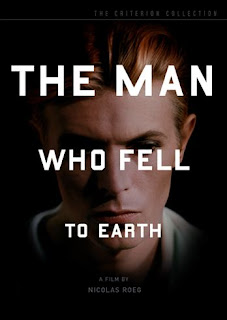

The considerable reputation and aura of The Man Who Fell To Earth (man, why do I keep going for movies with ridiculously long titles?) rests on the shoulders of one man. And, no, it's not Nic Roeg, a maverick director who also gave us such wonders as Don't Look Now and Walkabout. No, if The Man Who Fell To Earth stands apart as one of the most exciting and singular films of all time, it's because of David Bowie, who was here making his first appearance in a leading role in a film.

That's not to say that Roeg's talents are not visible here. They are, in abundance, and The Man Who Fell To Earth overflows with the Brit's trademark stunning visuals, innovative camera techniques and disconcerting time shifts. It's a lyrical visual poem, detailing the arrival on Earth of androgynous alien Thomas Jerome Newton who's looking for ways to bring water back to his dried-up home planet. Before long, though, he finds his projects taken over by the government, whilst he himself becomes a slave to sex, booze and television. Typically for a Roeg film, though, this is told in elliptical style, as the dreams, memories and reveries of Newton cross into reality, giving us some marvellous and unforgettable scenes along the way.

But make no mistake, this is Bowie's triumph (although kudos must go to Roeg for taking a chance on the untried singer and for bringing out the best in the drug-addled Bowie). The Thin White Duke is fabulous as the suave, elegant, intellectually superior Newton, exhuding a natural grace and delicate beauty that makes him mesmerising in absolutely every scene. And it gets better as he descends deeper and deeper into decadence, his character becoming more and more detached, more and more sinister, and perverse. Yet throughout, Bowie retains his aura of cool elegance, but where once it hid a warm, caring soul, by the end it comes with a cold disinterest in everything, a subtle change that few actors could have handled with such panache. With The Man Who Fell to Earth, Bowie took a step away from being "just" a rock star and towards becoming a great actor. Whilst Roeg continued to prove he deserved a place as one of Britain's greatest ever directors.


17 - VIDEODROME - David Cronenberg - 1983


Sticking to science-fiction, I give you the incomparable Videodrome, by Canada's most notorious director, David Cronenberg. Sci-fi is the perfect genre for cult films, as it's pretty much a cult genre in itself, with books like 'Do Androids Dream of Electric Sheep?' and Marvel comics having almost fetish-like status among collectors and nerds around the globe.

Luckily not all sci-fi is the realm of geeky comic book fans (I should point out here that I am a massive fan of Philip K. Dick's books), and from around 1979-onwards directors began moving away from Planet of the Apes-territory and into a type of sci-fi that was smart, disturbing and no longer very fanciful. The way had been paved by Kubrick with 2001: A Space Odyssey, and by the aforementioned Man Who Fell to Earth, but Ridley Scott's double whammy of Alien (1979) and Blade Runner (1982) - both of which I could have included here- really set the tone: vicious, blood-thirsty aliens raced around drifting spaceships or murderous androids were chased through dank, rain-soaked cityscapes. Sci-fi had basically got gritty, urban and disillusioned.

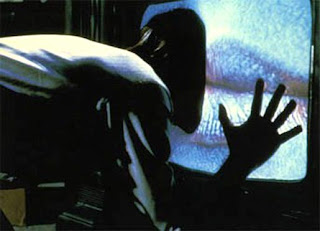
And never more so than in Videodrome, which had the particularity of being set more-or-less in the present. But it's a present that is warped and premonitory, anticipating the rise of satellite TV and the vicious consumerism it entailed. James Woods plays Max, a seedy director of an adult satellite station in Toronto, who stumbles on a creepy broadcast called "Videodrome" that shows snuff movies with unbelievably realistic scenes of violence. He and his semi-partner (played by Debbie Harry, no less) slowly become obsessed, to the point that Max begins experiencing nightmarish hallucinations such as getting sucked into a TV screen and pushing a video tape into his own gut. As the increasingly bizarre film advances, Max is drawn into a nightmarish Orwellian underworld of mind control, corruption and disease.

Frightening stuff, and all the more so because it feels so real. In today's consumerist, TV-driven world, Videodrome still seems unbelievably modern (helped by the amazing special effects), like a distorted prediction of what our world will -or already has- become. Since Videodrome, Cronenberg has gone on to be one of modern cinema's most sucessful mavericks, always staying true to his themes of madness, bodily horror and nightmarish underworlds. But this is probably where he first crystallised those themes to perfection.


18 - BRAZIL - Terry Gilliam - 1985

Bizarre doesn't really begin to describe Terry Gilliam's masterpiece. Every time I watch it, I marvel at how the ex-Monty Python star managed to encompass so much in barely two hours.
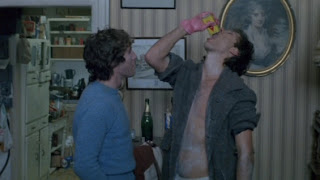
Part of the "sci-fi boom" I mentioned, Brazil was also a film that took the genre to new heights. Whilst David Cronenberg was exploring the psychological and physical effects of new technologies in dank, realistic environments, Gilliam opted for an oniric fantasy future of towering buildings and modern technology. Yet, Brazil's future is easily as nightmarish as the one in Videodrome or Scanners. It's a world where, in true '1984' fashion, surveillance is omnipresent, apartments are close and oppressive, and bureaucracy reigns supreme. When minor administrator Sam Lowry gets caught up in a case of mistaken identity (not even his!), he finds himself set upon by government forces on one side, and a group of anti-establishment terrorists on the other. The results at first are amusing, courtesy of Jonathan Price's bumbling performance as Lowry, and Gilliam's off-the-wall humour, before rapidly getting troubling, and then horrifying.

That is Brazil's ultimate strength. Gilliam surprises his audience, catches them off guard. And what starts out as a witty critique with a hint of romance quickly becomes a terrifying race against time, with Lowry hemmed in by forces he can't resist, and that he doesn't even understand. Funny, moving, mind-blowing and scary: Brazil has it all, yet it bombed. It's enough to make you despair. Thank fuck for Cult movies!

19 - WITHNAIL AND I - Bruce Robinson - 1987

You couldn't get further from Science Fiction than this low-key, yet hilarious, comedy from ex-actor Bruce Robinson. It stars Richard E Grant as an upper-class actor, currently out of work and constantly drunk, and Paul McGann as his roommate, an equally struggling actor whose name is never revealed (hence the "and I"). Tired of slumming it in dreary Camden, they hoodwink Withnail's lecherous gay uncle Monty (Richard Griffiths) into lending them his Lake District cottage for a relaxing country getaway, that turns out to be just as morose as their lives in London. Cue hilarity, though I'm not selling that side very well.

Eddie Izzard once did a stand-up routine about how British movies are often low-key, "room-with-a-view-with-a-staircase-and-a-pond"-type character pieces. Withnail and I demonstrates marvellously just how monumental such films can be. It is subdued. It is low-key. This is no special effects-laden rom-com with Jack Black doing slapstick to a hard rock soundtrack whilst looking perpetually bemused, goofy and smug all at once. Withnail and I is slow-paced, melancholic. And utterly, utterly hilarious. It may just be the funniest film ever. It relies on wit, cunning dialogue and a trio of magic performances from the inimitable Grant, McGann and Griffiths. Grant, in particular, give a stunning display of wanton perpetual drunkenness, a feat that has led to a drinking game being especially created for the movie (apparently not be tried if you value your health). It's a film that will have you quoting lines, mostly from Withnail ("I demand to have some booze!!", "Monty, you terrible cunt!", "You can shove it up your arse and fuck off while you're at it!!") and chuckling to yourself days after watching. A true comic masterpiece.


20 - SHORTBUS - John Cameron Mitchell - 2006

A bit of a leap forwards in time, I admit. I'm not sure if cult movies became rarer in the 90s, the video and DVD decade -apart from the movies of Tarantino, Wong Kar-Wai and the occasional leftfield one such as Gattaca- but as it is, I've jumped forward nearly 20 years to talk about one of the most provocative films of the last ten years.
Shortbus, put simply, is a film that dares. It dares to go where few movies have gone before. Director Mitchell saw it as his anti-Bush manifesto, a film that would fly in the face of the US president's ridiculously conservative laws and edicts. For the Bush years have been dominated by religious and moral puritanism of the most bogus degree. Sex has in America become taboo: kids shouldn't know about it, teens and young adults shouldn't do it until they marry, and the less said about the gays, the better.

Shortbus doesn't just address sex - it revels in it. It celebrates it. The result is one of the most graphic films you'll ever see. The actors actually copulate and orgasm before your eyes. A lot. Of course, this caused a bit of a scandal, meaning the film was barely seen in the US outside New York. Even European audiences seemed squeamish when confronted with such blatant sexuality (there's indeed quite a bit of gay sex, including a hilarious threesome scene), so the film fared poorly. Luckily, those that did see it mostly loved it, and a bit of a cult, and a political movement has grown up around it.
Because Shortbus is not just about shagging. It's an intensely moving film about the sexual, but also emotional tribulations of modern society. It's about freedom, to be with the person you want, to love that person, and to have sex with them, without fear of disapproval or hatred. The place you can do this is in a club called Shortbus, where an array of lost souls gather to try and find each other, and themsleves. It's about their self-discovery. And it's even about one city -New York- rebuilding itself after the horror of 9/11. For Mitchell, it needs to come from the same counter-cultural, humane, and sexually mature spirit that has long defined the city of Warhol, Allen, Hujar and Wojnarowicz. And I can only say "Amen" to that.

Friday, 19 September 2008

Before I move on...

Here's a few more essential Shoegazer/dream pop albums, some of which I may come back to in the not-so-distant future...

My Bloody Valentine - Loveless (1991): Already mentioned, legendary, but inescapable.

Slowdive - Souvlaki (1993): Another classic by these guys. So underrated!

Cranes - Forever (1993): The epitome of dreampop, and one of the best albums ever made. Listen to those vocals, like a dying baby's last breaths...

Ride - Nowhere (1990): The other emblematic shoegaze record is also a stunning noise/pop classic, all ghostly vocals and hard, beautiful riffs.

Chapterhouse - Whirlpool (1992): Where dance beats were added to the guitar noise to often stunning effect.

Jesu - Jesu (2005): Shoegaze gets a facelift on this hard-hitting, semi-metal, occasionally droning masterpiece.

Alcest - Souvenirs d'un Autre Monde (2007): One French dude takes dark metal noise and adds in the ethereal vocals and airy guitars of shoegaze, for one of the most amazing records of recent years.


Bardo Pond - Amanita (1996): More psych-noise than shoegaze, but the dreamy, lethargic pace and blissed-out vocal style are all there, so...

Lush - Split (1996): Contains the sumptuous 'Desire Lines', a strong contender for best-ever shoegaze song, as well as some of the most amazing vocals the genre has ever provided.

M83 - Dead Cities, Red Seas and Lost Ghosts (2003): Massive shoegaze noise added to majestic electronica a la Air, only even bigger and more powerful. Rivals Loveless for sheer power.

Cocteau Twins - Head Over Heels (1983): More post-punk than real shoegaze/dreampop, but this superb, dreamy album laid the foundation for everything that came afterwards.

The Cure - Disintegration (1989): Robert Smith's dreampop excursion, featuring the band's most melancholic keyboard work and lengthy, emotional tracks of hurt and loss.

Galaxie 500 - On Fire (1989): Again, more precursors than actual genre mainstays, but their high, quavering voices and noisy guitar breaks obviously left an impression.

Mazzy Star - So Tonight that I Might See (1993): Between the slowcore of Red House Painters and the dreampop of Cranes. With such a gorgeous, sad voice!

Asobi Seksu - Asobi Seksu (2004): And shoegaze enters the new millenium, with this pop-laden rock noise record that may be a tad too referential, but still has its moments of pure shoegaze charm.

Friday, 12 September 2008

Two Jewels from Head Heritage

I have already waxed lyrical about Julian Cope's fantastic website, Head Heritage (http://www.headheritage.com/), and its stunningly comprehensive series of album reviews, band features and political columns dedicated to edifying and illuminating the minds of any "Heads" (or potential ones) that come across it. If you love obscure, psychedelic or loud music, this is the site for you. Hell, if you like just about any music, this is the site for you, and nary a day goes by without me logging on to check out what's been updated.

What I wasn't aware of until recently, is that Head Heritage is also a label, releasing some fascinating and obscure records that mostly fit into Cope's oddly shamanistic/celtic/punkish worldview, and that basically you can only get through the website. In some cases, these albums are so rare that you haven't a chance in hell of finding them on Amazon. In fact, the two below aren't even liste on http://www.rateyourmusic.com/. As far as the (not even that) mainstream is concerned, these albums barely exist.

So, thank God for Head Heritage. As such, it stands not just as a great musical encyclopedia and information site, but as a veritable bastion against the corporate world that seems destined to try and rob as much creativity and freedom from the artists as possible. You can just tell by listening to these two albums, that they were made in total freedom, nay, abandonment, and they represent the kind of experimental attitudes and sonic adventurousness that is so lacking in most of modern pop and rock. These two records channel something primeval, natural, instinctive, bereft of studio tinckering and arrogant sloganeering. Maybe see them as the "anti-Muse", or the "anti-Coldplay". No artifice. Just music. Pure.


1) Urthona - I Refute it Thus (2008)

I have been getting deeper and deeper into Drone music in the last year. After first having my mind blown by Cluster 71, the great, planet-sized electro-drone masterpiece by Krautrock duo Cluster, I quickly found myself craving more. Drone was the new great psychedelic music, as far as I was concerned, and I was hooked. Soon I had moved on to Zeit by Tangerine Dream and Klaus Schulze's first two masterpieces (staying in Germany), The Taj Mahal Travellers (and their leader Takehisa Kosugi's monstruous voice-and-violin epic Catch-Wave), Sunn O))), Earth and The Dead C. Not forgetting Nurse With Wound and Metal Machine Music (for the noise side of Drone), Stars of the Lid or underground Dutch meister Machinefabriek, whose free-to-download opus Stuip/Staar is well worth checking out (http://www.machinefabriek.nu/).

Yet, if I thought I had seen it all as far as Drone was concerned, after venturing backwards to check out LaMonte Young, Steve Reich and Tony Conrad, I was wrong. I Refute It Thus stands as one of THE greatest Drone albums ever made.

It is shrouded in mystery, even by Head Heritage standards. It's hard to tell who is making this music. Is the man who's picture's on the front cover the sole purveyor of the insane sounds held within the CD's grooves (can we say grooves when talking of CDs?)? Is he really doing all that with just one guitar? We know Cope himself was involved in the creation, conceptualisation and of course release of this album, but it doesn't look like he appeared on it. So, how to describe it? How is it possible to pinpoint the nature of the supreme mind-melting rock that is contained inside I Refute It Thus?

Well, for starters, it's worth checking out the album's artwork: a man with a guitar stands in the distance, surrounded by massive monoliths, overlooking a vast, barren plain. Man and machine, standing buffeted by the winds of time, and in the shadow of nature's splendour. Like I said, this is an album only a friend of Julian Cope could make. It's like latter-day druid music, something old, and powerful. Yet, it also, fundamentally, rock. After all, it's made with a sodding guitar, and, as far as I can tell, not much else. But Urthona knows his way around his six-string, fuck me! Opener 'Urthona Cannot Be Destroyed' kicks off with a staccato burst of guitar noise, like Jimi Hendrix (circa 'Machine Gun') filtered through Lou Reed's amp and extremist approach. It shudders and stutters, before more guitar kicks in, a sort of keening wail that whistles out of the speakers and keeps screaming for the duration of the track's ten-plus minutes. And the crazy thing? It's not long enough. This the kind of guitar pyrotechnics that allowed Jorma Kaukonen, Hendrix and John Cippolina to freak out whole audiences by sound alone back in the sixties, yet for all that it never sounds retro. The absence of drums, keys or even bass (so I can tell) propel 'Urthona Cannot Be Destroyed' either into a post-modern industrial world, or a Moorcock-ian fantasy landscape. Maybe both! It's psychedelic yet hard, natural-sounding yet modern. Decades of history (hence the Whitman and Blake quotes in the package), nature and rock have been channelled into 10 minutes of pure guitar drone. Can there be a more awe-inspiring sound than this?

Well, if there can't, Urthona sure gives it a good shot before the album pans out. Each track is longer than the last. The second, 'The Bright Burst of Morning', has a more industrial-metal feel, echoing Throbbing Gristle at their loudest and most psychedelic, as well as American drone-metal lords Sunn O))) and Earth. The guitars are heavier (more cliched, maybe?), and the piece ambles along at a drak, funereal pace. Sudden sound effects pop up: a babbling brook, the wind, birds, but this one feels less successful than the first track. The third, however, is a beast, twenty-one minutes of droning feedback and long, empty moments where the sound recedes, leaving a microsecond of silence to gorge on before the guitars return, sometimes screaming, often growling, mostly "humming" (for want of a better word). After the pyrotechnics of the opener and the heavy natural/industrial crunch of the second track, 'Sun and Moon So Heavy' seems the perfect synthesis of everything Urthona has been distilling up until then: it's metallic, rock, guitar-driven. But this is also a folk album, of sorts: an album stepped in its natural setting (in this case, the wilds of Dartmoor), an album at one with the elements, transported by rock and tree and fallow. And by guitars. Like early Klaus Schulze, natural elements collide with the machines, and leaves something that will swallow you whole, transcending science, transcending machinery, transcending nature. The sound, I guess of a black night sky that you stare at for hours on end, wholly swallowed by its infinite size. Can I get an "Amen"?


2) Universal Panzies - Transcendental Floss (1998)

Perhaps even more weird are the Universal Panzies, a Newcastle-based group of neo-seers orbiting around the mesmeric personality of their leader, Christophe F, who, as far as I can gather, is a sort of wild, unpredictable underground rock guru with a penchant for cross-dressing and Krautrock (!).

Little more is known of Christophe F, other than the fact that he seems determined never to move away from his familiar North-East stomping ground, and that he has been plagued by ill health for a while, meaning he has had to toil away in almost complete obscurity. Yet, if there is one thing Transcendental Floss demonstrates, is that the man is as close as we have come to a real guitar hero in the last two decades. Fuck Mark Knopfler and his sedate, boring noodling, Christophe F is the real deal!

Take the insane opener, 'Krautrock-lovesong/Hallowedundgallowed'. It starts as a dull dirge, a few lines of feedback with F muttering mutely over the top, like a stoned-out Thurston Moore (or was it Kim Gordon) at the beginning of Sonic Youth's Daydream Nation. But then the rythm really kicks in, the kind of monolithic pounding of the tom toms and descending bass lines that characterised the best of Amon Duul II circa Yeti or Ash Ra Tempel at their peak. It's slow, the lyrics are unintelligible, the groove is insistent to the point of being numbing, and over it all, Christophe F flies on his guitar like few others! It could almost be "post-rock" (think Explosions in the Sky, only less restrained), but weirder, wilder and more fun by a country mile.
But, here's the killer: about half-way through, the song gets even better! The drummer and bassist kick into a superb motorik groove, easily as good as any Neu! or Harmonia ever managed, giving F full reign to rip out a continuous, almost-hypnotic solo that goes on for the best part of ten minutes. This is the kind of rock I thought we'd never hear in recent years: the song literally flails, seeming to careen along of its own accord, all pummelling toms, disjointed keyboard effects and forever that uncontrollable, unrelenting guitar. You can hear the references, yet somehow it still sounds fresh and new, as F puts his entire heart, soul and being into his guitar, turning the whole album, an ode to love lost, I should specify, into a rock 'n' roll requiem of sorts, a haunting serenade sung by that ripped-up axe and F's dull, plaintive voice.

Never is this more potent (except on the first track!) than on 'Star-bard and grounded', which adds wailing sax to the sumptuous mix. F sings more here, but mostly he still lets his guitar do the talking as his acolytes continue to bash out a relentless beat that speeds up or slows down as the mood takes them, yet never do they falter, never do they stumble. F just keeps thrashing out chord after chord, solo after solo, until you are left shuddering and shaking in its wake. It's music you can shake your arse to, music you can head-bang to, music you can meditate to, music you can trip to. It's krautrock, but filtered through metal, funk, trance, free-form and electronica. It's stunning, possessing more heart and soul than anything that the infinitely more popular Radioheads and Coldplays of this world were bashing out at the time.


These two albums are the defining indication that if you look to the sidelines, you can find some of the most exciting and innovative music ever made, even in these increasingly creatively sterile times. And you can actually purchase both on Head Heritage (though stocks are pretty limited, so hurry!), plus find Julian Cope's much more informative and extensive review of Transcendental Floss.

This is real music. Real because it is made by passionate people doing it for their muse, not for sales or profile-boosting. Real because it is immediate, instinctive, heartfelt. I defy you to listen to the guitar freakout of 'Urthona Cannot Be Destroyed' (how true!) or the blaring sax/guitar freeform funk freakout and not be stunned at the sheer power and beauty these two artists/bands/druids have managed to meld with such class and energy. Thank you Mr Cope! And thank you Urthona and Universal Panzies!

Wednesday, 10 September 2008

For any Americans out there...

The US elections are creeping up on us fast, with the voters of that great nation about to make a monumental decision that will not only shape their own future, but also that of the entire planet. As a concerned "World Citizen", I'm hoping they make the right choice.

The choice by John McCain to nominate Sarah Palin as his running-mate surprised me, mainly because I'd never heard of her. I duly did some research. I was impressed at her acceptance of her daughter's out-of-wedlock pregnancy. Pretty progressive, for a Republican. She's a woman. She's relatively young. She seemed smart. Could this finally be the election where debate moves away from psychotic religious extremism and actually focuses on real issues like the war on terror and the economy, rather than on a vague "culture war" and divisive "bleeding-hearted, terrorist-loving liberal commies versus true patriotic Americans"-style debate?

Sadly, the answer is no. By selecting Sarah Palin as potential future vice-president, McCain is doing just that: aiming for a simplistic divisiveness that will see Republicans appealing to Americans' sense of "moral values", patriotism and religious zeal, rather than actually debate the true issues that will ACTUALLY determine whether America stands as a true leader of the free world, or as an insular, narrow-minded bully determined to impose its lowbrow world-view on the rest of us.

Y'see, this is the real Sarah Palin: http://www.huffingtonpost.com/miles-mogulescu/let-swing-voters-know-tha_b_124384.html. And she's one scary lady!

And here's the deal: she could quite reasonably find herself as President. After all, McCain is old, a cancer survivor. So, what if, should he be elected, he makes an unexpected early exit (certainly not something I would wish of anyone)? We could end up with Palin, a religious, moral and political extremist (if she was European, we would call her at best a nationalist, at worst a fascist) running the most powerful country in the world... Now there's a sobering thought.

So, I do urge any Americans out there to really think about what the Huffington Post's journalist is exposing in the above article. America is a beautiful, magnificent country. It needs a leader that mirrors that.

Monday, 25 August 2008

Great Underappreciated or Obscure Albums 4: PYGMALION by Slowdive (1995)


Slowdive are what I like to call a 'blank-look band'. Y'know, you're at a party with friends, sitting around with beers and too much pot, talking pretentiously about music, and someone asks what your favourite album of the nineties is (among other world-defining subjects). You say Pygmalion by Slowdive and your friends frown mildly and say 'what by who?'. Then someone puts on 'Karma Police' by Radiohead or some mindless sludge by Muse, all your friends all cry 'All right!' in unison and leap up to start swaying drunkenly in a dazed parody of dancing. And you're left to wonder how it is possible for these people not to know who Slowdive were.

Not that it's surprising. Slowdive belonged to that much-maligned musical current of the early nineties that was shoegazer. Like their contemporaries, they blended soaring, effects-drenched guitars with swirling keyboards and inaudible lyrics that created dream-like aural universes possibly best appreciated when going though a heroin come-down. The press hated them. They were called pretentious, charm-less poseurs. It's actually possible that much of this was backlash from My Bloody Valentine's
Loveless, the album that defined shoegazer, but ultimately was it's undoing as Kevin Shields and co. needed 18 engineers and 250 000 pounds to make the album, just the kind of excess and perfectionism that was seen as totally anti-rock in the early nineties of grunge and brit-pop.

In truth, everything about shoegazer to me is the epitome of rock: it's nerdy, introverted, and so fucking loud! It's also the only genre of the day, apart from grunge to really tap into that particular vein of angst that characterised the youth of the day. What the grungers expressed via ragged guitars and unkempt rage, the shoegazers translated into mournful, melancholic guitar drowning out ghostly voices strangled by emotion. 15 years on, shoegazer sounds more relevant than anything that appeared in it's wake, as evidenced by the recent recrudescence of similar guitar noise and stoned-out vocals.

Slowdive were definitely no strangers to the singular middle-class pathos of the time, as evidenced on their seminal and genre-defining opus Souvlaki, from 1993. But the music press of the time savaged them each and every time. Sensing a change of trends towards the emerging brit-pop movement and it's beer-drenched, oafish, unimaginative Beatles rip-offs, label owner Alan McGee had grown disinterested in the likes of Slowdive. 1994 saw them forced to finance part of an American tour out of their own pocket. Realising they were about to be dropped by McGee, the band's two leaders Neil Halsted and Rachel Goswell decided to make an album as introverted and un-commercial as possible. They succeeded in producing a masterpiece.


Be warned,
Pygmalion is oblique beyond description. Slowdive distilled the expansive aural atmospheres of Souvlaki to perfection. Immersing himself in techno music, Halstead incorporated the vocal, synth and guitar loops, double-tracking and digital effects of that genre, but you sure as shit can't dance to it! But it single-handedly gave a much-needed facelift to ambient pop, paving the way for Sigur Ros, Boards of Canada and Labradford, and freed up the band to create scintillating atmospheric soundscapes that were as disturbing and sombre as they were hypnotic and catchy.

My frustration at this album's anonymity knows no bounds, because from my very first listen of the very first track, 'Rutti', I was entranced. It sounds like an outtake from Talk Talk's Spirit of Eden, with it's hypnotic guitar, slight percussion and echo-drenched voice. But far from Mark Hollis' cries of hope and redemption, this is sparse, morose and deliberately sombre. It builds up layer-upon-layer of whispery sound, leaving the listener on a knife's edge, expecting an explosion of chorus and noise (à la Talk Talk). Instead, it just… doesn't. It continues to swirl, creating a trance-like atmosphere of veiled emotion and subdued paranoïa. It's the sound you get in your head at the end of a long night spent on too much music and too much coke. 'Rutti' sets the tone: there is no light, just dark, scattered noises and ghostly, haunted voices. Occasionally, rays of blinding sunlight pierce the veil of darkness and dust, as on the luminous 'Crazy for you', before we're dragged back into some psychic abyss or into a dark, sparsely furnished bed-sit somewhere in the London suburbs.


It all comes to a head on the deliriously beautiful 'Blue Skied an' Clear', the sort of song that most of us can only dream of writing. Like all of Pygmalion, it builds up slowly, trancelike, gloomy and obtuse. Then suddenly (as sudden as a quiet ripple of water, mind), it bursts into a surge of synthesizer, and Rachel Goswell can be heard chanting mournfully before Halstead joins in with a desolate, world-weary hymn to the lost cause that was the ecstasy generation. The whole song soars to the heavens, a heart-rending nocturne of the aimlessness of the nineties, the decade when we realized hippy values were dead for good, that our parents had become reactionaries and that there was really no way out. That's the crux of
Pygmalion: with it's dance influences, druggy atmosphere and listlessness, it's the perfect incarnation of disaffected nineties youth, as powerful and as fatalistic as anything by Nirvana, Depeche Mode or Alice in Chains. It's the soundtrack to drugs, drink, emotional withdrawal and too much soulless money, and it's the only one that really captures those elements to perfection.

Not that anyone got that. The press hammered it, so the public ignored it. Pygmalion became Alan McGee's excuse to drop Slowdive, who promptly split, Halstead and Goswell going on to form Mojave 3. Luckily someone thought to take the time out to re-release this shimmering, cryptic masterpiece. It stands as one of the few albums that ever really "got" my generation, and encapsulated our spirit in 48 oh so short minutes. Thank you Slowdive!

Blue Skied an' Clear: The magic of Slowdive

Shoegaze was a brief, ephemeral and fascinating period in British rock that in my opinion has never been equalled. Born in the aftermath of post-punk, it melded super-saturated guitar noise with ghostly vocals and soaring melody lines, inspired by the punkish noise-pop of The Jesus and Mary Chain and the dreamy, ethereal sound of Cocteau Twins. Those two bands pioneered the use of noisy guitar in gentle (though not always), elegiac pop-rock, on monumental albums such as Psychocandy (by the former, 1985) and Head over Heels (by the Twins, 1983). By 1988, Irish band My Bloody Valentine had taken things to a new level, with their seminal Isn't Anything album. It was an artistic and critical triumph, as the screaming guitars and barely audible vocals of Bilinda Butcher and Kevin Shields, allied to heavy metal rythm patterns launched a new, totally original sound. And the critics quickly picked up on MBV's (and others') stage presence (or lack thereof), dubbing this new genre "shoegaze" in reference to the bands' tendency to stare fixedly at their effects pedals.

My Bloody Valentine went on to seal the genre's place in Rock history thanks to their 1991 masterpiece Loveless, but that opus took up so much time, energy and money that they have yet to follow it up. In their "absence", Slowdive became the main poster boys (and girl) of shoegaze, just in time to get the flack.


Slowdive are the perfect epitomy of shoegaze: nerdy, awkward, floppy-haired, middle-class Englishmen (and one woman), with a love of The Smiths and Cocteau Twins, who played delicate pop-rock graced with soaring, loud guitars and occasional melancholic keyboard effects. Their voices were often buried deep in the mix, obscured by their instruments, and on-stage they hid reolutely behind their long fringes, eyes glued to their feet. Their first album, Just for a Day, came out in 1991, just in time for the Loveless-inspired euphoria, when any band that sounded remotely like MBV was guaranteed a rave-up in the press and a place on Alan McGee's Creation label roster. was an excellent slab of powerful shoegaze, closer perhaps, however, to the more energetic style of Ride or Pale Saints than to MBV's almost cosmic lumber. As such, it doesn't really stand out among the more impressive shoegaze albums out there (Ride's Nowhere, Lush's Split, Chapterhouse's Whirlpool, and of course, Loveless).

It wasn't until 1993's magnificent Souvlaki that Slowdive would really find their voice and identity, and in some style. Put simply, it's the definitve shoegaze album, featuring all that made the genre so distinctive (and so magical), and the band's most immediate, arresting songs. It kicks off splendidly, with the single 'Alison'. A burst of guitar, insistent drums and bass, and soaring noise effects kick out of the speakers and launch the listener into the track, a weird tale of a woozy relationship centred around drugs, drinking and wearing ladies' clothes. 'Alison' is the perfect shoegaze anthem.
Shoegaze was the weird, awkward cousin of electronica: it was druggy, woozy and hedonistic, the music of middle-class nineties Britain, disinterested in politics or social issues (unlike their predecessors of the hippy, folk or punk ages, or their American grunge cousins). But where Depeche Mode and New Order and other dance kings had Britain's disaffected, spoiled youth dancing their way through the ecstasy years, the music of Slowdive and their noisy contemporaries seemed to be about the come-down. The chiming, sad guitars and shimmering effects seemed to evoke the first rays of
sunshine pushing through the curtains at the end of a long, sleepless and drug-fueled night. You can imagine lonely highways, deserted streets, bleary eyes and the shuffling gait of people who've been out all night and are feeling down, lost and strangely melancholic. It's often some of the saddest music around, and it's no wonder Sofia Coppola and Gregg Araki decided to turn to shoegaze when compiling the soundtracks to their movies depicting lost souls in tired, indifferent modern landscapes. 'Alison', despite its (relatively) pacy tempo, holds all of this: the sadness, the wooziness, the casual indifference and the subtle layers of hope underneath. And that's just the first track.

The rest of the albim is of a similar quality. 'Machine Gun' goes a step further, with singer Rachel Goswell's voice drowned and inaudible underneath the majestic guitars and driving effects. 'Souvlaki Space Stations' takes a darker turn, whilst 'Sings' features the quiet atmospherics of ambient overlord Brian Eno himself, surely an indication of the album's quality. Meanwhile, on 'As the Sun Hits', the album's cornerstone, songwriter Neil Halstead delivers his greatest lyrics, with images of desolation, death and glaring morning sunlight (what did I tell you?). The songs creeps along slowly, almost mutely as Halstead intones numbly "Sweet thing I watch you/Burn so fast it scares me", before bursting into life, and screaming guitar noise, with the line "It matters where you are". Every
time, this never fails to give me the shivers, as the locked guitars of Goswell, Halstead and Christian Savill reach for the heavens, their ghostly voices washed underneath, yet united in a strange, subdued and druggy version of Crosby, Stills and Nash's famed cristalline harmonies.

The album closed* with the delicate, heart-breaking ballad 'Dagger', played solo by Halstead, his voice crystal-clear and beautiful, accompanied by some of the saddest acoustic guitar chords ever laid to disk. The lyrics of loss and destructive love are a fittingly bleak conclusion to a dark, wistful and depressingly beautiful album, where gentle melancholy and quiet vocals are thrown up against the band's raging guitar noise and use of saturation to staggering effect. Souvlaki is unforgettable, and should have gone down in history as one of the great pop-rock albums of the nineties.

Unfortunately, by the time Souvlaki came out, the British press had decided it was time to move on. Shoegaze was given a similar short shrift as prog rock had been in the late seventies: it was "pretentious", "self-indulgent", "nombrilistic" and "boring". Brit pop was all the rage: out went the misery and darkness of the past decade (after all, shoegaze's doomy vibe owed a lot to the goth and post-punk waves of the 80s), and in came catchy, Beatles-inspired (stolen?) melodies, crystal-clear voices, pretty-boy singers with short hair and bags of ego, and a celebration of all things British, like football, beer and festivals.
Druggy party aftermaths and ecstasy comedowns were not in keeping with this all-joyous vibe, and Slowdive could not compete with Blur's chirpy songs about houses in the "countr-aaaaaaaayyy" or boys that love boys that love girls that love girls that love boys; or with Oasis' arrogant sneer; or Suede's sexual ambiguity. Here were five Reading-ites wearing heavy sweaters and floppy hairdos, drwning out their voices in waves of moody guitar saturation. They were declared obsolete, Souvlaki was savaged by the British press, and pretty soon they were losing the backing of their label, Creation.

But Slowdive still had one great card up it's sleeve, one of the best, most beautiful "fuck-yous" addressed by a band to its record label. As two successive tours failed to re-ignite the shoegaze euphoria of '91, and with the band about to be dropped by Creation (rumour has it under the influence, nay, demands, of Oasis, as if I needed another reason to hate those James Blunts), Neil Halstead and Rachel Goswell immersed themselves in dance and ambient music, and delivered their greatest album, and one of the most triumphant artistic statements of the nineties, Pygmalion, an album so un-commercial it beggars belief, and yet one which today sounds more modern, vital and immediate than 99% of most music produced since, in any genre. But more of that later. Pygmalion had the desired effect: the press hated it, the public ignored it and Creation told the band where to get off. Halsted, Goswell and drummer Ian McCutcheon founded Mojave 3 and became the darlings of the rock underground, sort of like modern-day David Sylvians.

In recent years, the music of Slowdive has slowly been rehabilitated, with heavy metal bands like Isis, Jesu and Nadja happily citing the band's influence on their own noise-scapes, and pop artists such as The Delays, Guillemots and Death In Vegas also taking their cue to deliver ghostly vocals behind walls of elegiac guitar saturation. Meanwhile, songs like 'Alison', 'Dagger' and 'Blue Skied an'Clear' (off Pygmalion) are gracing film soundtracks and all of Slowdive's albums have been re-released on CD. Rediscovering them now is like being let into a world you automatically feel you belong to, and they open your heart to deep and meaningful emotions, with a grace, yet also an edge, few other bands, even other shoegaze ones, can match. With shoegaze suddenly back into fashion, Slowdive will soon, I hope, be given the place deserve, that of producers of some of the most enduring, heart-warming and affecting music of the nineties. Sure, you can dance to 'Girls & Boys', but you can cry, laugh, dance, kiss, fuck and sleep to just about any Slowdive song, and it will always have some meaning for you. Or you can just put 'Dagger' on at 6am on a Saturday morning after a long night out, and watch the sun rise. I guarantee you will never hear a more beautiful sound.

Saturday, 16 August 2008

A little light, but very true look at the British papers

Russell Howard is one of the UK's top young comedians, and here is his hilarious, but very true, take on the British press. I couldn't agree more!

http://www.youtube.com/watch?v=Hq5_joo5l5I

Thanks Russell!

Wednesday, 13 August 2008

Great Underappreciated or Obscure Albums 3 - THE FITZGERALD by Richmond Fontaine (2005)


Jumping up the decades, here, I guess. I seem to have been gripped by "rehabilititus", and feel the need to give some bands/albums I love the credit they deserve. Slowdive is next on the list, I assure you!

With this review, I'm hoping to correct one of the worst musical oversights of the last few years. The truth is, Richmond Fontaine should be huge. They should be as big as Wilco. They should be bigger than the Kings of Leon or the White Stripes. We should be reading so much more about them than The Shins or Ryan Adams. But we're not. Instead, their music is restricted to a few very, very lucky souls. Such as me. And maybe now you as well.

RF hail from Oregon, and descend from a long line of bands that blended Rock music with folk and country. The first were Gene Clark, Gram Parsons and The Byrds. Then came Uncle Tupelo, followed by The Jayhawks and Whiskeytown. Who were in turn followed by thousands more, all churning out sweet –but perhaps overly familiar by now- songs of drink, loss, roads, love and, um, gravel. RF are not much different, to be honest, but they just do it with a sense of poetry and emotion that is pretty much unparalleled today.

Their previous opus, Post to Wire, was already pretty majestic, chock-full of gorgeously-produced songs about travelling the roads, lost and alone and blue. A vignette of modern-day American country life, it features the breathtaking turns of phrase and pained vocals of singer-songwriter Willy Vlautin, and the tight rhythm and strong musicianship of his band mates. But, if it has one defect, it’s that it’s a tad long, and seems to struggle to accommodate all its country, pop and rock sensitivities comfortably.

The Fitzgerald shares no such problems. It’s probably the most cohesive album to have been released in years, along with Antony and the Johnsons’ I am a bird now. The themes the guys explore are similar to those developed so well already on Post to Wire: financial strife, drinking, domestic violence, restlessness and death. Typical country/alt-rock fare, really! However, The Fitzgerald delves even further into these dark depths. When writing the songs for the album, Willy Vlautin locked himself in a crappy hotel in the dingiest part of downtown Reno, Nevada. Drawing on the experiences and stories of the bums, down-and-outs and lowlifes he met there, he delivered a masterpiece, a set of songs tackling the trials and tribulations of these lost souls with a stunning mixture of empathy and raw emotion.

The resulting album is therefore understandably raw and uncompromising. The opening song, ‘The Warehouse Life’, starts with a quaint portrayal of a narrator and his friend getting wasted in a bar and ends with the friend getting beaten up and robbed. ‘The Incident at Conklin Creek’ sees a man and his son discover the body of a murdered teenager in an old mineshaft. ‘Casino Lights’, set to delicate violin and deceptively jocular chords, is a tale of an abandoned child and an alcoholic uncle. All these songs are delivered in Vlautin’s deadpan, yet haunted, husky tenor. His voice is up-close, personal, like a drunken friend reciting tales of other friends who’ve gone astray. You can’t help but feel affected by these stories; the characters that people them are real, as tangible as anyone you’ve ever met. The whole of The Fitzgerald shares this sense of audio-verite, as Neil Young would put it, a sense of truth, of reality, of unrelenting honesty.

Of course, such dark and gritty lyrical matter is set to fittingly sparse musical arrangements. Unlike Post to Wire, The Fitzgerald is mostly acoustic, with guitars, upright bass and occasional drums accompanied here and there by piano, harmonica, lap steel and fiddle. There are just two rock numbers, both of them relatively forgettable, but more cohesive with the overall sound than on the band’s previous opus.

‘Disappeared’, meanwhile, the album’s cornerstone, is a desperately mournful tale of separation and despair, set to the most beautiful piano chords to appear on a recent pop record (outside of the afore-mentioned I am a bird now, of course). It’s almost overpowering in its sheer emotion, both sweeping and intimate. ‘Exit 194B’ is another masterpiece, a glorious country shuffle that connects the album through the characters (a bunch of young kids sharing a house - imagine flannel shirts, weed, floppy long hair and cheap booze) to the grunge and alt-rock genres. It ensures that, for all its discreet arrangements and country style, The Fitzgerald is as much a rock record as anything by Alice in Chains, Uncle Tupelo or Nirvana. It shares the same themes of loss, pain and salvation that permeated those bands’ better works, yet the intimate delivery is if possible even more arresting, even more in-your-face.

You’ve got the picture, The Fitzgerald is deeply emotional, grim and sombre, easily as dark and depressing as Neil Young ‘s Tonight’s the Night or Lou Reed’s Berlin, and as equally confessional. All three albums reveal artists opening their hearts and souls for the listener, revealing the darkest recesses of their lives and surroundings in the process. But, more so than Young’s deliriously drunken trawl and Reed’s macabre drug-fest, The Fitzgerald contains a ray of sunlight, whether it’s in ‘The Janitor’s’ tale of dogged survival, or the salvation recounted in ‘Laramie, Wyoming’. It’s no Hollywood happy end, but the last track, ‘Making it Back’, sees Vlautin sitting alone in a quiet bar in the dead of night, lucid, alive and determined to, well, “make it back”, even after all he’s seen. The quiet beauty and reflective grace of the album is intoxicating, and stays with you long after the last track has ended. Albums like The Fitzgerald are few and far-between these days. That makes it a rare treasure, but one I’m glad to share here!

Great Underappreciated or Obscure Albums 2 - TIN DRUM by Japan (1981)


Japan are one of those bands that suffer greatly from being lumped into a musical genre that not only is the constant target for derision by critics and the public alike, but that they didn't have much in common with in the first place. In Japan's case it's the New Romantics, that most insufferable of typically eighties ego-fests. Japan got labelled New Romantics after Duran Duran's Nick Rhodes cited them as a huge influence. It didn't help that the typically New Romantic big hair and make-up look had been lifted from Japan's lead singer, the great David Sylvian.

The fact is that Japan's seminal Quiet Life album, with its melancholic synths, supple, fretless bass and crooning vocals was indeed the blueprint for early eighties mournful, self-obsessed pop. But Japan always did everything better that their peers, and Quiet Life is more a tasteful mix of glam-rock posturing and electronic melancholia than actual synth-pop, and boasts some truly stunning lyrics, unlike anything Duran Duran, Spandau Ballet or Blancmange would ever achieve. 1981's Tin Drum would demonstrate to the entire world that Japan were leagues ahead and head and shoulders above nearly all their contemporaries. Hell, it's still ahead of the pace 26 years later.

It certainly doesn't sound like anything else released in 1981. And I just know that it's one of those albums that I'm gonna struggle to appraise correctly, and will probably end this review with a very lame "just buy it and see for yourself how amazing Tin Drum is". Still, you can't blame a man for trying!

In essence, Tin Drum is something of a concept album, albeit a rather disjointed one, centred around singer David Sylvian's reflections on communist China. It's ironic that a band called Japan, and whose music often borrowed aspects of that country's musical and visual styles should base its magnum opus on China. While some songs only touch gently on these themes, others are steeped in popular Chinese culture, from lyrics dealing with the Red Army and rice fields to the use of Asian instruments, voices and time structures on tracks like 'Talking Drum' and 'Still Life in Mobile Homes'. These themes ensure that, from the off, Tin Drum is steeped in a sort of Oriental mysticism and a profound sense of otherness that is just intoxicating. Even at my first listen, when I was thinking "OK, hang on, what the f#!ck is this?", this sense of being transported to another land, not quite China, certainly not Europe, but rather a sort of Eurasian nether land, fascinated me, and it still does several years later.

Tin Drum is Japan's lyrical and musical triumph. It's audacious from the off, as 'The Art of Parties' kicks things in gear with barnstorming saxophone, polyrhythmic percussion and, of course, Mick Karn's wobbly, instantly identifiable (and I do admit, hard to get used to) bass lines. The instruments are varied and exciting, piled on top of one another in a daring tornado of unexpected sounds that manages to be powerful without getting invasive. Then comes Sylvian's gorgeous voice. Liberated from his Bryan Ferry influences, he sounds confident, in command of his words, which is just as well, as these are some of his most fractured and elliptic lyrics yet. Songs like ‘Talking Drum’ set the context – China, or at least Asia, with traditional percussion (courtesy of Sylvian’s brother, the seriously talented and sexy Steve Jansen) and weird chanting, as well as lyrics relating to Chinese life. Yet on the lush instrumental ‘Canton’, icy synths and a driving pop-rock style yank things into the modern age (indeed, in the Oil on Canvas movie, this song was set to images of Chinese businessmen wandering through neon-lit streets). The Asian sound is still there, but it’s allied to a European sense of romance, and the juxtaposition of these two sensitivities -tradition and modernity; Chinese rural life and the Westernised city- is the crux of Tin Drum. The gorgeous ‘Still Life in Mobile Homes’ starts off as a thoughtful musing on the nomadic lifestyles of Chinese river people. It’s a disjointed rocker featuring Sylvian’s girlfriend Yuka Fuji chanting backed by jerky drums and Karn’s omnipresent outlandish bass. Suddenly, as the instrumental pile-up reaches breaking point, with everyone chiming or bashing or crooning away in unison, Sylvian crashes in with a titanic guitar solo that almost rips the song asunder as he wails about voices screaming from heaven. It comes across as a meteorite of technology, a screaming electric machine, yet the lyrics refer to themes of spirituality and God-like presences and the life inside these ‘mobile homes’. The clash of the modern and the traditional, the old and the new is stirring, and in many ways, Tin Drum is prescient in its portrayal of a post-Mao China struggling to consolidate its past and its new ambitions. As China gears itself up to take assault on the global market in 2007 while coming under scrutiny for Human Rights violation, songs like ‘Cantonese Boy’(with its marching rythms offset by futuristic synthesiser riffs) , ‘Still Life in Mobile Homes’ and ‘Visions of China’ (especially that one) sound more than a little prophetic.

However, the two tracks that stand out the most from Tin Drum are the epic ‘Sons of Pioneers’, and the single, ‘Ghosts’. The first is a deeply evocative song of travel. Sylvian conjures up images of Mao’s Long March, of green hills and barren deserts, of ranks of troops and lonely villages; and also of the desperate solitude of these pioneers. A master of melancholy, Sylvian delivers on ‘Sons of Pioneers’ a wondrous vision of a wandering soldier, as vivid as any novel or film. No wonder he later collaborated with Japanese star Ryuichi Sakamoto for the Merry Christmas Mr Lawrence soundtrack. In ‘Ghosts’, his European sensitivities kick in. It’s a more personal song, the heart-felt portrayal of a man plagued by shattering doubts, set to mournful synths, creepy xylophone and peculiar sound effects, and remains the band's most memorable track.

It’s also another deeply prophetic song, although not for the same reasons as the rest of the album. ‘Ghosts’ was the song that finally delivered Japan into the big time, as it became a top 5 hit in the UK. After so many failures, Japan finally seemed to be getting the success their talents deserved. Instead, even as they performed ‘Ghosts’ on Top of the Pops, they were already geared up for a split. Sylvian’s doubts appeared to have taken hold, and he no longer felt satisfied with the group format. In 1982, Japan disbanded, and David Sylvian embarked on a luminous solo career.

Never mind, because on Tin Drum, Japan attained musical perfection, one that few bands can compare with. It’s lush but fiery, mystical but strangely groovy, intellectual without being snobbish. It's a genre-defying album, the kind that elevates pop music to a similar level as its rock and jazz cousins. Every listen opens up new aural delights and reveals new insights into Sylvian’s peculiar lyrics. Once again, words just don’t do justice to the depth and range of this album, so all I can do is recommend you go and get yourself a copy and listen to it for yourself.

See, I knew I was going to do that!

Shock! Horror! A post in defence of Emerson, Lake and Palmer!!!


Great Underappreciated or Obscure Albums 1 - TARKUS by Emerson Lake and Palmer (1971)

I shouldn't really like this. In many ways, Tarkus is the antithesis of everything I feel Rock music should be. I'm a punk, industrial, glam, new wave and garage rock fan, and guys like ELP were who we hated. They're pretentious. Arrogant. Bombastic. Over-the-top. Corny. And Tarkus is definitely ALL of those as well. But fuck me, somehow it's a truly brilliant album!

Maybe it's because it was their first stab at something so ambitious. Later albums are not nearly so enjoyable. Tarkus represents one last stab at proper psychedelia, something completely out-there and with an unparalleled sense of reckless abandon. Of course, I'm referring to the 20-minute title track, possibly the defining prog-rock track. Born from Keith Emerson's fascination with a set of paintings (that woul later become the album's sublime cover art), Carl Palmer's desire to toy around with new time signatures, and Greg Lake's musings on war, 'Tarkus' is a mind-blowing ramble, featuring shifting tempos, baroque organ and moog lines, arcane vocals and scattered drums. Musically, like most of ELP's work and a lot of all prog, the main influence is classical music, namely Bach. But rather than the pompousness of 'Karn Evil 9' or 'Trilogy', this immediately brings to mind not the tiring meanderings of the other prog bands, but rather the epic, aventurous and enthralling experimentation of the best of 60s psychedelia. Keith Emerson's keyboards owe a lot to Frank Zappa and Jimi Hendrix's guitar-playing. You can even feel the spirit of Iron Butterfly and The Grateful Dead, although played at break-neck speed and ear-splitting volume. Even the lyrics are worthy of the West Coast scene of the time: angry condemnations of war and violence that you can almost imagine being sung by Grace Slick rather than Greg Lake (how cool would they have sounded if that were true? Lake's not a bad vocalist, but he does take himself a bit too seriously). 'Tarkus' is certainly a pretentious song, complete with silly cowbells, interminable organ jams and a pretty self-satisfied feel to it, but this is starry-eyed pretention, the boundless enthusiasm of a generation that still feels it can change the world. Which is certainly preferable at times to Pink Floyd's self-absorbed arrogance or John Anderson's self-indulgent, know-all lyrics. For just this moment, ELP come across as the enthusiastic, youthful punk-rockers of prog, albeit with virtuoso musicianship and massive egos.

'Tarkus' (the song) opens with the sucker-punch that is 'Eruption'. A wave of synth noise and tape loops, and then suddenly everything bursts, and Palmer and Emerson kick in, with pummeling drums and vibrant organ drives. In all honesty, it's best to listen to 'Tarkus' whilst gazing at the album's superb artwork. The warbling keys and rolling drums perfectly evoke the birth of Tarkus as the armadillo-machine emerges from a torrent of lava. It may have a hippy-trippy tone to it, but this music remains violent and scary, as befits the arrival of Tarkus, the monster machine. 'Eruption' segues staright into 'Stone of Years', a true Lake anti-war diatribe that perfectly sets the tone for the rest of the piece. As Emerson and Palmer pummel away, the former King Crimson singer laments the loss of innocence, and the build-up of hatred and violence that has been of staple of humanity since time immemorate. Whilst most prog bands were only interested in displaying their instrumental virtuosity, ELP took time out to turn an acerbic gaze on modern society, and Man's thirst for violence, and 'Stone of Ages' demonstrates this singular trait. There are no magical elves, mystical mantras and lyrical flights of fancy here. ELP aim to hit hard and angry, and whilst Lake is no Dylan, it's mission achieved on 'Tarkus'.
Likewise, 'Battlefield' displays the singer's impressive and passionate vocal range as he rails against war mongers across the world, and treats us to a stupendous guitar solo in the process. Meanwile, Keith Emerson returns to the images of the album's artwork, using his moog and his Hammond to give life to Tarkus' monstrous enemy, the Manticore. Between Lake's political posturing and Emerson's esoteric musical evocation, 'Tarkus' becomes a stirring anti-war messsage, a violent and at times troubling tale of conflict and loss. In the last movement, Tarkus, vanquished by the Manticore, flees to the water in a deluge of warbling synths and rabid percussion. It's a breath-taking conclusion to a stupendously ambitious song. Throughout, Lake rages like a leftist activist, Emerson unleashes a veritable torrent of twisting, shimmering sounds and Palmer pounds away behind, driving the whole fantastic piece forwards with an energy and verve that can only come from being young and fearless and on top of the world! Such boundless enthusiasm is infectious, and ranks the 'Tarkus' suite as one of the most powerful songs of the early seventies.

Apart from the 'pretentious' gimmick, the other criticism aimed at Tarkus is that the rest of the album is a lot weaker than that gorgeous opening salvo. While this is undoubtedly true (they could hadly get any better), I think it doesn't do justice to some of the other tracks. Far from lacking the focus of 'Tarkus', the second half pursues the anti-war stance with 'The Only Way (Hymn)' and its vicious condemnation of Nazism. 'Bitches Crystal' and 'A Time and a Place' are driving psychedelic rushes of energy, carrying forward the sense of outrage and fury from the opening track, with powerful jazz elements reminiscent of the best of early King Crimson. The two 'throw-away' tracks, 'Jeremy Bender' and 'Are You Ready, Eddy?' are the most maligned due to their light-hearted, humerous content. At the same time, ELP are constantly lambasted for taking themselves too seriously. Seems they can't win. These two tracks prove they can have a laugh, and also tapped into the nascent glam-rock and retro trends that were springing up about the time this album was made.

Of course, Tarkus will always be remembered for the title track, and will be used by ELP's (numerous) detractors as just more evidence of the band's vacuousness. But if you open your mind enough, you soon realise just how seminal and powerful Tarkus really is. It's an album that defines an era: the last great age of innocence of Rock, when everything seemed possible and when music seemed the greatest weapon against the evils of the world. Surely that's not a bad thing, even if it was misguided?


PS - I know this isn't a Slowdive critique, but fuck it, I was listening to Tarkus and felt like adding this. Spontaneity, how "rock" is that? And, if this has somehow piqued anyone's interest in much-maligned or little-known progressive rock, here are some bands to check out, in addition to the inevitable (and often great
) Floyd, Genesis, Yes and King Crimson: Caravan, Egg, Soft Machine, Henry Cow, Necronomicon, and above all, Van der Graaf Generator, the very best band that genre ever produced. I'll surely be mentioning a couple of them over the next few eternities.