My father, being a man of greater conscience than most, including me, has set up a rather important little campaign to try to get banks to change their ways. He outlines it all in this article. I have yet to properly follow his lead, for selfish and lazy reasons, but do think I need to get my act together. As should all of us:
http://www.guardianweekly.co.uk/?page=editorial&id=1475&catID=1
Here's to improving our world!
Friday, 19 February 2010


Tuesday, 2 February 2010
January on my iPod!!
So, after a quick anti-Cameron rant (he's come up with another piece of gibberish covered by Angry Mob here: http://www.angrymob.uponnothing.co.uk/home/56-mailhypocrisy/902-you-leave-your-rights-at-the-door-but-not-your-beliefs, apparently not realising that the existing laws cover dealing with burglars that enter your home, or that he appears to be advocating the killing of burglars regardless of their offense - I doubt he is really, hence why he's talking out of his arse), back to real business and music and movies! And a couple of books to boot!
Genre of the month for me has undoubtedly been DUBSTEP. I had only a very vague idea of what dubstep was until I by chance started reading about it in The Wire's very excellent Primers book, a compilation of some of their most exhaustive retrospectives that covers everything from the avant-rock of Zappa, Beefheart and No Wave, to the adventurous jazz of Sun Ra and Ornette, to modern composition and noise. Essential reading, and among others, one that introduced me to dubstep, this singularly bass-heavy form of electronic underground music.
 The current hero of dubstep (apart from Skream!, whom I know less) is Burial, whose 2007 masterpiece Untrue (Hyperdub) has probably been the most listened-to album of mine this month. It's irresistible, perfect, even, with jerky syncopated beats that snake around your ears, whilst throbbing bass lines, infectious synth lines and mournful sampled vocals project an image of dense, nocturnal, urban London into your mind. It's the sound of an early-hours train journey, or a suburban bus ride at night, as the capital's youth drifts from club to party to their homes, lonely souls locked in society's collective comedown. That Burial himself is as mysterious as his music is melancholic only adds to its charm. His self-titled debut, from 2006 (also on Hyperdub), is also fantastic, but harsher and less contemplative, its sub-sonic bass lines throwing a closer link back to drum'n'bass and garage. Untrue, meanwhile, is in a world unto itself.

Also worth grabbing is My Demons by Distance (Planet Mu Records, 2007). Distance, like Burial, is a relatively anonymous DJ, but where Burial's tunes are warm and hook-laden, Distance's are harsh and aggressive, much more synthetic and angular. The bass is still omnipresent, and deep, like a beating heart locked in some Dr Who-ish cyborg's metallic body, but the rhythm tracks crash and pound, and the synth lines are cold and dark, much closer to other forms of electronic music like trance and techno. But tunes like "Weigh Down", with its fabulously distorted vocodered vocal and the angst-ridden title track are pure examples of dubstep at its best.
 In a completely different vein is 2009's Waiting for You... by King Midas Sound (Hyperdub), one of a number of projects by versatile DJ and musician Kevin Martin, also of The Bug and Curse of the Golden Vampire (with Justin K Broadrick no less!). For KMS, Martin has allied himself with a poet, Roger Robinson, and Japanese vocalist Hitomi to deliver some slow-burning, romantic and forlorn dubstep that was one of The Wire's top ten albums of last year. It's actually not as consistent or strong as the other two classics named above, but there is no resisting its sad, dreamy vibe and lyrical intensity. Most tracks feature lead vocals and lyrics by Robinson, whose smooth tenor is both seductive and aggressive where needed, but the true classics are when Hitomi kicks in with her dreamlike moan, especially on poisonous "Goodbye Girl". It's a grower, but well worth tracking down.
 I also spent a lot of time listening to jazz last month. Pharoah Sanders' Karma (Impulse!, 1969) is a monumental classic of free-jazz, one of the more underrated albums of the genre. The album is mostly taken up by the 30-minute-long epic "The Creator Has A Master Plan" and whilst I can't say I share the soppy religious sentiment, there is no denying it chimed with the spiritual hippy vibe of the Woodstock Generation, making this, like A Love Supreme and Ascension by Coltrane, or Bitches Brew by Miles Davis, a jazz answer to what bands like Jefferson Airplane and The Grateful Dead were doing. As such, it is modern, intelligent and groovy, with some fantastic free-spirited soloing and irresistible funky undertones. Above all, it is imbued with the kind of deep, heartfelt emotion that too few jazz artists try to approach. An under-appreciated gem from Impulse!
 But it pales a tiny bit alongside Ascension (Impulse!, 1966), one of 'Trane's most controversial albums. Ascension followed on from the much-lauded A Love Supreme and Meditations and saw him fully embrace fire music in all its spitting, exploratory, free-form and noisy glory. For jazz purists of the fifties who'd love Kind of Blue, this must have been a nightmare and an insult, and the proof is that it still divides listeners today. But I love it. It may not have A Love Supreme's cohesion and vision, but it more than makes up for it in reckless abandon, sense of adventure and innovation. Coltrane is truly a master here, with some devastating sax work throughout, marvelously directing his crew of free-form geniuses, even as the threaten to fall apart through sheer experimentation. A landmark album, and a true masterpiece.
 And no mention of fire music can be made without turning to Archie Shepp, a former disciple of Coltrane's who became something of the guardian of the flame (no pun intended) for the genre, as he even named an album Fire Music. I will admit to not being very familiar with everything he's done, but Live At The Panafrican Festival (BYG Records, 1971) is a must. I will admit, the sound is poor, but as a document of a truly fascinating musical adventure, it's essential. The festival was a celebration of African culture, and sees Shepp not only embracing his own African roots, but also the culture of North Africa where the festival took place, as he brought in a bunch of Algerian musicians to jam with him. The result is a splendid blend of African-tinted American free-jazz, all wailing saxes and hard groove, and joujouka-esque "ethnic" drone and percussive funk. Sure, we can wish the recording also properly captured the speeches made by the militants who spoke over this music (it must have been electric), but sometimes you just have to enjoy what you've got.
 Sticking to the seventies, I've also been trawling through a number of old live recordings by two of my favourite "progressive" bands, namely King Crimson and Soft Machine. Frequent readers (if there are any) will know my love for Crimson. So my joy at getting hold of a copy of KCCC 20: Live at the Zoom Club, October 13 1972 (2002) knows no bounds. It's a bootleg recording of the first concert by the short-lived Jamie Muir line-up of Crimson, the one that gave us the excellent Larks Tongues In Aspic album in 73 before crazed percussionist Muir jumped ship. Muir was an experimentalist, having previously played with the likes of Evan Parker and Derek Bailey and, as KC geared up for this gig, unsure of what to play (the "Larks" songs had only just been written and barely fleshed out), he immediately suggested that the band just improvise. And fuck me, did they improvise! Prog is known as a genre for its meticulous restraint, but Crimson were no ordinary proggers, certainly not in this incarnation! Although the sound is pretty raw, there is no denying the power displayed here. The "Larks" tracks are given cursory airings, often seeming unfinished or stripped down, the band obviously not yet comfortable with them. "Exiles" still features some awesome soling by underrated violinist David Cross, whilst the rawness on "Easy Money", coupled with Muir's bonkers percussion (all crashing metal and wild gongs), make John Wetton's strained vocals more appealing. But the band truly takes wings on the three wild improvs, called "Zoom" (20+ minutes), "Zoom Zoom" (44 minutes!!!!) and "Z'Zoom". All are mighty and LOUD, but "Zoom Zoom" really takes the biscuit - a never-ending roar-a-thon, between screaming hard rock, caterwauling free-jazz and unrelenting noise. Robert Fripp, Britain's great unsung guitarist, is the big star here, mashing up his guitar with a reckless abandon he would hardly ever display again. It's mighty and unpredictable, a truly phenomenal track from a truly monumental live album.
 Soft Machine were an altogether different beast - measure, subtle and sophisticated in a typically Canterbury Scene kind of way, as expertly demonstrated on Grides (Cuneiform Records, 2006), an archival release that shows them at the height of their Third- and Fourth-era powers. Soft Machine were natural improvisers (unlike, say, Yes or Genesis), capable of transporting each other into unknown directions, playing off each others virtuosity. But this was no self-satisfied ELP-ish wank, more a curious, intrigued improvisation lifted from jazz. Grides is a truly jazz live album, with a quiet, respectful audience and amazing sound. The great tracks are omnipresent, from Third's "Facelift", "Slightly All The Time" and "Out-Bloody-Rageous" to ones I knew less (not actually owning a full copy of Fourth) such as "Virtually" (a joyous surprise featuring saxophonist Elton Dean at his best) and "Teeth". The one regret is an absence of Robert Wyatt's singular vocals, but thus is still a much appreciated treat worth lapping up while you can.
 Reissue of the month has to go to the very new re-release of Nurse With Wound's seminal debut album Chance Meeting on a Dissecting Table of a Sewing Machine and an Umbrella (United Diaries, 1980; United Jnana, 2010), one of the most important -and difficult- albums of all time. It's long been an illegal download treasure of mine, due to its unavailability on CD, so this reissue, which I immediately dashed to the shops to purchase, is a blessing. If you don't know Chance Meeting, you may be in for a shock upon hearing it the first time. Nurse With Wound took the post-punk template beyond anything remotely musical, using ramshackle instruments to create insane free noise compositions that saturate the speakers and drench the mind and ears in pure sound. Only the opener "Two Mock Projections" offers any sort of concession to "accessible" music, via some free-form electric guitar soloing. The rest is awe-inspiring noise, the birth of noise as a genre unto itself, all screaming electronics, unintelligible chanted vocals and mashed up percussion. Leader Steve Stapleton, who had blagged his way into getting studio time and is also the only remaining member from this album, was a disciple of Faust and Amon Duul II in Germany, and their psychedelic and avant-garde influences can be heard here. But above all, Chance Meeting is the work of forward-thinking pioneers, and deserves its place as a maverick classic of modern British music.
So, quite a few golden oldies in there. Oh well, there'll be time for a full Skullflower retrospective (I've discovered even more of their superb work since last time!), Cadaver in Drag, To Blacken the Pages and Sunn O))) next month.
To sign off, I wanted to recommend some movies and books, ostensibly, but not exclusively aimed at a gay audience. These may be gay-themed, but it would take a particularly narrow mind for a straight person not to appreciate them.
In movies, I particularly enjoyed semi-documentary Greek Pete by Andrew Haigh (2009, available on DVD from Peccadillo Pictures), an almost true story chronicling a year in the life of a real rent boy, Pete Pittaros, as he aims to become the number one hustler in the world. Realistic and dark, the film shines a white light into the warren-like world of London's rent boys: the drugs, self-effacement and seediness, whilst also highlighting the central figures' (all real rent boys) humanity and emotions. Not essential, but a bold and daring film focusing on a difficult subject.
Also something of a rough diamond and harrowing viewing was Shank by Simon Pearce (also 2009, and available from TLA), a gritty, somewhat amateurish it must be said, look at gay love and desire among skally teenagers in Bristol. Some of the acting is crap, but it is well-written and intense, with an intriguing view of the "hoodie" lifestyle. Worth grabbing if you can get it cheap. It's also rather sexy and violent, if those are your kind of things.
Markedly less gay-themed was The Road by John Hillicoat (2009), an adaptation of Cormac McCarthy's masterpiece novel. In a dying and near-deserted post-apocalyptic world, a man and his son travel through the snow, ash and rain to try and find salvation, living from hand to mouth and faced with unimaginable horror that threatens their very humanity. The film could never live up to the novel's brilliance, but Viggo Mortensen is sterling as the father and the photography and music are simply superb. A guaranteed tearjerker, with a powerful message to boot.
 But, music aside, it was through the written word that I found the most to get excited about in January. First up was The Sluts by notorious underground gay writer-terrorist Dennis Cooper. It follows Cooper's familiar themes of child sexual abuse, male prostitution, drugs, sex and violence, with a recurring fantasy of killing young boys expressed by older men. It might have seemed a bit tired by now (these themes are recurrent in all his work, from the seminal Frisk to the fantastic Try, one of my all-time favourite books), but he shows considerable intelligence and an ability to reinvent himself by recounting the entire narrative through posts left on a fictional male hustlers rate and review website. Truth and fiction, fact and fantasy are blurred and left to our imagination as the lonely visitors to the site salivate via their keyboards over a hooker named "Brad". It's a fascinating, grim, upsetting and even funny roller coaster of a novel, and one of the most radical books of our time.
 More subtle, more emotional, yet oddly more difficult is What We Do Is Secret by Thorn Kief Hillsbery, a book that explores the complex emotions, bizarre antics and wild dreams of a group of punk street kids in the LA of 1980. The kids have just lost their idol, punk icon Darby Crash of the Germs, who killed himself the same day that John Lennon was shot. For them, Crash's death was the bigger loss, and now, as they show a gullible older male couple around their haunts and streets, they have to come to terms with their loss, especially the protagonist, Rockets, a 13-year-old hustler and ex-lover of Darby Crash's. Hillsbery's writing is fantastic, witty and elliptical, full of crazed metaphors and stream-of-consciousness ramblings that perfectly capture drug-addled Rockets' mindset. It can be heavy-going, and a minimum of appreciation of LA punk and the various subcultures of the time may be necessary, but I have rarely enjoyed a book more than What We do Is Secret, and for that I say "Thank you Mr Hillsbery!".
Right, that's that from me. Happy New Year and Happy Valentine's and all that shite. See you soon for some long-delayed ramblings on Skullflower and Cabaret Voltaire!!
Genre of the month for me has undoubtedly been DUBSTEP. I had only a very vague idea of what dubstep was until I by chance started reading about it in The Wire's very excellent Primers book, a compilation of some of their most exhaustive retrospectives that covers everything from the avant-rock of Zappa, Beefheart and No Wave, to the adventurous jazz of Sun Ra and Ornette, to modern composition and noise. Essential reading, and among others, one that introduced me to dubstep, this singularly bass-heavy form of electronic underground music.
 The current hero of dubstep (apart from Skream!, whom I know less) is Burial, whose 2007 masterpiece Untrue (Hyperdub) has probably been the most listened-to album of mine this month. It's irresistible, perfect, even, with jerky syncopated beats that snake around your ears, whilst throbbing bass lines, infectious synth lines and mournful sampled vocals project an image of dense, nocturnal, urban London into your mind. It's the sound of an early-hours train journey, or a suburban bus ride at night, as the capital's youth drifts from club to party to their homes, lonely souls locked in society's collective comedown. That Burial himself is as mysterious as his music is melancholic only adds to its charm. His self-titled debut, from 2006 (also on Hyperdub), is also fantastic, but harsher and less contemplative, its sub-sonic bass lines throwing a closer link back to drum'n'bass and garage. Untrue, meanwhile, is in a world unto itself.
Also worth grabbing is My Demons by Distance (Planet Mu Records, 2007). Distance, like Burial, is a relatively anonymous DJ, but where Burial's tunes are warm and hook-laden, Distance's are harsh and aggressive, much more synthetic and angular. The bass is still omnipresent, and deep, like a beating heart locked in some Dr Who-ish cyborg's metallic body, but the rhythm tracks crash and pound, and the synth lines are cold and dark, much closer to other forms of electronic music like trance and techno. But tunes like "Weigh Down", with its fabulously distorted vocodered vocal and the angst-ridden title track are pure examples of dubstep at its best.
 In a completely different vein is 2009's Waiting for You... by King Midas Sound (Hyperdub), one of a number of projects by versatile DJ and musician Kevin Martin, also of The Bug and Curse of the Golden Vampire (with Justin K Broadrick no less!). For KMS, Martin has allied himself with a poet, Roger Robinson, and Japanese vocalist Hitomi to deliver some slow-burning, romantic and forlorn dubstep that was one of The Wire's top ten albums of last year. It's actually not as consistent or strong as the other two classics named above, but there is no resisting its sad, dreamy vibe and lyrical intensity. Most tracks feature lead vocals and lyrics by Robinson, whose smooth tenor is both seductive and aggressive where needed, but the true classics are when Hitomi kicks in with her dreamlike moan, especially on poisonous "Goodbye Girl". It's a grower, but well worth tracking down.
 I also spent a lot of time listening to jazz last month. Pharoah Sanders' Karma (Impulse!, 1969) is a monumental classic of free-jazz, one of the more underrated albums of the genre. The album is mostly taken up by the 30-minute-long epic "The Creator Has A Master Plan" and whilst I can't say I share the soppy religious sentiment, there is no denying it chimed with the spiritual hippy vibe of the Woodstock Generation, making this, like A Love Supreme and Ascension by Coltrane, or Bitches Brew by Miles Davis, a jazz answer to what bands like Jefferson Airplane and The Grateful Dead were doing. As such, it is modern, intelligent and groovy, with some fantastic free-spirited soloing and irresistible funky undertones. Above all, it is imbued with the kind of deep, heartfelt emotion that too few jazz artists try to approach. An under-appreciated gem from Impulse!
 But it pales a tiny bit alongside Ascension (Impulse!, 1966), one of 'Trane's most controversial albums. Ascension followed on from the much-lauded A Love Supreme and Meditations and saw him fully embrace fire music in all its spitting, exploratory, free-form and noisy glory. For jazz purists of the fifties who'd love Kind of Blue, this must have been a nightmare and an insult, and the proof is that it still divides listeners today. But I love it. It may not have A Love Supreme's cohesion and vision, but it more than makes up for it in reckless abandon, sense of adventure and innovation. Coltrane is truly a master here, with some devastating sax work throughout, marvelously directing his crew of free-form geniuses, even as the threaten to fall apart through sheer experimentation. A landmark album, and a true masterpiece.
 And no mention of fire music can be made without turning to Archie Shepp, a former disciple of Coltrane's who became something of the guardian of the flame (no pun intended) for the genre, as he even named an album Fire Music. I will admit to not being very familiar with everything he's done, but Live At The Panafrican Festival (BYG Records, 1971) is a must. I will admit, the sound is poor, but as a document of a truly fascinating musical adventure, it's essential. The festival was a celebration of African culture, and sees Shepp not only embracing his own African roots, but also the culture of North Africa where the festival took place, as he brought in a bunch of Algerian musicians to jam with him. The result is a splendid blend of African-tinted American free-jazz, all wailing saxes and hard groove, and joujouka-esque "ethnic" drone and percussive funk. Sure, we can wish the recording also properly captured the speeches made by the militants who spoke over this music (it must have been electric), but sometimes you just have to enjoy what you've got.
 Sticking to the seventies, I've also been trawling through a number of old live recordings by two of my favourite "progressive" bands, namely King Crimson and Soft Machine. Frequent readers (if there are any) will know my love for Crimson. So my joy at getting hold of a copy of KCCC 20: Live at the Zoom Club, October 13 1972 (2002) knows no bounds. It's a bootleg recording of the first concert by the short-lived Jamie Muir line-up of Crimson, the one that gave us the excellent Larks Tongues In Aspic album in 73 before crazed percussionist Muir jumped ship. Muir was an experimentalist, having previously played with the likes of Evan Parker and Derek Bailey and, as KC geared up for this gig, unsure of what to play (the "Larks" songs had only just been written and barely fleshed out), he immediately suggested that the band just improvise. And fuck me, did they improvise! Prog is known as a genre for its meticulous restraint, but Crimson were no ordinary proggers, certainly not in this incarnation! Although the sound is pretty raw, there is no denying the power displayed here. The "Larks" tracks are given cursory airings, often seeming unfinished or stripped down, the band obviously not yet comfortable with them. "Exiles" still features some awesome soling by underrated violinist David Cross, whilst the rawness on "Easy Money", coupled with Muir's bonkers percussion (all crashing metal and wild gongs), make John Wetton's strained vocals more appealing. But the band truly takes wings on the three wild improvs, called "Zoom" (20+ minutes), "Zoom Zoom" (44 minutes!!!!) and "Z'Zoom". All are mighty and LOUD, but "Zoom Zoom" really takes the biscuit - a never-ending roar-a-thon, between screaming hard rock, caterwauling free-jazz and unrelenting noise. Robert Fripp, Britain's great unsung guitarist, is the big star here, mashing up his guitar with a reckless abandon he would hardly ever display again. It's mighty and unpredictable, a truly phenomenal track from a truly monumental live album.
 Soft Machine were an altogether different beast - measure, subtle and sophisticated in a typically Canterbury Scene kind of way, as expertly demonstrated on Grides (Cuneiform Records, 2006), an archival release that shows them at the height of their Third- and Fourth-era powers. Soft Machine were natural improvisers (unlike, say, Yes or Genesis), capable of transporting each other into unknown directions, playing off each others virtuosity. But this was no self-satisfied ELP-ish wank, more a curious, intrigued improvisation lifted from jazz. Grides is a truly jazz live album, with a quiet, respectful audience and amazing sound. The great tracks are omnipresent, from Third's "Facelift", "Slightly All The Time" and "Out-Bloody-Rageous" to ones I knew less (not actually owning a full copy of Fourth) such as "Virtually" (a joyous surprise featuring saxophonist Elton Dean at his best) and "Teeth". The one regret is an absence of Robert Wyatt's singular vocals, but thus is still a much appreciated treat worth lapping up while you can.
 Reissue of the month has to go to the very new re-release of Nurse With Wound's seminal debut album Chance Meeting on a Dissecting Table of a Sewing Machine and an Umbrella (United Diaries, 1980; United Jnana, 2010), one of the most important -and difficult- albums of all time. It's long been an illegal download treasure of mine, due to its unavailability on CD, so this reissue, which I immediately dashed to the shops to purchase, is a blessing. If you don't know Chance Meeting, you may be in for a shock upon hearing it the first time. Nurse With Wound took the post-punk template beyond anything remotely musical, using ramshackle instruments to create insane free noise compositions that saturate the speakers and drench the mind and ears in pure sound. Only the opener "Two Mock Projections" offers any sort of concession to "accessible" music, via some free-form electric guitar soloing. The rest is awe-inspiring noise, the birth of noise as a genre unto itself, all screaming electronics, unintelligible chanted vocals and mashed up percussion. Leader Steve Stapleton, who had blagged his way into getting studio time and is also the only remaining member from this album, was a disciple of Faust and Amon Duul II in Germany, and their psychedelic and avant-garde influences can be heard here. But above all, Chance Meeting is the work of forward-thinking pioneers, and deserves its place as a maverick classic of modern British music.
So, quite a few golden oldies in there. Oh well, there'll be time for a full Skullflower retrospective (I've discovered even more of their superb work since last time!), Cadaver in Drag, To Blacken the Pages and Sunn O))) next month.
To sign off, I wanted to recommend some movies and books, ostensibly, but not exclusively aimed at a gay audience. These may be gay-themed, but it would take a particularly narrow mind for a straight person not to appreciate them.
In movies, I particularly enjoyed semi-documentary Greek Pete by Andrew Haigh (2009, available on DVD from Peccadillo Pictures), an almost true story chronicling a year in the life of a real rent boy, Pete Pittaros, as he aims to become the number one hustler in the world. Realistic and dark, the film shines a white light into the warren-like world of London's rent boys: the drugs, self-effacement and seediness, whilst also highlighting the central figures' (all real rent boys) humanity and emotions. Not essential, but a bold and daring film focusing on a difficult subject.
Also something of a rough diamond and harrowing viewing was Shank by Simon Pearce (also 2009, and available from TLA), a gritty, somewhat amateurish it must be said, look at gay love and desire among skally teenagers in Bristol. Some of the acting is crap, but it is well-written and intense, with an intriguing view of the "hoodie" lifestyle. Worth grabbing if you can get it cheap. It's also rather sexy and violent, if those are your kind of things.
Markedly less gay-themed was The Road by John Hillicoat (2009), an adaptation of Cormac McCarthy's masterpiece novel. In a dying and near-deserted post-apocalyptic world, a man and his son travel through the snow, ash and rain to try and find salvation, living from hand to mouth and faced with unimaginable horror that threatens their very humanity. The film could never live up to the novel's brilliance, but Viggo Mortensen is sterling as the father and the photography and music are simply superb. A guaranteed tearjerker, with a powerful message to boot.
 But, music aside, it was through the written word that I found the most to get excited about in January. First up was The Sluts by notorious underground gay writer-terrorist Dennis Cooper. It follows Cooper's familiar themes of child sexual abuse, male prostitution, drugs, sex and violence, with a recurring fantasy of killing young boys expressed by older men. It might have seemed a bit tired by now (these themes are recurrent in all his work, from the seminal Frisk to the fantastic Try, one of my all-time favourite books), but he shows considerable intelligence and an ability to reinvent himself by recounting the entire narrative through posts left on a fictional male hustlers rate and review website. Truth and fiction, fact and fantasy are blurred and left to our imagination as the lonely visitors to the site salivate via their keyboards over a hooker named "Brad". It's a fascinating, grim, upsetting and even funny roller coaster of a novel, and one of the most radical books of our time.
 More subtle, more emotional, yet oddly more difficult is What We Do Is Secret by Thorn Kief Hillsbery, a book that explores the complex emotions, bizarre antics and wild dreams of a group of punk street kids in the LA of 1980. The kids have just lost their idol, punk icon Darby Crash of the Germs, who killed himself the same day that John Lennon was shot. For them, Crash's death was the bigger loss, and now, as they show a gullible older male couple around their haunts and streets, they have to come to terms with their loss, especially the protagonist, Rockets, a 13-year-old hustler and ex-lover of Darby Crash's. Hillsbery's writing is fantastic, witty and elliptical, full of crazed metaphors and stream-of-consciousness ramblings that perfectly capture drug-addled Rockets' mindset. It can be heavy-going, and a minimum of appreciation of LA punk and the various subcultures of the time may be necessary, but I have rarely enjoyed a book more than What We do Is Secret, and for that I say "Thank you Mr Hillsbery!".
Right, that's that from me. Happy New Year and Happy Valentine's and all that shite. See you soon for some long-delayed ramblings on Skullflower and Cabaret Voltaire!!
Thursday, 28 January 2010
The pain of choice
Happy New Year!! All the best for 2010, and all that crap.
Ahem. Anyway, hello all. So, in the wake of Christmas, I've been doing a lot of music-gobbling, and January 2010 has been one of the most exciting and fascinating months of my life. Ok, slight exaggeration, but screw it - passion sells!
Before all that, though, I feel I should say a bit on politics (groans all round). The UK general election is getting closer, and mostly greeted with relative indifference, including me. I can't really discern that many differences between any of them, once you eliminate the loonies and the no-hopers. It's enough to make you want to give up on the whole thing altogether. That may just be my slogan every election year.
It's pretty much a foregone conclusion that David Cameron's Tories will get in. So, who to vote for? Well, I will never vote BNP or UKIP, and whilst this may have been the Conservatives best chance at securing my usually leftist vote, given Labour's iniquities, a cursory look beyond Cameron's waffle and posturing soon convinced me otherwise.
How come? Well, it's all very well talking about cutting taxes, and in this economic climate, who doesn't want to save money? But, as this article outlines: http://www.johannhari.com/2010/01/15/cameronomics-has-already-been-tried-in-ireland-the-result, Cameron's approach is bogus, and the cutting of state spending will only lengthen the recession, as is the case in Ireland. I'm no economist, but Vince Cable does seem to speak more sense on these issues, and the example of China is interesting. As is the fact that the debt hysteria is being oversold by Osbourne and The Daily Mail. Above all, I dislike this talk of tax breaks for the rich at exactly the time when society should be pulling together to help those less fortunate. These Tories strike me as just another old Etonian rich men's brigade, happy to help out its own, less keen on securing the future of Britain's poor. After all, as Hari says, who will suffer the most if taxes are cut? Osbourne's millionaire buddies and foreign oligarchs? Of course not - it'll be working class Britons, whose public services will almost inevitably feel the strain.
On a much more personal note, there's the gay issue. Cameron was at one time one of the Conservative party's most vehement opponents to the repeal of that odious Tory law called Section 28. He voted to keep it in place 3 times. That's three! I am willing to believe he may have had some Road to Damascus-esque conversion to the importance of gay rights, but I'm pretty sure it has more to do with the realisation that 3.5 million or so potential voters are gays or lesbians. Call me cynical... But cynical or not, at least he's talking the talk. Except he's not showing the right signs that we, as a group, will be any better treated under the upcoming Tory government than previous ones, except by virtue of existing Labour legislation.
The single most important issue facing the gay community today is that of bullying in schools. One of the legacies of Section 28 is that gay or effeminate (or "butch" girls) teenagers and children have little to no protection in the playground, and are regularly submitted to verbal or physical abuse. The statistics are scary: even as we are more and more visible in the media or have better protection at work, gay and lesbian teenagers are far more likely to commit suicide, suffer from depression or self-harm than their straight peers (http://www.stonewall.org.uk/education_for_all/research/1790.asp). And teachers are considerably less likely to intervene if a kid is being called "faggot" than if he is being singled out for his race or religion.
So something needs to be done.Yet so far, outside of fringe leftist parties, only Nick Clegg and the Liberal Democrats have said they will take any radical steps to fight this problem. Brown and Cameron have been predictably wishy-washy. Whilst homophobic bullying is deemed punishable in schools, nothing will be done to make sure religious schools, where homophobic bullying is particularly rampant (see any report by Stonewall for evidence), comply and crack down on it. If anything, matters will get worse, as both parties are bowing down to the vociferous right-wing religious minority (be it Jewish, Christian or Muslim) and talking about introducing even more faith schools. Clegg has been clear - faith schools, like secular ones, will have to crack down on gay-bashing, and expressly show support to gay teens and children. They will not be allowed to openly teach (preach?) anti-gay sentiments, as many do now under the banner of religious freedom. I may baulk at the idea of telling religious bodies how to behave, but the fact is these schools are paid for by the state, and therefore the taxes of millions of gay people, and my taxes (that word again) should not go towards creating an environment that is inhospitable to gays. What if these schools were teaching the value of slavery and genocide, both allowed in the Bible in the same pages that condemn homosexuality? This is not about free speech, it's about responsible state-funded education. Yet Cameron's stance is even softer than Brown's.
Likewise, the Tory Lords have been doing their utmost to block an Equality bill that would bring Britain in line with European law on this most difficult matter. They want to make sure a religious body can refuse to employ someone, if said person is gay, or of a different religion. As European law stipulates, the Equality laws do not suddenly mean a Catholic church would be forced to ordain openly gay men as priests, or even women (the horror!). It does not mean that Muslim imams would be forced to recognise and marry gay couples. What it intends is to protect people from being discriminated against by employers because of their sexuality or religion. Does a christian faith school's cleaners all have to be heterosexual Christians? What difference would it make were they gay or Muslim or Sikh? It's not about forcing religious bodies to change their way of thought, it's about stopping discrimination. It's one of the few areas I am in line with recent Labour policies. The Tories have not changed their spots so radically on gay issues (was Alan Duncan really the best they could do?). Their recent alliance with anti-semitic, racist, gay-hating extremists in Europe only proves this. Cameron's hypocrisy is vile. It's the equivalent of someone saying "I love black people", then going to a garden party with the KKK. And if you think these European extremists aren't as bad as the KKK, try organising a gay pride in Warsaw.
All in all, Cameron is as fake as his airbrushed picture (seriously, what the fuck is that?). I don't trust his supposed support of gay rights (it's more a "status-quo-let's-above-all-let-the-religious-nutjobs-keep-discriminating-but-I-love-you-really" stance), and his tax cuts just hide a desire to keep on favouring his rich cronies over ordinary citizens. On top of that, it looks like the BBC, a fantastic institution for all its occasional flaws, will become a major target under Cameron, with his buddies in the Murdoch empire already looking to dismantle Auntie's status and usher in a British answer to Fox News and Sky across the board. Profit over the people - how truly Conservative. Old school Conservative.
Though, what's the alternative? Another 5 years of Labour's sleaze and incompetence? Visions of them all getting off scot free for the Iraq War? Blech! I suppose that any other vote will be a wasted one, a side-effect of Cameron's rise to power. Well, screw it. I have principles. I will not vote Tory just because I am tired of Labour. And I will not vote Labour simply to keep the Tories out. They both stink. I will agree, The Lib Dems are muddled, and Clegg is as charismatic as a slightly soiled dish cloth. I haven't made up my mind on them, so my vote is not cast. I agree with their policies on gay rights. But I also like what the Greens have to say. And, always nagging away is the fact that voting for either will change jack shit. Argh, the pain of choice. After the BNP loonies, the creepy Ukippers, I have now consigned Cameron's airbrushed Tories to the dustbin of my voting options. But what to choose instead? Seriously, it's enough to turn you off politics forever. Now where have I heard that before?
Phew! Another day, another rant! Back to music, next. That world makes more sense to me...
Ahem. Anyway, hello all. So, in the wake of Christmas, I've been doing a lot of music-gobbling, and January 2010 has been one of the most exciting and fascinating months of my life. Ok, slight exaggeration, but screw it - passion sells!
Before all that, though, I feel I should say a bit on politics (groans all round). The UK general election is getting closer, and mostly greeted with relative indifference, including me. I can't really discern that many differences between any of them, once you eliminate the loonies and the no-hopers. It's enough to make you want to give up on the whole thing altogether. That may just be my slogan every election year.
It's pretty much a foregone conclusion that David Cameron's Tories will get in. So, who to vote for? Well, I will never vote BNP or UKIP, and whilst this may have been the Conservatives best chance at securing my usually leftist vote, given Labour's iniquities, a cursory look beyond Cameron's waffle and posturing soon convinced me otherwise.
How come? Well, it's all very well talking about cutting taxes, and in this economic climate, who doesn't want to save money? But, as this article outlines: http://www.johannhari.com/2010/01/15/cameronomics-has-already-been-tried-in-ireland-the-result, Cameron's approach is bogus, and the cutting of state spending will only lengthen the recession, as is the case in Ireland. I'm no economist, but Vince Cable does seem to speak more sense on these issues, and the example of China is interesting. As is the fact that the debt hysteria is being oversold by Osbourne and The Daily Mail. Above all, I dislike this talk of tax breaks for the rich at exactly the time when society should be pulling together to help those less fortunate. These Tories strike me as just another old Etonian rich men's brigade, happy to help out its own, less keen on securing the future of Britain's poor. After all, as Hari says, who will suffer the most if taxes are cut? Osbourne's millionaire buddies and foreign oligarchs? Of course not - it'll be working class Britons, whose public services will almost inevitably feel the strain.
On a much more personal note, there's the gay issue. Cameron was at one time one of the Conservative party's most vehement opponents to the repeal of that odious Tory law called Section 28. He voted to keep it in place 3 times. That's three! I am willing to believe he may have had some Road to Damascus-esque conversion to the importance of gay rights, but I'm pretty sure it has more to do with the realisation that 3.5 million or so potential voters are gays or lesbians. Call me cynical... But cynical or not, at least he's talking the talk. Except he's not showing the right signs that we, as a group, will be any better treated under the upcoming Tory government than previous ones, except by virtue of existing Labour legislation.
The single most important issue facing the gay community today is that of bullying in schools. One of the legacies of Section 28 is that gay or effeminate (or "butch" girls) teenagers and children have little to no protection in the playground, and are regularly submitted to verbal or physical abuse. The statistics are scary: even as we are more and more visible in the media or have better protection at work, gay and lesbian teenagers are far more likely to commit suicide, suffer from depression or self-harm than their straight peers (http://www.stonewall.org.uk/education_for_all/research/1790.asp). And teachers are considerably less likely to intervene if a kid is being called "faggot" than if he is being singled out for his race or religion.
So something needs to be done.Yet so far, outside of fringe leftist parties, only Nick Clegg and the Liberal Democrats have said they will take any radical steps to fight this problem. Brown and Cameron have been predictably wishy-washy. Whilst homophobic bullying is deemed punishable in schools, nothing will be done to make sure religious schools, where homophobic bullying is particularly rampant (see any report by Stonewall for evidence), comply and crack down on it. If anything, matters will get worse, as both parties are bowing down to the vociferous right-wing religious minority (be it Jewish, Christian or Muslim) and talking about introducing even more faith schools. Clegg has been clear - faith schools, like secular ones, will have to crack down on gay-bashing, and expressly show support to gay teens and children. They will not be allowed to openly teach (preach?) anti-gay sentiments, as many do now under the banner of religious freedom. I may baulk at the idea of telling religious bodies how to behave, but the fact is these schools are paid for by the state, and therefore the taxes of millions of gay people, and my taxes (that word again) should not go towards creating an environment that is inhospitable to gays. What if these schools were teaching the value of slavery and genocide, both allowed in the Bible in the same pages that condemn homosexuality? This is not about free speech, it's about responsible state-funded education. Yet Cameron's stance is even softer than Brown's.
Likewise, the Tory Lords have been doing their utmost to block an Equality bill that would bring Britain in line with European law on this most difficult matter. They want to make sure a religious body can refuse to employ someone, if said person is gay, or of a different religion. As European law stipulates, the Equality laws do not suddenly mean a Catholic church would be forced to ordain openly gay men as priests, or even women (the horror!). It does not mean that Muslim imams would be forced to recognise and marry gay couples. What it intends is to protect people from being discriminated against by employers because of their sexuality or religion. Does a christian faith school's cleaners all have to be heterosexual Christians? What difference would it make were they gay or Muslim or Sikh? It's not about forcing religious bodies to change their way of thought, it's about stopping discrimination. It's one of the few areas I am in line with recent Labour policies. The Tories have not changed their spots so radically on gay issues (was Alan Duncan really the best they could do?). Their recent alliance with anti-semitic, racist, gay-hating extremists in Europe only proves this. Cameron's hypocrisy is vile. It's the equivalent of someone saying "I love black people", then going to a garden party with the KKK. And if you think these European extremists aren't as bad as the KKK, try organising a gay pride in Warsaw.
All in all, Cameron is as fake as his airbrushed picture (seriously, what the fuck is that?). I don't trust his supposed support of gay rights (it's more a "status-quo-let's-above-all-let-the-religious-nutjobs-keep-discriminating-but-I-love-you-really" stance), and his tax cuts just hide a desire to keep on favouring his rich cronies over ordinary citizens. On top of that, it looks like the BBC, a fantastic institution for all its occasional flaws, will become a major target under Cameron, with his buddies in the Murdoch empire already looking to dismantle Auntie's status and usher in a British answer to Fox News and Sky across the board. Profit over the people - how truly Conservative. Old school Conservative.
Though, what's the alternative? Another 5 years of Labour's sleaze and incompetence? Visions of them all getting off scot free for the Iraq War? Blech! I suppose that any other vote will be a wasted one, a side-effect of Cameron's rise to power. Well, screw it. I have principles. I will not vote Tory just because I am tired of Labour. And I will not vote Labour simply to keep the Tories out. They both stink. I will agree, The Lib Dems are muddled, and Clegg is as charismatic as a slightly soiled dish cloth. I haven't made up my mind on them, so my vote is not cast. I agree with their policies on gay rights. But I also like what the Greens have to say. And, always nagging away is the fact that voting for either will change jack shit. Argh, the pain of choice. After the BNP loonies, the creepy Ukippers, I have now consigned Cameron's airbrushed Tories to the dustbin of my voting options. But what to choose instead? Seriously, it's enough to turn you off politics forever. Now where have I heard that before?
Phew! Another day, another rant! Back to music, next. That world makes more sense to me...
Thursday, 21 January 2010
Best of 08 and 07
Well, I'm on a roll, aren't I? Don't worry, there won't be 2006 and beyond. Basically, it's only really since 2007 that I've had the financial resources to dedicate myself completely to expanding my musical knowledge. Until then, I had to mostly concentrate my budget on highly-recommended "older" records, trying to amass the best records of each era, before delving into the rarities, bootlegs and live albums from individual years. Obviously, my recent flush period has allowed me to expand my collections of CDs from lots of different years, not just 2007-2009, but that was still by back-tracking since January 07. Effectively, it's only since then that I've been able to really delve into the music that's been coming out each month, so, whilst I could give my top 10 albums of 2006, 2005, 2004 or even 2000, it doesn't feel quite so "legit" for some reason. So I won't.
And yes, I realise that I come across as a serious mental case here. I'm used to it by now, to be honest.
Top 10 albums of 2007:
1) Baikal by Baikal (Important Records) - see my review from a few months back. Baikal is a humungous slab of rip-roaring excessive heavy psych from the Bardo Pond guys. Sublime and mind-melting.
2) Untrue by Burial (Hyperdub) - possibly the ultimate dubstep album, a dark, hauntingly beautiful urban album of jittery grooves, melancholic electro melodies and lush, nocturnal textures.
3) Why Don't You Give It To Me? by Nathaniel Mayer (Alive) - veteran soul singer teams up with a bunch of white garage-rockers to deliver a groovy, sensual mix of Nuggets-esque psychedelia, raw r'n'b and free-form garage.
4) Souvenirs d'un Autre Monde by Alcest (Prophecy) - one of the best collisions of soaring shoegaze and hard-hitting heavy metal.
5) Weighing Souls With Sand by The Angelic Process (Profound Lore) - amazingly available on iTunes, Weighing Souls With Sand, like Alcest's album, mixes elegiac shoegaze guitar noise into a crunching metal template to stunning, and heart-wrenching effect.
6) Hunted Gathering by Robedoor & Pocahaunted (Digitalis) - the haunting tribal folk of Pocahaunted duels with nightmarish drone from Robedoor, and both of them are stunning!
7) Live at Massey Hall 1971 by Neil Young (Reprise) - welcome official release of this excellent archival performance that captures Young at his intimate, sensitive best.
8) A Weekend In the City by Bloc Party (Wichita) - a surprising triumph from the indy-rock faves, a stark, emotional concept album that highlights the angst and confusion of the noughties generation.
9) Live 1974 by Harmonia (Gronland) - a weird and offbeat live album where silence competes with noisy drone and Harmonia's hypnotic grooves are at their most stark and robotic. Great sound.
10) Ghosts Will Come And Kiss Our Eyes by HRSTA (Constellation) - an unusual release from the label of Godspeed and other such noisy post-rockers. HRSTA's style is more mournful folk-rock, but sudden bursts of saturated guitar and off-kilter effects make it a subtle and underrated gem.
Best song:
"I forgot" by Baikal. There is simply nothing to fault in this extreme, outlandish and destructively beautiful masterpiece. Kudos to Clint Takeda for the vocals.
Best reissue:
IIIrd Gatekeeper by Skullflower. Any reissue of their early stuff is a delight, but IIIrd Gatekeeper is not only probably their best album, but a strong contender for best metal album of all time!
Top 10 albums of 2008:
1) A Semblance of Something Appertaining to Destruction by To Blacken The Pages (Colony Records) - one of the deepest, most world-weary drone/doom opuses of all time, a slow-burning and funereal masterpiece.
2) Elegy For Native Tongues by Tetragrammaton (Subvalent) - perfect fusion of extreme drone, shamanic rock and free-form experimentation, with a particularly superb live disc.
3) The Creation of the Universe by Lou Reed's Metal Machine Trio (Sister Ray) - wherein the former Velvet Underground front man goes back to his experimental roots, ripping out a wall of monstrous drone and free noise over nearly two blissful hours.
4) Street Horrrsing by Fuck Buttons (ATP Recordings) - a triumphant debut of fierce harsh noise, alternatively soaring and groovy electronics and demented, driving free-form percussion. Hints of power electronics and post-rock, but ultimately one of a kind.
5) Andre Sider Af Sonic Youth - Sonic Youth with Mats Gustafsson and Merzbow (SYR Recordings) - Well, it could only be superb, really. One of America's true top-class bands join forces with the Japanese Noise wizard and a wild Scandinavian free-jazzer for one long, abrasive and experimental live improvisation.
6) Jex Thoth by Jex Thoth (I Hate Records) - It's been a while since rock music had been handed the gift of such a stirring, powerful and evocative vocalist, but Jex Thoth is all that and more, as the voice and head of this thunderous, arcane metal outfit.
7) Tilburg by The Heads (Rooster Records) - they are one of Britain's best-kept underground secrets: a proper fuck-off psych-metal band who, as they display on this wild live set, are experts and plugging in, wigging out and frying your mind.
8) "I Refute It Thus" by Urthona (Head Heritage) - special thanks to Julian Cope for unearthing this one-man noise-fest from Dartmoor of all places. This is heady heathen noise at its most primeval, and one no drone-head should be without!
9) Nothing to Say by Serpentina Satelite (Trip In Time) - these Peruvians actually having fucking loads to say -or rather play-, and they rival The Heads and Acid Mothers Temple for a place as top heavy psych band on the planet. A band to watch.
10) St Dymphna by Gang Gang Dance (Warp Records) - frenetic angular pop with hints of just about everything in it. This Brooklyn quartet should be huge, as their knack for hooks and catchy energy are the stuff most people shouldn't be able to resist! That they are also challenging and innovative is a delicious bonus!
Best song:
"Sweet Love For Planet Earth" by Fuck Buttons - kicks off their debut with a rumble, some buzzing and then one almighty bang! Pure genius from start until the moment it segues into the equally superb "Ribs Out".
Best reissue:
Between Two Skies & Towards The Night by Ilyas Ahmed - I've already waxed lyrical about this excellent singer-songwriter's debut, and this reissue compiles it with the more experimental Towards The Night, making it an essential purchase. Thanks to Digitalis!
And yes, I realise that I come across as a serious mental case here. I'm used to it by now, to be honest.
Top 10 albums of 2007:
1) Baikal by Baikal (Important Records) - see my review from a few months back. Baikal is a humungous slab of rip-roaring excessive heavy psych from the Bardo Pond guys. Sublime and mind-melting.
2) Untrue by Burial (Hyperdub) - possibly the ultimate dubstep album, a dark, hauntingly beautiful urban album of jittery grooves, melancholic electro melodies and lush, nocturnal textures.
3) Why Don't You Give It To Me? by Nathaniel Mayer (Alive) - veteran soul singer teams up with a bunch of white garage-rockers to deliver a groovy, sensual mix of Nuggets-esque psychedelia, raw r'n'b and free-form garage.
4) Souvenirs d'un Autre Monde by Alcest (Prophecy) - one of the best collisions of soaring shoegaze and hard-hitting heavy metal.
5) Weighing Souls With Sand by The Angelic Process (Profound Lore) - amazingly available on iTunes, Weighing Souls With Sand, like Alcest's album, mixes elegiac shoegaze guitar noise into a crunching metal template to stunning, and heart-wrenching effect.
6) Hunted Gathering by Robedoor & Pocahaunted (Digitalis) - the haunting tribal folk of Pocahaunted duels with nightmarish drone from Robedoor, and both of them are stunning!
7) Live at Massey Hall 1971 by Neil Young (Reprise) - welcome official release of this excellent archival performance that captures Young at his intimate, sensitive best.
8) A Weekend In the City by Bloc Party (Wichita) - a surprising triumph from the indy-rock faves, a stark, emotional concept album that highlights the angst and confusion of the noughties generation.
9) Live 1974 by Harmonia (Gronland) - a weird and offbeat live album where silence competes with noisy drone and Harmonia's hypnotic grooves are at their most stark and robotic. Great sound.
10) Ghosts Will Come And Kiss Our Eyes by HRSTA (Constellation) - an unusual release from the label of Godspeed and other such noisy post-rockers. HRSTA's style is more mournful folk-rock, but sudden bursts of saturated guitar and off-kilter effects make it a subtle and underrated gem.
Best song:
"I forgot" by Baikal. There is simply nothing to fault in this extreme, outlandish and destructively beautiful masterpiece. Kudos to Clint Takeda for the vocals.
Best reissue:
IIIrd Gatekeeper by Skullflower. Any reissue of their early stuff is a delight, but IIIrd Gatekeeper is not only probably their best album, but a strong contender for best metal album of all time!
Top 10 albums of 2008:
1) A Semblance of Something Appertaining to Destruction by To Blacken The Pages (Colony Records) - one of the deepest, most world-weary drone/doom opuses of all time, a slow-burning and funereal masterpiece.
2) Elegy For Native Tongues by Tetragrammaton (Subvalent) - perfect fusion of extreme drone, shamanic rock and free-form experimentation, with a particularly superb live disc.
3) The Creation of the Universe by Lou Reed's Metal Machine Trio (Sister Ray) - wherein the former Velvet Underground front man goes back to his experimental roots, ripping out a wall of monstrous drone and free noise over nearly two blissful hours.
4) Street Horrrsing by Fuck Buttons (ATP Recordings) - a triumphant debut of fierce harsh noise, alternatively soaring and groovy electronics and demented, driving free-form percussion. Hints of power electronics and post-rock, but ultimately one of a kind.
5) Andre Sider Af Sonic Youth - Sonic Youth with Mats Gustafsson and Merzbow (SYR Recordings) - Well, it could only be superb, really. One of America's true top-class bands join forces with the Japanese Noise wizard and a wild Scandinavian free-jazzer for one long, abrasive and experimental live improvisation.
6) Jex Thoth by Jex Thoth (I Hate Records) - It's been a while since rock music had been handed the gift of such a stirring, powerful and evocative vocalist, but Jex Thoth is all that and more, as the voice and head of this thunderous, arcane metal outfit.
7) Tilburg by The Heads (Rooster Records) - they are one of Britain's best-kept underground secrets: a proper fuck-off psych-metal band who, as they display on this wild live set, are experts and plugging in, wigging out and frying your mind.
8) "I Refute It Thus" by Urthona (Head Heritage) - special thanks to Julian Cope for unearthing this one-man noise-fest from Dartmoor of all places. This is heady heathen noise at its most primeval, and one no drone-head should be without!
9) Nothing to Say by Serpentina Satelite (Trip In Time) - these Peruvians actually having fucking loads to say -or rather play-, and they rival The Heads and Acid Mothers Temple for a place as top heavy psych band on the planet. A band to watch.
10) St Dymphna by Gang Gang Dance (Warp Records) - frenetic angular pop with hints of just about everything in it. This Brooklyn quartet should be huge, as their knack for hooks and catchy energy are the stuff most people shouldn't be able to resist! That they are also challenging and innovative is a delicious bonus!
Best song:
"Sweet Love For Planet Earth" by Fuck Buttons - kicks off their debut with a rumble, some buzzing and then one almighty bang! Pure genius from start until the moment it segues into the equally superb "Ribs Out".
Best reissue:
Between Two Skies & Towards The Night by Ilyas Ahmed - I've already waxed lyrical about this excellent singer-songwriter's debut, and this reissue compiles it with the more experimental Towards The Night, making it an essential purchase. Thanks to Digitalis!
Friday, 15 January 2010
The best of 2009 - Ten Great Albums, One Great Song and the Reissue of the Year!!
2009 has been a remarkably good year for music, and an apt way of bidding farewell to the decade. I am determined not to go back over my "best albums of the noughties" list (see here: http://rateyourmusic.com/list/Phimister/20_best_albums_2000_2009), although my recent discovery of Burial, plus great recent albums by Sunn O))), Lou Reed's Metal Machine Trio and William Basinski have made my life more traumatic than I surely need right now!
Not that choosing the top 10 of 2009 has been any easier (I do not have the money to follow Wire or the NME's leads and pick 50). A particular spanner for me was the realisation that Tetragrammaton's Elegy for Native Tongues, the album I have perhaps enjoyed the most this year (old Skullflower and Fuck Buttons excepted) actually came out in 2008. Damn!
But, despite that, there have been more than a few classics and nice surprises, so, in order of preference, here goes!
 1. Teeth of the Sea - Orphaned By The Ocean (The Rocket Record Company)
Very underrated but triumphant mixture of just about every righteous and useful musical genre out there, from searing noise, to ambient electronics, to stomping psych metal, via some weird and lush mariachi trumpet sounds. Essential and rapturous.
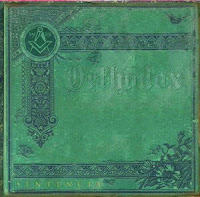 2. Orthodox - Sentencia (Alone)
Orthodox used to be a rather standard -if powerful- Metal band in the vein of Boris, Melvins and Sunn O))). But with Sentencia, they stripped-down their heavy, heavy thundering to explore free-jazz, experimental and musique concrete sounds, creating one of the most unpredictable albums of the decade, let alone the year.
 3. Sunn O))) - Monoliths & Dimensions (Southern Lord)
A good year indeed for drone/doom metal, with the genre's standard bearers delivering their best opus yet, and one that, much like Orthodox, sees the masters of sub-sub-bass notes and droning riffs explore new territories and textures, with strings, keyboards, choirs and trombones adding colour and variety to their monstrous roar.
 4. D'Agostino/Foxx/Jansen - A Secret Life (Metamatic)
One of my favourite ambient albums of recent years was this often-overlooked little gem featuring some improvised piano/tam tam jams between the evergreen John Foxx and foremr Japan drummer Steve Jansen, completed by sparse, stark keyboard shimmers from Steve D'Agostino.
 5. William Basinski - 92982 (2062)
An excellent and much appreciated return from the man behind The Disintegration Loops series. Again, Basinski uses old tape loops to create odd, gently shifting and highly absorbing ambient atmospheres that manage to evoke images of a sweltering New York skyline on a summer's night. Masterful!
 6. Greymachine - Disconnected (Hydra Head)
A surprise triumph was this association between Isis' Aaron Turner and Justin K Broadrick of Jesu. Disconnected is much closer to JKB's old band Godflesh with its harsh industrial sounds and extreme heaviness, but also incorporates the spacey, sky-soaring textures of Isis and Jesu, making this a superb meeting of the ferocious and the graceful.
 7. Fuck Buttons - Tarot Sport (ATP Recordings)
It may not have been as good as Street Horrrsing, but FB's sophomore effort still showcases this unique duo's absurb talent, as they take the noise-funk of their debut, compress it to buggery and add even more scattered dance/electro beats. The new style of dance.
 8. Khanate - Clean Hands Go Foul (Hydra Head)
The swansong of this unique metal outfit shows us just what we will be missing. They are still as harsh as fuck, but were also unafraid to experiment, with vocalist Alan Dubin in particular shining, unleashing his pained, harrowing shrieks over stripped-down, atmospheric, dark ambient metal. Not for the faint-hearted.
 9. The xx - XX (Young Turks)
My pop album of the year. XX is a ghostly, sparse album of modern indy rock, tinted by electro grooves and and r'n'b sensibility. Dominated by the superb deadpan vocals of the band's two singers, XX is pleasant surprise to emerge from indy's increasingly dull landscape.
 10. OM - God Is Good (Drag City)
Like Khanate, Sunn O))) and Orthodox, Om decided to experiment and play with their uber-heavy base sound, adding droning sitar, electric guitar and synth effects to augment their traditional fuzzed-out bass and scattered heavy jazz drums. Still perfect in so many ways.
Song of the year - "Olympians" by Fuck Buttons. Beautiful, soaring, spine-tingling.
Reissue of the year - Everybody Knows This Is Nowhere by Neil Young and Crazy Horse. Still brilliant, forty years on.
Not that choosing the top 10 of 2009 has been any easier (I do not have the money to follow Wire or the NME's leads and pick 50). A particular spanner for me was the realisation that Tetragrammaton's Elegy for Native Tongues, the album I have perhaps enjoyed the most this year (old Skullflower and Fuck Buttons excepted) actually came out in 2008. Damn!
But, despite that, there have been more than a few classics and nice surprises, so, in order of preference, here goes!
 1. Teeth of the Sea - Orphaned By The Ocean (The Rocket Record Company)
Very underrated but triumphant mixture of just about every righteous and useful musical genre out there, from searing noise, to ambient electronics, to stomping psych metal, via some weird and lush mariachi trumpet sounds. Essential and rapturous.
 2. Orthodox - Sentencia (Alone)
Orthodox used to be a rather standard -if powerful- Metal band in the vein of Boris, Melvins and Sunn O))). But with Sentencia, they stripped-down their heavy, heavy thundering to explore free-jazz, experimental and musique concrete sounds, creating one of the most unpredictable albums of the decade, let alone the year.
 3. Sunn O))) - Monoliths & Dimensions (Southern Lord)
A good year indeed for drone/doom metal, with the genre's standard bearers delivering their best opus yet, and one that, much like Orthodox, sees the masters of sub-sub-bass notes and droning riffs explore new territories and textures, with strings, keyboards, choirs and trombones adding colour and variety to their monstrous roar.
 4. D'Agostino/Foxx/Jansen - A Secret Life (Metamatic)
One of my favourite ambient albums of recent years was this often-overlooked little gem featuring some improvised piano/tam tam jams between the evergreen John Foxx and foremr Japan drummer Steve Jansen, completed by sparse, stark keyboard shimmers from Steve D'Agostino.
 5. William Basinski - 92982 (2062)
An excellent and much appreciated return from the man behind The Disintegration Loops series. Again, Basinski uses old tape loops to create odd, gently shifting and highly absorbing ambient atmospheres that manage to evoke images of a sweltering New York skyline on a summer's night. Masterful!
 6. Greymachine - Disconnected (Hydra Head)
A surprise triumph was this association between Isis' Aaron Turner and Justin K Broadrick of Jesu. Disconnected is much closer to JKB's old band Godflesh with its harsh industrial sounds and extreme heaviness, but also incorporates the spacey, sky-soaring textures of Isis and Jesu, making this a superb meeting of the ferocious and the graceful.
 7. Fuck Buttons - Tarot Sport (ATP Recordings)
It may not have been as good as Street Horrrsing, but FB's sophomore effort still showcases this unique duo's absurb talent, as they take the noise-funk of their debut, compress it to buggery and add even more scattered dance/electro beats. The new style of dance.
 8. Khanate - Clean Hands Go Foul (Hydra Head)
The swansong of this unique metal outfit shows us just what we will be missing. They are still as harsh as fuck, but were also unafraid to experiment, with vocalist Alan Dubin in particular shining, unleashing his pained, harrowing shrieks over stripped-down, atmospheric, dark ambient metal. Not for the faint-hearted.
 9. The xx - XX (Young Turks)
My pop album of the year. XX is a ghostly, sparse album of modern indy rock, tinted by electro grooves and and r'n'b sensibility. Dominated by the superb deadpan vocals of the band's two singers, XX is pleasant surprise to emerge from indy's increasingly dull landscape.
 10. OM - God Is Good (Drag City)
Like Khanate, Sunn O))) and Orthodox, Om decided to experiment and play with their uber-heavy base sound, adding droning sitar, electric guitar and synth effects to augment their traditional fuzzed-out bass and scattered heavy jazz drums. Still perfect in so many ways.
Song of the year - "Olympians" by Fuck Buttons. Beautiful, soaring, spine-tingling.
Reissue of the year - Everybody Knows This Is Nowhere by Neil Young and Crazy Horse. Still brilliant, forty years on.
Sunday, 10 January 2010
Great underappreciated or obscure albums 9: BETWEEN TWO SKIES by Ilyas Ahmed (2005)
 About a month ago, I was asked (by myself, and by someone very convincing on Julian Cope's website - not directly, but at least I can pretend!) to name my top albums of the "noughties". In between many vituperative cursing sessions, I actually managed to come up with said albums. And among them was Ilyas Ahmed's Between Two Skies, perhaps the most obscure album of the entire fucking list (see here for more detail: http://rustedshadows.blogspot.com/2009/11/impossible-task.html).
Ahmed was born in Karachi, Pakistan, but moved to New Jersey, then Minnesota at a young age. Now, it appears he's based in Portland, Oregon. This duality of origin is intrensic to his music, particularly on Between Two Skies. The front cover, after all, depicts a woman in what appears to be traditional muslim/Pakistani garb with her eyes hollowed-out. An odd and troubling image, but one that is perfectly fitting for the disquieting, subtle tones contained within this album. Although lyricless, the ultimate vibe you get from Ahmed's songs is one of a blurred identity, of shadowy unease and lonesome self-reflection. But more of that later.
Between Two Skies was originally released as a CD-R, with packaging hand-crafted by the man himself, so we have to be very thankful to Digitalis records for this re-release (which is coupled with his second album, Towards The Night, also from 2005 and self-released, and which curiously features eyes but no face on its cover - not a coincidence, methinks...). The sound is great for something so lo-fi, and it is one of those aural experiences that is almost immediately rapturous, sucking you in in one go and not letting you go until the record has run its course. From what I can gather (he is after all, a pretty elusive and unknown artist), Ahmed recorded this on his own in a cabin lost up in the dark forests of Minnesota, surrounded by nothing more than the trees. It's mostly acoustic music (only occasional electric guitar drones break from this trend), "folk" for want of a better word, although "heathen" would probably suit better, with Ahmed accompanying himself with delicate acoustic guitar arpeggios, the tinkling of a piano and some vague percussion. Considering he doesn't sing words, his voice is oddly the main ingredient of his fascinating mix. Each track sees him intone soft, wordless chants of such stark, raw beauty that they convey heaps more than any set of lyrics could. Again, you think back to his Asian heritage, with echoes of Sufi or Buddhist chanting, but this has been filtered through his American musical heritage to deliver something pretty much unique, for all the James Blackshaw/Ben Chasny comparisons. His elusive, darting guitar notes, that seem to flit around his voice like persistent flies, echo not the plodding chords of traditional anglo-american folk and rock, but rather the bold, insistent soloing of Coltrane-esque free jazz. It's no surprise that Ahmed names A Love Supreme as a major influence in his musical education.
But trying to decode Ahmed's work in purely musical terms is to miss the point. This is music that functions primarily -you might even say exclusively- on emotional levels. The first melancholic notes of "Black Midas" are enough to get the hairs on your spine tingling, and that's even before Ahmed releases his dreamy, mournful falsetto. When he does, it's musical gold, the kind of primeval, profound sound that can only come from that most elusive and nebulous of human attributes - the soul. Whenever I have doubts as to the existence of such a thing, I put Between Two Skies on.
The centrepiece of the album is the 16-minute masterpiece "To You Soon/Silence The High", an unreal track, where Ahmed's love of experimental music and free jazz comes through most clearly. It's an acoustic and an electric guitar duet (duel?) over increasingly warped wordless wailings, the instruments evoking Sonny Sharrock's staccato solos on 1968's Black Woman, while Ahmed's distant moans come across like a druggier, less directly political, answer to Linda Sharrock's screaming on that record. Midway through, Ahmed introduces jarring percussion, a stunted, halting rhythm that is pure raga, hence re-connecting with Ahmed's Asian roots, although his by now pained vocals come across as much as akin to Native American chanting as they do to Sufi/Pakistani music. But this is not some retro attempt at "World" music, and "To You Soon/Silence The High" also evokes the wordless avant-garde of Yoko Ono's first album. It's electric, even though the actual music is acoustic.
Sitting somewhere between a stripped-down 'Trane (maybe the ambient side of Miles Davis, displayed on "He Loved Him Madly" or In A Silent Way would be the most apt reference point) and the pagan ragas of Ben Chasny, Ilyas Ahmed's music is an odd proposition - deep, dark and meaningful. It's the music of wind-swept steppes, barren plains and snow-laden conifer trees. It's primordial and yet forward-thinking, a music for all civilisations seen through one lost soul's eyes. It's timeless and hypnotic, challenging and emotionally pure. It's essential, simple as.
Wednesday, 23 December 2009
Invasion of the hooded ones - Ten Years of ATP, December 09
Location - Butlin's, Minehead, Somerset
That title could be a reference to legendary cloaked doom-meisters Sunn O))), who performed twice at this marvelous event, but is actually a note about the curious preponderance of rather unappealing hoodies amongst the 5000 or so festival-goers. I know it's fucking December and therefore cold (so cold!), but surely tastes have not plummeted to the point that alluring polo-necked jumpers and woolen scarves have suddenly become obsolete? Yet, it would seem so, with every other hairy bloke sporting one such grimy, grey or black hoodie to rather gruesomely compliment their skinny jeans and scuffed converse trainers. It bemuses me, almost as much as the apparent lack of desire on the part of most of said hood-wearers to not shower, despite lodging in sodding Butlin's. It's not like you're camping out in a fucking field, stoners!! It's a holiday resort, with full amenities!! I may sound despairingly middle class by writing this, but at least I was the best-dressed person there. Being a rock fan doesn't mean you have to look like you were just dragged out of a fucking bin!
ATP is a wonderful concept for a festival - a three-day indoor rock smörgåsbord, with three concert halls, a plethora of bars and restaurants and on-site accommodation in cheap-but-cheerful cabins. In any other context I'd find Butlin's loathsome -it's so tacky- but when your senses are being gleefully assaulted but three days' worth of high-octane rock, blissful pop and fucked-up electronica, one can't help but ignore the surroundings, and indeed revel in them. Who needs to be in a gross, unhygienic and muddy field when you can have your own toilet? I know, that's an odd thing to worry about, but these issues matter to me!
 Putting a little pressure on my three friends to hurry, I managed to get there in time for Bardo Pond, who were appearing at the ridiculously early hour of 4.30 on the first day! Ridiculous mainly because if ever there was a band whose music is best suited for the wee wee hours of the morning when people are drunk and more than a little bit stoned, it's Bardo Pond. Regular readers of the blog (I am aware there aren't any, but I can pretend, can't I?) will know the esteem in which I hold these Pennsylvanians and they did not disappoint, despite seeming a tad rusty (normal, given the hour - I'm guessing they flew straight in from the US that day). The highly saturated riffs, thumping bass and Isobel Sollenberger's stoned voice rang out strong and true, and pretty soon I was banging my head away like a 19-year-old at his first stoner gig. Isobel is a really excellent singer underneath all the effects and volume, and her dreamy swaying and garbled moans were the perfect introduction to my ATP experience. It was a sign: this festival would be marked by the dual forces of bleary mind-mashing and incomparable volume.
As such, Pavement frontman Stephen Malkmus and his new band The Jicks were unlikely to impress. They were playing on the rather cavernous Pavilion stage and his songs failed to ignite any interest in me, being a sort of Neil Young / Uncle Tupelo rehash with few hooks or stage presence. Even worse were The Yeah Yeah Yeahs, who showed up late, insulted the crowd and then vomited out a set of rather dull electro-punk featuring some of the lamest post-Iggy moves that I've ever seen from tedious singer Karen O. Thing is, she has a decent-ish voice, in a raw scream kind of way, but everything they do seems contrived and facile, a truly banal excuse for a band. All hype and no trousers.
After a bite to eat, I caught the early stages of Mum, who are a rather trite Sigur Ros-only-cuter Icelandic outfit with two female singers and an unassuming, pastoral vibe. Not exciting, but cute. But my priority that evening was Ben Chasny's Six Organs of Admittance, who were the first great surprise of the festival. I had been expecting trademark drony folk and Appalachian influences, but was instead treated to barnstorming heavy psych in pure Bardo Pond / Heads style! Chasny is a master axeman, a super-saturated descendant of Neil Young and Jimi Hendrix, and he played LOUD. Caught in the front rows, I drank in the volume and the guitar pyrotechnics, and applauded loudly after the all-too-brief set. An added bonus was that I bumped into Bardo Pond's Clint Takeda after the set!
There was just time to dash back to the main stage to catch Fuck Buttons at 11.30. This was perhaps the most packed set of the weekend, with countless floppy-haired indy kids cajoling each other to boogie (showing my age, there) to the duo's blissful electronic soundscapes. As usual, the Bristolians were excellent, with "Olympians" a trance-inducing highlight, as loud sheets of synthetic noise showered down onto us grateful souls from their amps. Deranged vocals, hypnotic grooves and driving beats - these two have the lot!
 Sadly, by then, I was pretty much on the way to being well and truly twatted, plus the early start to get from Cambridge to Minehead was catching up with me, so I missed Tortoise's late-night set. Luckily, I had seen them in November (playing with Cluster, if you please!), so wasn't too fussed. Those guys can be trusted to deliver a great show, and I've no doubt they did, if The Royal Festival Hall on the 22nd of the 11th is anything to go by...
 I awoke the next morning refreshed, if not really rested (those cabins are a very good excuse to prolong boozing into the early hours without fear of catching a cold or disturbing anyone). After a very late breakfast / lunch, I raced over to the main stage for one of my favourite bands of the moment - the mighty OM. I can't stress enough how much I dig this band / duo. Despite my love of many types of trippy music, I actually hate weed and pot, so am never stoned. But if I did like it, OM would be the soundtrack to my trips. It's heavy, but beautiful, graceful under all that volume, and Al Cisneros' mystical lyrics speak to me despite being very hard to comprehend. So, I was really looking forward to seeing them and, despite a ludicrously short set (45 minutes!!), they did not disappoint. A third member has joined them, at least for gigs, and he added wild tambourine crashes, plus layers of synth and guitar to Cisneros and Amos' bass-and-drums stomp. Live, the primordial vibe of their music is even stronger as they thump out their sky-sailing anthems, taking listeners to the astral planes and back again. I banged my head back and forth so much my neck was aching for days, and the set (comprised mainly of tracks from their recent album God Is Good and sounding even better live), for all its brevity, was a true highlight of the 3 days.
After OM came Shellac, another pleasant surprise. At times their music veers a bit towards juvenile, Sum 41-ish hardcore, but mostly it was heavy, heavy math rock of the most righteous, mind-assaulting kind. They also intersperse their sets with hilarious Q&A sessions and banter, making them an engagingly off-beat act, very much in tune with the spirit of the event. A quick break for one of the many hot dogs that would be consumed over the course of the weekend (notwithstanding the fact that they were vile!) meant I missed Porn, but got to rest my wearisome ears during Battles' set. They were on the Pavilion stage, very much like an outdoor one, so there was less chance of them deafening me, although I did find the cold a bit wearing. They are energetic and quirky, with some great grooves - surely a band going somewhere. However, I had to scatter half-way through so I could catch the second half of Melvins' drum-heavy set. The veterans, like Shellac, occasionally wander into dull Californian hardcore, and I will always pine for the full-on sludge of albums like Lysol, but there is no denying the charisma of King Buzzo and his cohorts, and their finale was a kind of fucked-up mess that I couldn't help but love. So, again, a very pleasant surprise!
In a pattern that would come to define the weekend, I then took a bit of a break, even missing Modest Mouse and The Breeders. I think the sheer volume of a lot of the acts, combined with the out-of-synch lifestyle (up at 12, lunch at 5, dinner at 10.30, bed at 4am) and the copious amounts of beer consumed made it hard to sit through act after act without losing the plot a little. Certainly, by the time I pitched up in front of the stage at the Red's club to see Apse, I was pretty tipsy. But I was yet again treated to a very pleasant surprise. I like their debut, Spirit, but had yet to hear their latest album, nor did I know anything about their live persona. Turns out, they are excellent, scattering strident guitar lines and thumping bass over glistening synths and pounding drums. Their new sound is less tribal, or even spiritual, than on their debut, but it carries definite bite and their intriguing use of multi-layered vocals is a novel touch in these days of tiresome, shouty Brandon Flowers-styled vocalists.
The lure of a party back at the cabin dragged me away from the bands and into the arms of even more booze, meaning that by the time I got back to the main stage for SUNN O)))'s first performance of the weekend, a full representation of their debut, The Grimmrobe Demos, I was well and truly soused. With some shame I have to admit to not recalling much of it, other than that it was LOUD. Gut-pummeling loud. The kind of volume that could make people sick. The massive crick in my neck come the next morning also suggests I was well into their ferocious guitar riffage, and I do recall annoying the people around me by trying to join in on the show on harmonica. Ah, the joys of vodka and tonic...
Sunday would in many ways be even more of a write-off, but in an even more satisfying way! The previous night's excesses meant we lurched out of bed and gobbled down a hearty hangover breakfast just in time for Deerhoof at 3.30pm. There is certainly something arresting about these peculiar New Yorkers with their pretty and high-pitched Japanese lead singer. Their sound is angular, with effects-laden guitars and jerky bass. They also had the novel knack of getting their least-confident member, the drummer, to introduce the songs, which he did in an endearingly gauche manner. Several tracks were powerful and grooved hard, but at times I found their forced quirkiness a bit contrived. You're weird - I get it. But they at least are original, and I intend to check them out in further depth. I also caught a bit of Devendra Banhart on the big Pavilion stage, who wasn't great -too derivative- but managed at times to unleash some excellent folk-blues stomps nonetheless, a pleasing, if slight, soundtrack to the Liverpool-Arsenal match playing on the telly (2-1 to the Gunners, up yours you scouse bastards!!!).
Lunch then beckoned, and I was done in time for one of my guilty pleasures, Explosions in the Sky, who were simply excellent. Post-rock snobs can go get fucked, these guys are experts at crafting beautiful, melancholic instrumentals that soar on wings of emotion. The Pavilion became a sort of indy cathedral, their dream-like guitar solos drifting upwards, lifting the audience with them. Although I maintain that this particular stage was too cold and cavernous to really capture me, EITS did the best job at overcoming this, and should be saluted for it.
 But it was all about SUNN O)))'s second set from then on for me. I was determined to be completely alert for this, a full rendition of their latest -and best- album Monoliths and Dimensions. The album has seen them take their demonic doom to a new level, with hints of jazz, musique concrete and classical music tinting their heavy sludge. Their reputation for extreme volume, coupled with what few memories I had of the previous night, had me feeling an uncharacteristic sense of trepidation as I took my place just opposite centre stage and gazed at the wall of amps that lined up behind the sole microphone. Above all, I knew that they -and OM for that matter- sat a tad uncomfortably alongside some of the other acts of the weekend. How would the lanky-fringed, be-hoodied youfs around me take to what was about to descend upon them? Already, I overheard a veteran of the previous night mutter darkly to his mates, "I hope you've done a shit!"
Then the lights went out and a pall of smoke billowed over the stage, obscuring everything from view. Peering through the gloom, I saw three hooded, cowled figures stride onstage, disappearing in and out of the fog. A couple of guitar necks reared up and then - BOOOOOOOOOOOOMMMM!!!! The loudest, most ear-shattering riff I have ever heard. SUNN O))) were everything I expected and more. Beyond loud. Each shuddering note hit me right in the gut, pummeling my intestines and making me glad I'd taken that man's advice! As Greg Anderson and Stephen O'Malley riffed away and a third hooded figure extracted sub-atomic bass notes from some machine I couldn't see, another man walked slowly onstage - Hungarian singer Attila Csihar, one of the most singular vocalists in modern metal.
Also wearing a hooded robe, he strode up to the mic and, oblivious to the audience, began what can't really be described as singing, but rather an incantation. Deep, dark and growling, his voice sounds like the echoes of an underground earthquake coming up from a well patched into the heart of the world. As he roared and moaned and chanted and grumbled, grasping the air with his fingers like an opera tenor, I became aware that this was not a normal concert. Not a concert at all. This was a ritual. The other guys barely moved, O'Malley remaining statuesque behind the fog, right up against his amps, whilst Anderson's only concessions to rock "attitude" were occasional waves of his guitar. At one point, a strident trombone pierced the noise, but the player was invisible. The focus was Csihar, the high priest of doom, whose body seemed to be producing the fog and whose voice was shattering my nerves. He then strode off stage, returning only after much more demented, saturated riffage, this time wearing a black suit covered in flashing silver and a monumental metal crown adorned with spikes! Clutching a cast-metal model of a human face (what the fuck? I hear you asking - you had to be there), and with lasers shooting out of his fingers, he continued his screaming incantation, apparently in Latin, coming across as some warped high priest of an old religion, or an overlord of the underworld. I have literally never seen anything like it in a rock context, and between the sheer volume of the guitars, and the hallucinatory nature of Csihar's performances, I was left physically and mentally drained, but so exhilirated. There is only one word for the experience of seeing SUNN O))) live - unique.
But the joy came at a cost. The experience was so overpowering (and loud - seriously, next time I'm bringing earplugs!) that the idea of then rushing off to see the end of The Mars Volta, or any other band, was inconceivable, so I headed back to the cabin, to wax lyrical about what I'd just witnessed and wash down the memories of the last 90 minutes with lashings of beer, whisky and gin.
In my defense, I did try to go and see Lightning Bolt at the death, but couldn't get in due to the crowds, so had to leave my first ATP experience at that, and in many ways it was perfect. The best gig I'd ever seen at a festival that, for all the dress code flaws of some of its participants and general aura of indy arrogance, remains unique. All hail the dark Gods of rock!!!
That title could be a reference to legendary cloaked doom-meisters Sunn O))), who performed twice at this marvelous event, but is actually a note about the curious preponderance of rather unappealing hoodies amongst the 5000 or so festival-goers. I know it's fucking December and therefore cold (so cold!), but surely tastes have not plummeted to the point that alluring polo-necked jumpers and woolen scarves have suddenly become obsolete? Yet, it would seem so, with every other hairy bloke sporting one such grimy, grey or black hoodie to rather gruesomely compliment their skinny jeans and scuffed converse trainers. It bemuses me, almost as much as the apparent lack of desire on the part of most of said hood-wearers to not shower, despite lodging in sodding Butlin's. It's not like you're camping out in a fucking field, stoners!! It's a holiday resort, with full amenities!! I may sound despairingly middle class by writing this, but at least I was the best-dressed person there. Being a rock fan doesn't mean you have to look like you were just dragged out of a fucking bin!
ATP is a wonderful concept for a festival - a three-day indoor rock smörgåsbord, with three concert halls, a plethora of bars and restaurants and on-site accommodation in cheap-but-cheerful cabins. In any other context I'd find Butlin's loathsome -it's so tacky- but when your senses are being gleefully assaulted but three days' worth of high-octane rock, blissful pop and fucked-up electronica, one can't help but ignore the surroundings, and indeed revel in them. Who needs to be in a gross, unhygienic and muddy field when you can have your own toilet? I know, that's an odd thing to worry about, but these issues matter to me!
 Putting a little pressure on my three friends to hurry, I managed to get there in time for Bardo Pond, who were appearing at the ridiculously early hour of 4.30 on the first day! Ridiculous mainly because if ever there was a band whose music is best suited for the wee wee hours of the morning when people are drunk and more than a little bit stoned, it's Bardo Pond. Regular readers of the blog (I am aware there aren't any, but I can pretend, can't I?) will know the esteem in which I hold these Pennsylvanians and they did not disappoint, despite seeming a tad rusty (normal, given the hour - I'm guessing they flew straight in from the US that day). The highly saturated riffs, thumping bass and Isobel Sollenberger's stoned voice rang out strong and true, and pretty soon I was banging my head away like a 19-year-old at his first stoner gig. Isobel is a really excellent singer underneath all the effects and volume, and her dreamy swaying and garbled moans were the perfect introduction to my ATP experience. It was a sign: this festival would be marked by the dual forces of bleary mind-mashing and incomparable volume.
As such, Pavement frontman Stephen Malkmus and his new band The Jicks were unlikely to impress. They were playing on the rather cavernous Pavilion stage and his songs failed to ignite any interest in me, being a sort of Neil Young / Uncle Tupelo rehash with few hooks or stage presence. Even worse were The Yeah Yeah Yeahs, who showed up late, insulted the crowd and then vomited out a set of rather dull electro-punk featuring some of the lamest post-Iggy moves that I've ever seen from tedious singer Karen O. Thing is, she has a decent-ish voice, in a raw scream kind of way, but everything they do seems contrived and facile, a truly banal excuse for a band. All hype and no trousers.
After a bite to eat, I caught the early stages of Mum, who are a rather trite Sigur Ros-only-cuter Icelandic outfit with two female singers and an unassuming, pastoral vibe. Not exciting, but cute. But my priority that evening was Ben Chasny's Six Organs of Admittance, who were the first great surprise of the festival. I had been expecting trademark drony folk and Appalachian influences, but was instead treated to barnstorming heavy psych in pure Bardo Pond / Heads style! Chasny is a master axeman, a super-saturated descendant of Neil Young and Jimi Hendrix, and he played LOUD. Caught in the front rows, I drank in the volume and the guitar pyrotechnics, and applauded loudly after the all-too-brief set. An added bonus was that I bumped into Bardo Pond's Clint Takeda after the set!
There was just time to dash back to the main stage to catch Fuck Buttons at 11.30. This was perhaps the most packed set of the weekend, with countless floppy-haired indy kids cajoling each other to boogie (showing my age, there) to the duo's blissful electronic soundscapes. As usual, the Bristolians were excellent, with "Olympians" a trance-inducing highlight, as loud sheets of synthetic noise showered down onto us grateful souls from their amps. Deranged vocals, hypnotic grooves and driving beats - these two have the lot!
 Sadly, by then, I was pretty much on the way to being well and truly twatted, plus the early start to get from Cambridge to Minehead was catching up with me, so I missed Tortoise's late-night set. Luckily, I had seen them in November (playing with Cluster, if you please!), so wasn't too fussed. Those guys can be trusted to deliver a great show, and I've no doubt they did, if The Royal Festival Hall on the 22nd of the 11th is anything to go by...
 I awoke the next morning refreshed, if not really rested (those cabins are a very good excuse to prolong boozing into the early hours without fear of catching a cold or disturbing anyone). After a very late breakfast / lunch, I raced over to the main stage for one of my favourite bands of the moment - the mighty OM. I can't stress enough how much I dig this band / duo. Despite my love of many types of trippy music, I actually hate weed and pot, so am never stoned. But if I did like it, OM would be the soundtrack to my trips. It's heavy, but beautiful, graceful under all that volume, and Al Cisneros' mystical lyrics speak to me despite being very hard to comprehend. So, I was really looking forward to seeing them and, despite a ludicrously short set (45 minutes!!), they did not disappoint. A third member has joined them, at least for gigs, and he added wild tambourine crashes, plus layers of synth and guitar to Cisneros and Amos' bass-and-drums stomp. Live, the primordial vibe of their music is even stronger as they thump out their sky-sailing anthems, taking listeners to the astral planes and back again. I banged my head back and forth so much my neck was aching for days, and the set (comprised mainly of tracks from their recent album God Is Good and sounding even better live), for all its brevity, was a true highlight of the 3 days.
After OM came Shellac, another pleasant surprise. At times their music veers a bit towards juvenile, Sum 41-ish hardcore, but mostly it was heavy, heavy math rock of the most righteous, mind-assaulting kind. They also intersperse their sets with hilarious Q&A sessions and banter, making them an engagingly off-beat act, very much in tune with the spirit of the event. A quick break for one of the many hot dogs that would be consumed over the course of the weekend (notwithstanding the fact that they were vile!) meant I missed Porn, but got to rest my wearisome ears during Battles' set. They were on the Pavilion stage, very much like an outdoor one, so there was less chance of them deafening me, although I did find the cold a bit wearing. They are energetic and quirky, with some great grooves - surely a band going somewhere. However, I had to scatter half-way through so I could catch the second half of Melvins' drum-heavy set. The veterans, like Shellac, occasionally wander into dull Californian hardcore, and I will always pine for the full-on sludge of albums like Lysol, but there is no denying the charisma of King Buzzo and his cohorts, and their finale was a kind of fucked-up mess that I couldn't help but love. So, again, a very pleasant surprise!
In a pattern that would come to define the weekend, I then took a bit of a break, even missing Modest Mouse and The Breeders. I think the sheer volume of a lot of the acts, combined with the out-of-synch lifestyle (up at 12, lunch at 5, dinner at 10.30, bed at 4am) and the copious amounts of beer consumed made it hard to sit through act after act without losing the plot a little. Certainly, by the time I pitched up in front of the stage at the Red's club to see Apse, I was pretty tipsy. But I was yet again treated to a very pleasant surprise. I like their debut, Spirit, but had yet to hear their latest album, nor did I know anything about their live persona. Turns out, they are excellent, scattering strident guitar lines and thumping bass over glistening synths and pounding drums. Their new sound is less tribal, or even spiritual, than on their debut, but it carries definite bite and their intriguing use of multi-layered vocals is a novel touch in these days of tiresome, shouty Brandon Flowers-styled vocalists.
The lure of a party back at the cabin dragged me away from the bands and into the arms of even more booze, meaning that by the time I got back to the main stage for SUNN O)))'s first performance of the weekend, a full representation of their debut, The Grimmrobe Demos, I was well and truly soused. With some shame I have to admit to not recalling much of it, other than that it was LOUD. Gut-pummeling loud. The kind of volume that could make people sick. The massive crick in my neck come the next morning also suggests I was well into their ferocious guitar riffage, and I do recall annoying the people around me by trying to join in on the show on harmonica. Ah, the joys of vodka and tonic...
Sunday would in many ways be even more of a write-off, but in an even more satisfying way! The previous night's excesses meant we lurched out of bed and gobbled down a hearty hangover breakfast just in time for Deerhoof at 3.30pm. There is certainly something arresting about these peculiar New Yorkers with their pretty and high-pitched Japanese lead singer. Their sound is angular, with effects-laden guitars and jerky bass. They also had the novel knack of getting their least-confident member, the drummer, to introduce the songs, which he did in an endearingly gauche manner. Several tracks were powerful and grooved hard, but at times I found their forced quirkiness a bit contrived. You're weird - I get it. But they at least are original, and I intend to check them out in further depth. I also caught a bit of Devendra Banhart on the big Pavilion stage, who wasn't great -too derivative- but managed at times to unleash some excellent folk-blues stomps nonetheless, a pleasing, if slight, soundtrack to the Liverpool-Arsenal match playing on the telly (2-1 to the Gunners, up yours you scouse bastards!!!).
Lunch then beckoned, and I was done in time for one of my guilty pleasures, Explosions in the Sky, who were simply excellent. Post-rock snobs can go get fucked, these guys are experts at crafting beautiful, melancholic instrumentals that soar on wings of emotion. The Pavilion became a sort of indy cathedral, their dream-like guitar solos drifting upwards, lifting the audience with them. Although I maintain that this particular stage was too cold and cavernous to really capture me, EITS did the best job at overcoming this, and should be saluted for it.
 But it was all about SUNN O)))'s second set from then on for me. I was determined to be completely alert for this, a full rendition of their latest -and best- album Monoliths and Dimensions. The album has seen them take their demonic doom to a new level, with hints of jazz, musique concrete and classical music tinting their heavy sludge. Their reputation for extreme volume, coupled with what few memories I had of the previous night, had me feeling an uncharacteristic sense of trepidation as I took my place just opposite centre stage and gazed at the wall of amps that lined up behind the sole microphone. Above all, I knew that they -and OM for that matter- sat a tad uncomfortably alongside some of the other acts of the weekend. How would the lanky-fringed, be-hoodied youfs around me take to what was about to descend upon them? Already, I overheard a veteran of the previous night mutter darkly to his mates, "I hope you've done a shit!"
Then the lights went out and a pall of smoke billowed over the stage, obscuring everything from view. Peering through the gloom, I saw three hooded, cowled figures stride onstage, disappearing in and out of the fog. A couple of guitar necks reared up and then - BOOOOOOOOOOOOMMMM!!!! The loudest, most ear-shattering riff I have ever heard. SUNN O))) were everything I expected and more. Beyond loud. Each shuddering note hit me right in the gut, pummeling my intestines and making me glad I'd taken that man's advice! As Greg Anderson and Stephen O'Malley riffed away and a third hooded figure extracted sub-atomic bass notes from some machine I couldn't see, another man walked slowly onstage - Hungarian singer Attila Csihar, one of the most singular vocalists in modern metal.
Also wearing a hooded robe, he strode up to the mic and, oblivious to the audience, began what can't really be described as singing, but rather an incantation. Deep, dark and growling, his voice sounds like the echoes of an underground earthquake coming up from a well patched into the heart of the world. As he roared and moaned and chanted and grumbled, grasping the air with his fingers like an opera tenor, I became aware that this was not a normal concert. Not a concert at all. This was a ritual. The other guys barely moved, O'Malley remaining statuesque behind the fog, right up against his amps, whilst Anderson's only concessions to rock "attitude" were occasional waves of his guitar. At one point, a strident trombone pierced the noise, but the player was invisible. The focus was Csihar, the high priest of doom, whose body seemed to be producing the fog and whose voice was shattering my nerves. He then strode off stage, returning only after much more demented, saturated riffage, this time wearing a black suit covered in flashing silver and a monumental metal crown adorned with spikes! Clutching a cast-metal model of a human face (what the fuck? I hear you asking - you had to be there), and with lasers shooting out of his fingers, he continued his screaming incantation, apparently in Latin, coming across as some warped high priest of an old religion, or an overlord of the underworld. I have literally never seen anything like it in a rock context, and between the sheer volume of the guitars, and the hallucinatory nature of Csihar's performances, I was left physically and mentally drained, but so exhilirated. There is only one word for the experience of seeing SUNN O))) live - unique.
But the joy came at a cost. The experience was so overpowering (and loud - seriously, next time I'm bringing earplugs!) that the idea of then rushing off to see the end of The Mars Volta, or any other band, was inconceivable, so I headed back to the cabin, to wax lyrical about what I'd just witnessed and wash down the memories of the last 90 minutes with lashings of beer, whisky and gin.
In my defense, I did try to go and see Lightning Bolt at the death, but couldn't get in due to the crowds, so had to leave my first ATP experience at that, and in many ways it was perfect. The best gig I'd ever seen at a festival that, for all the dress code flaws of some of its participants and general aura of indy arrogance, remains unique. All hail the dark Gods of rock!!!
December on my iPod!
I realise that the last two months' "reviews" were a tad on the long side. Call it beginners' enthusiasm.
Before getting into music, I do have to ask why so many Christians / other religious people quote Hitler as an example of the evils atheists are capable of? As this article: http://www.middle-east-online.com/english/opinion/?id=36341, but also Richard Dawkins in The God Delusion, demonstrate, he was no atheist, and used God as a means of propagating his politics of hatred.
By all means refer to Stalin if you want to use such poor logic to decry atheism, but get your facts straight and admit the truth - that the holocaust was partly a result of Hitler's -and indeed German/European society's- Christian background and of the Church's direct collaboration with Nazism.
As it is, you can no more attribute the evils of Mao, Pol Pot and Stalin to their atheism as you can to their rotund figures or taste for military uniforms. To my knowledge, no-one has killed in the name of atheism. But millions have died in the name of religion. People in Britain, with the not-too-distant Northern Irish past, should be wary of peddling to this kind of increasing religious fundametalism by undermining atheism so cheaply.
Rant over. On with the sounds!
December coming just after my birthday, and being the month of Christmas, there have been quite a few CDs popped into my iMac's reader over the last few weeks! Greedy!
Thanks to W ire magazine's January 2010 issue, in which they feature their top 50 albums of 2009, I've been spending a bit of time checking out some of the last year's most-heralded releases. Typically for The Wire, some are so obscure as to be unavailable even after such a short period, but I was able to find their number one, Broadcast and The Focus Group's Broadcast and The Focus Group Investigate Witch Cults of The Radio Age (Warp Records, October 2009), a peculiar and fascinating slice of what is apparently called "hauntology", and which is principally based around exploring the sounds created by the gaps between stations on FM radio (!). This has long been the focus of The Focus Group's label Ghost Box (home of the excellent Eric Zann album Ouroborinda) and here they add the shimmering psych-pop and dream-like vocals of Broadcast into the mix, creating an odd little album that is dense (23 tracks over 50-odd minutes), elusive and strangely melancholic, like a folk- and electro-tinged modern answer to The United States of America's superb 1968 debut. Not perhaps the classic The Wire says it is, but one of the strangest releases of the year for sure, and a very beautiful one.
Also on th eir list, at number 20, was ambient great William Basinski's 92982 (2062, April 2009), for me one of the real triumphs of the last 12 months. Basinski has found his niche, taking old recordings he made in the 80s and then relaying them to digital, recording the shifts and disintegrations of the tape that occur during the transfer and using all this as basis to create remarkable ambient soundscapes that are slow, monotonous and absorbing. This has already given us his marvelous Disintegration Loops series (the third one is one of the best ambient albums of all time), but 92982 is pretty darn fabulous as well, a gentle, drifiting series of mysterious synth drones, tape noise and random sound effects, which filter through the ether due to the fact that the original recordings were made live in his apartment with the windows open. You hear klaxons, sirens, fireworks... And all the time the quiet, sensual, dreamy ambient magic, drifting like a raft over tumultous Brooklyn. But don't for one second assume this is a dull album. It subtly pulsates and fluctuates, dragging you in and it takes a while to get over it. Remarkable, and a welcome return from Basinski.
At the othe r end of the pop spectrum (and coming in at a surprising number 21 in the Wire's list) were the current indie faves The XX, a very trendy-looking quartet of twenty-year-olds from London. Their debut, XX (Young Turks, August 2009) is a surprisingly superb little gem, and one of the rare times I will ever agree with the NME! The XX certainly have all the indy cool they need: black clothes, pouty mouths, cool hairdos. But they're also a damn smart pop band, taking their lyrical and musical approach from -wait for it- modern R'n'B (they even covered Aaliyah!) and plying it gently onto stripped down post-punk pop. Brittle rhytm tracks limp about over funky bass lines, jangly guitar and subtle synths, at times recalling a slower, dulled (but not dull, far from it) version of Interpol or Bloc Party. But the lyrics are all about sex and intimacy, hence the r'n'b references, and you feel the tracks lurching into robotic neo-funk, like kraftwerk backing Macy Gray. But their voices! The two singers, male and female (possibly a couple?) are shockingly, delighfully deadpan and emotionless, murmuring their lyrics of sex, loss and desire like teenagers reciting WH Auden in English class. As such, they are perhaps the most successful encapsulators of juvenile moodiness in quite some time, whilst their brittle electro tunes will always evoke Young Marble Giants, perhaps the only act they truly seem to ape. A nice, long-awaited addition to the pop scene.
But if The XX were everywhere come September, my discovery of Natural Snow Buildings was far more serendipitous, the result of lazy, semi-awake searching on www.rateyourmusic.com. NSB are a duo of folk musicians from France, who create lengthy folk-drone opuses in the tradition of Double Leopards, but with singing to boot. Their latest album, Shadow Kingdom (Blackest Rainbow, September 2009) is over two hours long, which may be a tad too much, but it still contains some of the most arresting sounds you will hear all year. The album alternates between vast (we're talking 15-to-20-minute pieces) drone epics, all fuzzed guitar and strings; and quieter acoustic ballads that evoke the kind of traditional folk played in medieval times. Singer Solange Gularte has a strong set of pipes, and the kind of gentle, affecting voice that made Linda Thompson so popular. Part dark gothic dronefest, part airy folk revival, Shadow Kingdom is a singular, and welcome release in these days of tiresome stadium acts. Tough to find on CD, NSB remain obscure, although my copy was purchased for me on www.secondlayer.co.uk. Ya gotta love Christmas!!
Back in Oc tober, 4AD finally did justice to Bauhaus' classic debut In The Flat Field (released 1980, also on 4AD), giving it a full sound-lift as well as providing it -and all their other early albums- with some truly lush packaging, complete with second disk of outtakes and a massive booklet. Not that this stellar bit of window-dressing overshadows the music! In The Flat Field may just be the first true "gothic" album, and whilst its legacy may be dubious (most "Goth" music is shite once you get past 1982 and The Virgin Prunes), the record itself is a classic, a dark, theatrical monsterpiece of post-punk insanity, the excessive, truly out-there answer to the austerity of Young Marble Giants, The Raincoats and Talking Heads. Bauhaus weren't subtle, but their excesses were still pretty curbed on this debut, with a monstrous punk drive hitting in at times to balance the pretention in some of the lyrics. And in Peter Murphy they had one of post-punk's most iconic vocalists, a demonic performer whose hoarse and baroque style was easily as genre-defining as Curtis' doomy moan and Devoto's acerbic sneer. A classic. 'Nuff said.
Stepping e ven further back in time, I've been wigging out with much joy to the infernal doom-prog sounds of mid-seventies King Crimson, thanks to the superb live set The Great Deceiver (Virgin, box set 1992, re-released by EGM as two 2xCD sets in 2002), which showcases the quartet of John Wetton (bass, vocals), Robert Fripp (guitar, effects), Bill Bruford (drums, percussion) and David Cross (violin, mellotron, flute) in all its unfettered glory. This is perhaps the most celebrated KC line-up by fans of the band, the one that gave fans the classic albums Lark's Tongues in Aspic, Starless and Bible Black and, sort of minus Cross, Red. The Great Deceiver, originally a 4-disk box set, now two separate and nicely packaged 2-disk jewel cases, is two-and-a-half hours of this brutal and elegant band at their height, surfing on the crest of the Larks' and Starless waves, and allowing the music to take them to wild and wondrous places, as they mixed familiar album tracks with exploratory improv pieces. It was this taste for the unknown, the desire to take risks, that set Crimson apart from their prog-rock contemporaries, the Yeses and Genesises of this world. Of course, with 4 full concerts (or so), some tracks are repeated, but never is this collection dull, as each version of each song carries subtle variations and shifts, something that highlights not only the band's experimental nature, but also their tight-knit musical understanding. Required listening for all Crim-heads, but also for anyone who thinks "progressive" rock is limited to grandiose Floydian concepts or ELP wankery.
But by far th e band of the month has been the monumental Skullflower! Around since the early eighties, Skullflower is effectively the vehicle for Matt Bower, a British guitarist with a taste for free-form music and heavy, heavy noise. I discovered this lost treasure of a band through their third full album, and one of their only early ones to be available today, IIIrd Gatekeeper, released originally in 1992 on Justin K Broadrick's now-defunct indie HeadDirt, recently gloriously reissued by Crucial Blast (2007). This is certainly one of my all-time favourite albums. Thought I'd get that out of the way! If you think the birth of heavy sludge/doom/drone metal started with Earth's Earth 2, then think again! Over some of the most punishingly heavy drums you will ever hear (supplied by the superb Stewart Dennison - heavy as a God but with the necessary subtle touch to give his thudding feeling as well as weight) Matt Bower rips a new arsehole for his listeners with a tidal wave of savage guitar noise, lurching from Sabbathian doom-riffery to Brotzmann-inspired noise. It's the culmination of centuries of heathen rock explorations, touching on elements of Zappa, Takayanagi, Rallizes Denudes and Sabbath, without ever sounding derivative. And everyone from Melvins, to Boris, to SUNN O))) owe Skullflower a debt of gratitude for IIIrd Gatekeeper.
 On a high, the band, usually more-versed in power electronics of the Whitehouse variety and unused to such a stable line-up (the Bower, Dennison duo being complimented on monster abss by Anthony di Franco), decided to stick to metal and release an almost immediate follow-up in the form of Last Shot at Heaven (Noiseville, 1993). Not as fully-formed as its predecessor, it is nonetheless an essential record (in fairness, it's hard to equal, let alone beat, IIIrd Gatekeeper). The cover picture shows a girl craning her neck backwards in ecstasy, and LSAH has a soaring, dramatic feel to it, at times evoking the harder side of My Bloody Valentine (think a crunchier "Only Shallow"). Bower's guitar is less bass-heavy and distorted than before, but don't for one second imagine that LSAH is mellow! This motherfucker still crunches, thunders and rages, and at times the gang (the perfect description for these three) unleash the kind of sheer noise that characterised both their earlier and later output.
 And the noise was back in fine form for 1994's Carved Into Roses (VHF), yet another monumental album from Skullflower (minus DiFranco now, if I'm not much mistaken). The title does hint at moments of blissful ambient textures, with synths playing a greater -and more subtle- part than on the previous two records mentioned above, but mainly this is about the noise! The sounds are gritty, dark, buzzing and unpredictable. On some tracks, scattered drum patterns and rampaging solos from Bower clearly demonstrate a free-jazz influence, the kind of sophistication and variety that sets Bower and co. apart from the morass of metal and noise bands that formed in their wake. Both Carved Into Roses and Last Shot at Heaven are ahrd to get on CD, but are available to download from iTunes. So, the question remains - what the fuck are you waiting for, cunts???
I know for a fact that there are loads more Skullflower gems I need to discover and a couple are already winging their way to me. Certainly, the free-form noise of their later output, which more closely resembles the work Bower does with Hototogisu, is something I'm less familiar with (though if it's anything like Hototogisu, I can't wait!). Matt Bower (the sole remaining member from the early 90s) is an underrated rock genius and rebel, and deserves as much praise (and money) as geeks like me can sling his way.
So, a belated Merry Christmas to any who happen to stumble upon this blog, and a Happy New Year to you all! With more Skullflower, Krautrock, Jazz and metal to look forward to, I know mine's set to be a cracker!!
xx
Before getting into music, I do have to ask why so many Christians / other religious people quote Hitler as an example of the evils atheists are capable of? As this article: http://www.middle-east-online.com/english/opinion/?id=36341, but also Richard Dawkins in The God Delusion, demonstrate, he was no atheist, and used God as a means of propagating his politics of hatred.
By all means refer to Stalin if you want to use such poor logic to decry atheism, but get your facts straight and admit the truth - that the holocaust was partly a result of Hitler's -and indeed German/European society's- Christian background and of the Church's direct collaboration with Nazism.
As it is, you can no more attribute the evils of Mao, Pol Pot and Stalin to their atheism as you can to their rotund figures or taste for military uniforms. To my knowledge, no-one has killed in the name of atheism. But millions have died in the name of religion. People in Britain, with the not-too-distant Northern Irish past, should be wary of peddling to this kind of increasing religious fundametalism by undermining atheism so cheaply.
Rant over. On with the sounds!
December coming just after my birthday, and being the month of Christmas, there have been quite a few CDs popped into my iMac's reader over the last few weeks! Greedy!
Thanks to W
 ire magazine's January 2010 issue, in which they feature their top 50 albums of 2009, I've been spending a bit of time checking out some of the last year's most-heralded releases. Typically for The Wire, some are so obscure as to be unavailable even after such a short period, but I was able to find their number one, Broadcast and The Focus Group's Broadcast and The Focus Group Investigate Witch Cults of The Radio Age (Warp Records, October 2009), a peculiar and fascinating slice of what is apparently called "hauntology", and which is principally based around exploring the sounds created by the gaps between stations on FM radio (!). This has long been the focus of The Focus Group's label Ghost Box (home of the excellent Eric Zann album Ouroborinda) and here they add the shimmering psych-pop and dream-like vocals of Broadcast into the mix, creating an odd little album that is dense (23 tracks over 50-odd minutes), elusive and strangely melancholic, like a folk- and electro-tinged modern answer to The United States of America's superb 1968 debut. Not perhaps the classic The Wire says it is, but one of the strangest releases of the year for sure, and a very beautiful one.
Also on th
 eir list, at number 20, was ambient great William Basinski's 92982 (2062, April 2009), for me one of the real triumphs of the last 12 months. Basinski has found his niche, taking old recordings he made in the 80s and then relaying them to digital, recording the shifts and disintegrations of the tape that occur during the transfer and using all this as basis to create remarkable ambient soundscapes that are slow, monotonous and absorbing. This has already given us his marvelous Disintegration Loops series (the third one is one of the best ambient albums of all time), but 92982 is pretty darn fabulous as well, a gentle, drifiting series of mysterious synth drones, tape noise and random sound effects, which filter through the ether due to the fact that the original recordings were made live in his apartment with the windows open. You hear klaxons, sirens, fireworks... And all the time the quiet, sensual, dreamy ambient magic, drifting like a raft over tumultous Brooklyn. But don't for one second assume this is a dull album. It subtly pulsates and fluctuates, dragging you in and it takes a while to get over it. Remarkable, and a welcome return from Basinski.
At the othe
 r end of the pop spectrum (and coming in at a surprising number 21 in the Wire's list) were the current indie faves The XX, a very trendy-looking quartet of twenty-year-olds from London. Their debut, XX (Young Turks, August 2009) is a surprisingly superb little gem, and one of the rare times I will ever agree with the NME! The XX certainly have all the indy cool they need: black clothes, pouty mouths, cool hairdos. But they're also a damn smart pop band, taking their lyrical and musical approach from -wait for it- modern R'n'B (they even covered Aaliyah!) and plying it gently onto stripped down post-punk pop. Brittle rhytm tracks limp about over funky bass lines, jangly guitar and subtle synths, at times recalling a slower, dulled (but not dull, far from it) version of Interpol or Bloc Party. But the lyrics are all about sex and intimacy, hence the r'n'b references, and you feel the tracks lurching into robotic neo-funk, like kraftwerk backing Macy Gray. But their voices! The two singers, male and female (possibly a couple?) are shockingly, delighfully deadpan and emotionless, murmuring their lyrics of sex, loss and desire like teenagers reciting WH Auden in English class. As such, they are perhaps the most successful encapsulators of juvenile moodiness in quite some time, whilst their brittle electro tunes will always evoke Young Marble Giants, perhaps the only act they truly seem to ape. A nice, long-awaited addition to the pop scene.
But if The
 XX were everywhere come September, my discovery of Natural Snow Buildings was far more serendipitous, the result of lazy, semi-awake searching on www.rateyourmusic.com. NSB are a duo of folk musicians from France, who create lengthy folk-drone opuses in the tradition of Double Leopards, but with singing to boot. Their latest album, Shadow Kingdom (Blackest Rainbow, September 2009) is over two hours long, which may be a tad too much, but it still contains some of the most arresting sounds you will hear all year. The album alternates between vast (we're talking 15-to-20-minute pieces) drone epics, all fuzzed guitar and strings; and quieter acoustic ballads that evoke the kind of traditional folk played in medieval times. Singer Solange Gularte has a strong set of pipes, and the kind of gentle, affecting voice that made Linda Thompson so popular. Part dark gothic dronefest, part airy folk revival, Shadow Kingdom is a singular, and welcome release in these days of tiresome stadium acts. Tough to find on CD, NSB remain obscure, although my copy was purchased for me on www.secondlayer.co.uk. Ya gotta love Christmas!!
Back in Oc
 tober, 4AD finally did justice to Bauhaus' classic debut In The Flat Field (released 1980, also on 4AD), giving it a full sound-lift as well as providing it -and all their other early albums- with some truly lush packaging, complete with second disk of outtakes and a massive booklet. Not that this stellar bit of window-dressing overshadows the music! In The Flat Field may just be the first true "gothic" album, and whilst its legacy may be dubious (most "Goth" music is shite once you get past 1982 and The Virgin Prunes), the record itself is a classic, a dark, theatrical monsterpiece of post-punk insanity, the excessive, truly out-there answer to the austerity of Young Marble Giants, The Raincoats and Talking Heads. Bauhaus weren't subtle, but their excesses were still pretty curbed on this debut, with a monstrous punk drive hitting in at times to balance the pretention in some of the lyrics. And in Peter Murphy they had one of post-punk's most iconic vocalists, a demonic performer whose hoarse and baroque style was easily as genre-defining as Curtis' doomy moan and Devoto's acerbic sneer. A classic. 'Nuff said.
Stepping e
 ven further back in time, I've been wigging out with much joy to the infernal doom-prog sounds of mid-seventies King Crimson, thanks to the superb live set The Great Deceiver (Virgin, box set 1992, re-released by EGM as two 2xCD sets in 2002), which showcases the quartet of John Wetton (bass, vocals), Robert Fripp (guitar, effects), Bill Bruford (drums, percussion) and David Cross (violin, mellotron, flute) in all its unfettered glory. This is perhaps the most celebrated KC line-up by fans of the band, the one that gave fans the classic albums Lark's Tongues in Aspic, Starless and Bible Black and, sort of minus Cross, Red. The Great Deceiver, originally a 4-disk box set, now two separate and nicely packaged 2-disk jewel cases, is two-and-a-half hours of this brutal and elegant band at their height, surfing on the crest of the Larks' and Starless waves, and allowing the music to take them to wild and wondrous places, as they mixed familiar album tracks with exploratory improv pieces. It was this taste for the unknown, the desire to take risks, that set Crimson apart from their prog-rock contemporaries, the Yeses and Genesises of this world. Of course, with 4 full concerts (or so), some tracks are repeated, but never is this collection dull, as each version of each song carries subtle variations and shifts, something that highlights not only the band's experimental nature, but also their tight-knit musical understanding. Required listening for all Crim-heads, but also for anyone who thinks "progressive" rock is limited to grandiose Floydian concepts or ELP wankery.
But by far th
 e band of the month has been the monumental Skullflower! Around since the early eighties, Skullflower is effectively the vehicle for Matt Bower, a British guitarist with a taste for free-form music and heavy, heavy noise. I discovered this lost treasure of a band through their third full album, and one of their only early ones to be available today, IIIrd Gatekeeper, released originally in 1992 on Justin K Broadrick's now-defunct indie HeadDirt, recently gloriously reissued by Crucial Blast (2007). This is certainly one of my all-time favourite albums. Thought I'd get that out of the way! If you think the birth of heavy sludge/doom/drone metal started with Earth's Earth 2, then think again! Over some of the most punishingly heavy drums you will ever hear (supplied by the superb Stewart Dennison - heavy as a God but with the necessary subtle touch to give his thudding feeling as well as weight) Matt Bower rips a new arsehole for his listeners with a tidal wave of savage guitar noise, lurching from Sabbathian doom-riffery to Brotzmann-inspired noise. It's the culmination of centuries of heathen rock explorations, touching on elements of Zappa, Takayanagi, Rallizes Denudes and Sabbath, without ever sounding derivative. And everyone from Melvins, to Boris, to SUNN O))) owe Skullflower a debt of gratitude for IIIrd Gatekeeper.
 On a high, the band, usually more-versed in power electronics of the Whitehouse variety and unused to such a stable line-up (the Bower, Dennison duo being complimented on monster abss by Anthony di Franco), decided to stick to metal and release an almost immediate follow-up in the form of Last Shot at Heaven (Noiseville, 1993). Not as fully-formed as its predecessor, it is nonetheless an essential record (in fairness, it's hard to equal, let alone beat, IIIrd Gatekeeper). The cover picture shows a girl craning her neck backwards in ecstasy, and LSAH has a soaring, dramatic feel to it, at times evoking the harder side of My Bloody Valentine (think a crunchier "Only Shallow"). Bower's guitar is less bass-heavy and distorted than before, but don't for one second imagine that LSAH is mellow! This motherfucker still crunches, thunders and rages, and at times the gang (the perfect description for these three) unleash the kind of sheer noise that characterised both their earlier and later output.
 And the noise was back in fine form for 1994's Carved Into Roses (VHF), yet another monumental album from Skullflower (minus DiFranco now, if I'm not much mistaken). The title does hint at moments of blissful ambient textures, with synths playing a greater -and more subtle- part than on the previous two records mentioned above, but mainly this is about the noise! The sounds are gritty, dark, buzzing and unpredictable. On some tracks, scattered drum patterns and rampaging solos from Bower clearly demonstrate a free-jazz influence, the kind of sophistication and variety that sets Bower and co. apart from the morass of metal and noise bands that formed in their wake. Both Carved Into Roses and Last Shot at Heaven are ahrd to get on CD, but are available to download from iTunes. So, the question remains - what the fuck are you waiting for, cunts???
I know for a fact that there are loads more Skullflower gems I need to discover and a couple are already winging their way to me. Certainly, the free-form noise of their later output, which more closely resembles the work Bower does with Hototogisu, is something I'm less familiar with (though if it's anything like Hototogisu, I can't wait!). Matt Bower (the sole remaining member from the early 90s) is an underrated rock genius and rebel, and deserves as much praise (and money) as geeks like me can sling his way.
So, a belated Merry Christmas to any who happen to stumble upon this blog, and a Happy New Year to you all! With more Skullflower, Krautrock, Jazz and metal to look forward to, I know mine's set to be a cracker!!
xx
Subscribe to:
Posts (Atom)