Friday, 14 May 2010

March and April on my iPod

Such a mad couple of months, with gigs, new albums, work and flat-hunting all combining to mean I have to combine them both this time for an iPod extravaganza! Which means you all (sigh) get a bit longer to absorb my recent post on memory music. Lucky you!


Obviously, given my recent blurb on "memory music", hauntology and hypnagogic pop have been major aural focuses for me this month. I won't re-elaborate on the artists and records I gave detailed appraisals of previously, but must say that March's album of the month has to be Sadly The Future is No Longer What it Was by Leyland Kirby (History Always Favours The Winners, 2009). A titanic 3-hour monolith that sees Kirby echo his work as The Caretaker, but using Basinski-esque piano loops, rumbling synths and crackling noise in lieu of samples to carry across his sense of mournful nostalgia. Sumptuous. Also note that The Caretaker's Persistent Repitition of Phrases (HAFTW, 2009) has now been given a CD reissue, well worth picking up (this is a good opportunity for me to laud the excellent Manchester-based indie record store, Boomkat: www.boomkat.com, where you can grab this masterpiece, along with many others).


Altogether more immediate in its approach is Gary War's Horribles Parade (Sacred Bones, 2009), one of hypnagogic pop's stand-out albums, along with Dragging a Dead Deer Up a Hill by Grouper (Type, 2008), Island Diamonds by Pocahaunted (Not Not Fun, 2008) and Rifts by Oneohtrix Point Never (No Fun, 2009), all mentioned in "Memory In the Grooves". Horribles Parade is a fast-paced, totally warped and psychedelic rocker that sounds like very little out there. Under the deluge of weird sonic effects that drench his guitars and synths, you can just about detect some retro grooves, equally evoking brittle 60s garage-psych (such as 13th Floor Elevators and The Seeds) and icy post-punk in the Joy Division/Magazine vein. The rhythm patterns, bashed out on crude drum machines and supported by clouds of muffling synth noise, are overlayed by War's bleary guitar riffage, half-way between the Neil Young of Year of the Horse, and Manuel Gottsching's psychedelic solos on Ash Ra Tempel's debut, but recorded in a run-down student bedsit on cheap 8-track recording equipment. As for the vocals, it may take you a while to identify them, such are the watery effects that weigh them down, making it sound like they were recorded in a swimming pool. But concentrate and you will hear the dreamy leitmotivs and rhyming notes that highlight that, for all the effects and processing that he uses to soup up his songs, Gary War is really something of a pop songwriter. It's singular and unwieldy, but still classic pop-rock. A great introduction to hypnagogic pop's weird delights.


Also on Sacred Bones, and released in 2009, was the second album by Wisconsin-based band Zola Jesus, called The Spoils. Truth be told, The Spoils sits only at the edge of hypnagogic pop, it's backward-glancing haze owing less to Oneohtrix Point Never's ectoplasmic snatch and grab style than to the retro-nostalgia of indy rock's top acts who turn to the 80s to make up for their own lack of inspiration. Zola Jesus, however, are inspired, and let enough lo-fi spectrality permeate their record to make it sit nicely, if not always accurately alonside Horribles Parade or Island Diamonds. Their influence is the Gothic rock of the early 80s, a feeling mainly reinforced by the close similarity in vocal style between Zola Jesus' Nika Roza Danilova and such heathen chanteuses as Siouxsie Sioux and Diamanda Galas. The music is also dark and oppressive like the best Goth, but comes at you through a haze of lo-fi production values and stripped-down electronica, instantly channeling the gloomy forests and ramshackle backwater towns of Danilova's home state rather than towering Mittel-Europan castles or industrial cityscapes. Films like Silence of the Lambs or the dank prose of Cormac McCarthy's The Road are mirrored in the brittle riffs, crackling effects and monotonous beats, taking The Spoils beyond simple retro, by-the-ropes rock'n'roll and into something elusive, ghostly and mystical.


Equally evocative -oddly- of fog-laden forests, grim trailer parks and crumbling colonial houses in America's hinterland is Indignant Senility's Plays Wagner (Type Records, 2010), a monolithic slab of scratchy drone that owes a huge debt to the work of The Caretaker, whilst still managing to sound rather unique. As the title suggests, Indignant Senility's Pat  Maherr has taken the bombastic "classical" music of Richard Wagner and "played" with it. The result couldn't be much further removed from Wagner. Using old vinyl recordings of the German's music, and then twisting, turning, distorting and pummeling it beyond recognition, Maherr has created a massive gothic soundscape, where snippets of the old master's strings or orchestras seep into the mass of electronic drone like shafts of light, or ghosts of long-dead German aristocrats, heroes and princes trying to muscle their way back into reality. It's an exhausting listen, at 78 minutes in length, but a truly troubling and haunting one.


Closer to home, Manchester duo Demdike Stare have also been communicating with troubled spirits, as displayed on their peculiar debut electro gem Symbiosis (Modern Love, 2009). Their background is in turntablism, dub and techno, but Symbiosis only hints at such modern considerations, as it is one of the most oblique and troubling techno albums around. The pace is slow, sinister, starting with the insidious drone of the aptly named "Suspicious Drone", in which cracklng electronics seep around you like liquid knives, before segueing driftingly into "Haxan Dub", a slow-burning bass rumbler. Other tracks, such as "Jannisary" show an influence from Iranian music, but as with the techno and dub, this influence is ghostly and hard-to-grasp. Symbiosis is ultimately the product of England's haunted North-West, the sounds evoking, for all their modern synths and computers, the desolate Lancashire moors and dilapidated former industrial towns. They also betray their fascination with the grimmer side of English mythology: ghosts, haunted houses and witchcraft and similarly sign-posted, not least with the duo's name, a reference to one of the most famous witches in English history. Dark and impenetrable, Symbiosis does not have the immediacy of Broadcast's work, its closest hauntological cousin being Eric Zann's windswept epic Ouroborindra (Ghost box, 2005). 

Of course, none of this "Hauntology" is really -really- that original, and it owes a large amount to the experimental turntablism of Liverpool-born composer Philip Jeck, a maverick genius whose odd, experimental and ambitious records are benchmarks for anyone wanting to explore the possibilities of found sounds, old records and modern technology. His modus operandi appears consistent: he uses old, broken vinyl records and plays them old two dilapidated turntables, filtering the result through a gaggles of effects boxes to create powerful and disorientating sound collages. On Stoke (Touch Records, 2002), the results range from drifting ambience to epic avant-garde sound experimentation, the untiting factor being the endless crackles and hiss of his ageing vinyl. Some contain found sounds (could they be field recordings?), others hint at long-forgotten melodies and tunes. On "Pax", possibly Stoke's high-water mark, the fiercely manipulated voice of an anonymous blues singer is twisted into a mournful, disembodied loop, all traces of his or her words long gone, but the deeply affecting meaning preserved and even enhanced. That each of his albums is culled from live performances only enhances the sense that Philip Jeck is a singular genius in modern experimental music.

Also only on the fringe of modern hauntology (in fact, the clearest link is the fact that he is currently signed to Mordant Music, home of, well, Mordant Music) is Vindicatrix, aka David Aird, whose Die Alten Bosen Lieder album gets the "Best Album of April" award, even though it was released at the tail end of 2009. Compared to most hauntology, which takes pop culture and filters and distorts it into some sort of weird experimental soup, Vindicatrix doesn't even bother with the "pop" side of things. As the title suggests, this album sees Aird indulge his love for traditional German lieder, and translated into English it means "The Old Wicked Songs", which is pretty evocative! But do not expect dry, earthy folk tunes with traditional arrangements. Die Alten Bosen Lieder is a constantly surprising and unsettling album. What it shares with Mordant Music and other hauntologists is its breadth of influences and sources, as well as a basis in electronic music. At its core, it could even be seen as a stripped-down techno album, although not one that would be played in Fabric anytime soon. The first track, "Dein Schwert" is a modernised cover of a Schubert piece, reshaped to fit to a pulsating electronic beat, oppressive synths and futuristic effects, whilst Aird rasps and moans in German like Blixa Bargeld on downers. It is direct and dramatic where Mordant Music are elusive and cheeky, the sinister undertones of their Dead Air (Mordant Music, 2006) being pushed right up front. At times Vindicatrix evokes the "sound blocks" of Scott Walker's recent The Drift (4AD, 2006) album, but filtered through shades of dance, industrial punk and trip hop. At others, notably the three central tracks, "Lack of Correspondence", "Rubbing Pages Out" and "Insulinde", calm ambient passages are juxtaposed with brittle sonic experiments, much like David Sylvian's Manafon (Samadhisound, 2009), but perhaps with a greater sense of urgency and menace. Throughout the album, there is a sense of drifting through a dystopian urban wasteland, with the only sounds coming from a clapped-out transistor radio that randomly spits out half-formed tunes beamed from a decaying antenna lost in the fogs of time. As such, whilst Die Alten Bosen Lieder doesn't have the the clear nostalgia of vintage hauntology, it still encapsulates the spirit of half-remembered memes and musical cross-pollination that has made the genre so enthralling. And with its twisted humour and decayed post-modernist aura, it stands as one of the great albums of the last decade.

It wasn't all hauntology and backwards-gazing American oddball pop, though. I also -finally!- discovered the brilliant drone of Phill Niblock, one of the modern masters of minimalism, alongside Terry Riley, Pauline Oliveros and Tony Conrad. On the superb and awe-inspiring Touch Food (Touch Records, 2003), Niblock doesn't play, instead bringing in the likes of Zeitkratzer's master saxophonist Ulrich Krieger to give life to his deceptively simple compositions, the first three of which revolve around the adventurous manipulation of three staple instruments of modern music: sax, piano and violin. Under Niblock's direction, the instruments are double-tracked, distorted and reverbed almost beyond recognition, creating massive drone canvasses where each shift in tempo, volume or effect, even slight, becomes a flash of golden light in an all-envelopping cloud of sound. The images that come with the CD (one of the best booklets ever) show pictures of Chinese chefs at work, a weird contrast with the slow-paced, minimal music, but one that enhances the strangeness and disorientation of the music. This is an extremely long -and deceptively loud- album, but it's well worth letting it subsume your senses.

Also operating in the realm of minimalist drone is/are Eleh, a completely anonymous act who, after several limited vinyl-only releases, have/has finally released a debut CD album on Touch, Location Momentum (2010). This is not some sort of Residents-esque elaborately-orchestrated elusiveness. No-one, even the guys at Touch know who Eleh is or are. Could be a woman. Could be a man. Could be a band. Could be one person in a basement with some equipment. All we know is that Eleh use(s) vintage analogue equipment to create subtle drone epics of remarkable originality in a genre already over-saturated by countless sub-par releases. The first track on Locomotion Momentum, "HeleneleH", which may be a cheeky clue as to Eleh's identity, is the heady wine of drone music, and one that encapsulates the crafty sense of humour behind Eleh's mechanical obscurity, as a single unending drone note on a sine-wave generator is sustained for the best part of 20 minutes. Just as you're getting frustrated with the sheer bloody-mindedness of the piece, it suddenly shifts to a note, catapulting the listener into a new aural environment. These drones, whether the high-pitched white noise of "Circle One: Summer Transcience" or the rumbling organ distortion of "Observation Wheel", which evokes the best of early Klaus Schulze, are all-encompassing and drift imperceptibly into your synapses, enslaving you to their unexpected rhythms and shifting sound worlds. I don't care who Eleh is or are, so long as he/she/they keep delivering such superb CDs!


No such gentle disquiet from Venetian Snares, the peculiar moniker taken by Canadian techno producer Aaron Funk. His superb Rossz csillag alatt született (Planet Mu, 2005) is a classic of modern drum'n'bass, proof that the genre can still evolve and explore new territories. For Rossz csillag alatt született (which I still can't pronounce, despite getting taught how by my Hungarian flatmate) sees Funk exploring his Hungarian heritage in a most startling way, as he samples sounds from traditional Magyar folk tunes, twisting the sounds of violins, plucked cellos and full string quartets around ferocious breakbeats and driving synth noises that clatter along at hundreds of beats per minute. It shouldn't work but it does with some aplomb, especially on the magical "Öngyilkos Vasárnap", where Billie Holliday's sampled voice singing "Gloomy Sunday" (originally written by Hungarian composer Rezső Seress) adds a sense of melancholy and gloom, perfectly enhanced by Funk's doom-laden beats and distorted string samples. If you're not a fan of hardcore junglism, it's probably best to avoid Rossz csillag alatt született, but be warned, you'll be missing out on a truly unexpected techno gem.

Ending on a movie note, I want to send a big "you da man!" out to Michael Haneke, whose brilliant films Funny Games (1997) and The White Ribbon (2009) rattled my world one rainy Sunday in April. The former is one of the most disturbing pamphlet movies on the subject of violence you will ever come across. The principle is creepily simple: an upper middle-class couple and their young son rock up to their lakeside holiday home for a nice summer break, only to have their home invaded by two creepily polite and sadistic young men who torture them psychologically and physically with chilling detachment. Using "unallowed" film-making techniques such as breaking the fourth wall, Haneke highlights the sense of voyeurism and the dehumanising effects of violence in movies. Here, it is mainly off-screen, but the cold cinematography and lack of any sensationalisation make it seem all the more brutal. But that asks a fundamental question: why do we like our violence to be sensationalised?


The White Ribbon may just be Haneke's most perfect statement yet. Filmed in colour which was then digitally converted to black-and-white, it's a beautifully-crafted masterpiece of subtle disquiet, as the inhabitants of a German village in 1914 watch their daily lives descend slowly into chaos as random acts of senseless violence start to punctuate the well-ordered calm of their puritanical society. Haneke deliberately piles on the doubt and mystery, never allowing us to truly know who is commiting these acts, whilst also unveiling the hypocrisy and perversion that lurk continually under the well-mannered exterior each character projects. It's cold and studied, and deservedly won the Palme d'Or at Cannes last year, a just reward for one of the world's most enthralling directors.


Phew! What a slab! I'll avoid mentioning the dismal election result here in the UK which sees us foisted with the most unpopular and uninspiring government in decades, simply because it's just too dire for words. Proof if ever that voting in this country means fuck all. Still, it was worth it just to see Lembit Opik and Adam Boulton's meltdowns. Almost...

Thursday, 13 May 2010

LIVE MAGIC!!!

It's been a ruddy good couple of months for them, and things are set to get better, with ATP, Boris, Teeth of the Sea and Ben Frost still to come!

 note: the pictures below are not mine, but are, I believe from the gigs in question

Skream and Benga - Fabric, London; March 19 2010
Boxcutter, Kuedo and others - Corsica Studios, London; April 9 2010

Two club sets just a couple of weeks apart were the perfect introduction for me to the dubstep live experience. I'm glad I was prepared for how loud it would be, especially at Fabric where the pounding drum patterns and sub-sub-bass hit crushing volume levels.

Skream and Benga are the genre's two young superstars, a deserved reputation as they are also two of the most talented producers out there. I do have my reservations about the whole experience, though. Fabric is a pretty vile place, a club "superstore", soulless and brimming with tourists. The average age of the audience must have been 20, making me feel somewhat out of place. To top things off, Skream and Benga didn't come on until 3am, meaning I had to drink my way through the boredom of a number of other, less enthralling performers.

I would like to say it was worth it. Certainly, they are a talented duo, and I loved that they decided to perform side-by-side, taking turns to release their respective riffs and tunes, and supporting each other with much arm-waving to the crowd when not at the decks. But 6 hours is a long time to wait with only inaudible chats with friends and lots of beer as company. Plus, their set was partly spoiled by the irritating presence of a couple of MCs whose only vocal interventions seemed to be to repeat the words "Skream and Bengaaaaaaaaaaaaa!!!" ad infinitum. A shame, as both Croydon lads are excellent tunesmiths and when they were flying, the crowd's reaction was unlike any I'd seen in a club, even Berlin's cathedral-like Berghain. Benga was the hero for me, his pounding rhythm tracks setting a monstrous groove under industrial synth lines. But, by the time the set ended at 5 I was weary, and the MCs had driven me to the back of the room to lean against a pillar grumbling into my umpteenth bottle of Budweiser. Still, the experience of seeing hundreds of 20-somethings bouncing up and down to the thudding bass lines of two of of dubsteps most exciting stars was memorable, and proof perhaps that the genre has finally entered the mainstream. Where it goes from here remains a mystery...
The Corsica Studios are an altogether more intimate venue, with two small-ish rooms linked by tunnel-like corridors running under the dingy archways of Elephant & Castle in gloomy South London. A perfect setting for a dubstep evening that was cheap, good-natured and blessed with some amazing music.

I don't remember all the artists I saw, but even those I was unfamiliar with were able to get the young, arty crowd bouncing. I had come to see Boxcutter, whose excellent Oneiric album (Planet Mu, 2006) has been a recent fave of mine, and Kuedo, aka Jamie Vex'd, one half of the sadly now-defunct Vex'd, whose Degenerate (Planet Mu, 2005) remains one of the true must-have dubstep albums. 

Boxcutter's style has evolved notably since Oneiric's IDM-inflected indo-dub, moving towards more house-y synth patterns and graceful pop. For this set he added a live electric bass to his programmed patterns and whilst it didn't always work, lurching into wanky noodling occasion, there were times when it hit a spacey electro groove reminiscent of The Field.

But if Boxcutter was good, Kuedo was amazing, cranking up the volume and the thumping beats and mixing the best of Vex'd's post-industrial dub with the retro synthetic approach that has made Joker and Joy Orbison the new darlings of the UK club scene. Like them, Kuedo's synth riffs evoke a cross-section of 80s and 90s pop culture, from cheesy movies to old skool hip-hop and garage to video game soundtracks. But Kuedo's beats are that much more massive and thumping, whilst heavy basses churn away underneath the mix. Industrial dance at its best, Kuedo is an artist to watch, especially as his new EP Dream Sequence (Planet Mu, 2010) is also excellent.

Lou Reed's Metal Machine Trio - Royal Festival Hall, London, April 19 2010

The Metal Machine Trio's album The Creation of the Universe (Sister Ray Records) was one of the best surprises of 2008 or 2009. Which is not a slight on mister Reed (although his post-Songs for Drella output has been patchy at best), but rather a testament to how exciting, raw and adventurous the new album was. The Creation of the Universe saw Reed crowbar-ing free improv into his own curmudgeonly musical philosophy, delivering something that was unpredictable but concise, noisy but efficient. An essential album, but one that sat uneasily in any category, be it improv, rock or noise. 


So, the news that the RFA's Ether festival was going to give Reed a chance to unleash this particular brand of free "fuck you" on a London audience was quite welcome, and this was not an opportunity to miss. I figured most people would assume it would be a rehashing of Metal Machine Music, his unfairly lambasted noise album from 1975, and one the greatest "fuck you"s an artist has ever addressed to his or her own audience, and therefore steer well clear.


Instead, it seems most of the prats in the auditorium hadn't read the script, hadn't wondered what the "Metal Machine Trio" could possible imply, and had turned up expecting a run-through of hits, from "Perfect Day" to, um, "Walk on the Wild Side". As far as I'm concerned, these middle-aged dipshits got what they deserved. A good 30 minutes of feedback greeted everyone as we filtered our way into the glorious main hall, and already some of the grey-haired biddies around me looked troubled. When their enthusiastic applause at Reed's eventual appearance was drowned out by a wall of guitar feedback, electronic noise and strident sax, most decided, after a few minutes of very Britishly polite consideration, to head en masse for the exit. 


For those of us who stayed it was a true monument to free exploration of sound. The error here would be to expect Reed to play the improv game by the book. No, Lou Reed is Lou Reed, and even when improvising, he controls everything, with his usual sour temper. As such, you could see him bossing electro wizard Sarth Calhoun as to how to pound out his electronic drones, whilst sax genius Ulrich Krieger always deferred to the New Yorker, even when in full squalling flow. And why not? It's Lou Reed, for chrissakes! It's been a while since we were privileged to hear the great man's singular take on feedback virtuosity, and I for one one was enthralled, as rumbling drones made way for high-pitched saturation and then back again. At the end, the aging (he's 68, for fuck's sake) rocker waddled over to the giant gong behind him and gave it a resounding bash that woke up the old man beside me and brought this tumultuous, rapturous set to a close. All I can say is, fuck those dozy cunts that walked out (and I've never seen so many people head for the doors at a gig), and I am glad I got to see a grumpy old fart do what he still does better than most - make a fucking racket!

Iggy and the Stooges + Suicide - Hammersmith Apollo, London, May 3 2010

I think I was probably the only person in the audience who preferred the opening act to the main guys. As part of the interesting "Don't Look Back" series (organised, I believe, by ATP Recordings), Iggy & The Stooges were playing the entirety of their seminal Raw Power album, whilst Suicide would assault us with their complete debut. An evening of pure sonic bliss would surely present itself.

Ah expectations. I'm pretty sure they are the mother of all fuck ups. Which is not to say the gigs weren't great. They were. But maybe after dreaming of this moment for years, those damned expectations were bound to put the cat among the pigeons.

Suicide have the advantage of having a reputation built on a talent for making music difficult for their audiences. When they first appeared in London supporting The Clash, someone threw an ax at them, after all! As such, I was prepared for them to be challenging. I was not expecting it to be so loud, though! It must be kept in mind that Alan Vega and Martin Rev, the pioneering duo that makes up Suicide, are old. Vega is 71! But Rev's thundering drum machine patterns and warped synth noise roared out of the speakers at ear-shattering volume from the off, as they smashed "Ghost Rider", the album's amazing opener into the ground. Vega looked his age in a ludicrous yellow beanie, no longer able to jerk around stage whilst hitting himself in the face with the mic and starting fights with the audience. But he has traded in such antics for the mother of all "fuck you" attitudes, slouching around the stage and growl-shouting his lyrics as his voice is twisted and mauled by ridiculous amounts of reverb. At one pointm in true bastard rock curmudgeon style, he lit a cigarette and smoked it onstage, before apparently getting signalled that he would be in some shit if he didn't stub it out. Not really punk rock, but a nice little bit of grizzled, ageing defiance.

But Rev was surely the star. He barely looked at the audience as he hid his face under weird fluorescent wrap-around shades, instead banging on his fucked-up organ like a petulant two-year-old. It was hugely messy, untamed and the mix was all over the place, but with every pounding thud of electronic percussion I slipped deeper into a woozy swaggering dance, captivated by the duo's monstrous noise. They may no longer have the edginess of yore, but at least they still steadfastedly refuse to play the rock star game, skulking off with barely a glance our way after just 30-odd minutes. One of my friends was suitably outraged at what she heard, and sometimes it's nice to see that music can still incite that kind of anger and bile.

But what of Iggy? I think a lot of it has to do with how I enjoy live music. I no longer have the energy to cram myself into a mosh pit and bounce up and down like a Masai warrior on speed whilst some eijit crowd surfs over my head and the singer jiggles about like a whirling dervish with inner ear problems. These days I much prefer to sit at the back of the hall and observe such shenanigans from afar, which ultimately says a lot more about me than the quality of what's going on onstage. So, let's be clear: Iggy rocks like a motherfucker. He has always trodden the thin line between being ridiculous and being a genius, a feeling that is only reinforced as he nears 65 years of age. But for sheer charisma and never-ending energy, he has few peers, and I was seething with jealousy at the site of his amazingly ripped torso.


My main quibble was with the sound. In a bid to make as much noise as possible, and keep as tight as possible, The Stooges (with James Williamson back on guitar and the groovy Mike Watt in lieu of the late Ron Asheton) cranked up the volume and ultimately sounded a lot more like a thrash metal band than they did even on the super-violent Raw Power. Williamson's steamroller riffs were the main cause for this, with the guitar drowning out everything else and seeming to overpower Scott Asheton's Motown-y drum patterns and the occasional sax bursts from Steve Mackay. For me, songs like "Penetration" and "Gimme Danger" lost a lot of their subtle menace and sly sexuality with such an onslaught, as the over-amped electric guitar replaced the slender acoustic one from the album. Other tracks suffered less, particularly the blit-krieg versions of "Search & Destroy" and "Raw Power", but it spoke volumes for me that the best songs were the ones in the second half the set that were lifted from Fun House (still Iggy and The Stooges' best moment), the in-your-face onslaught becoming something more free-form and jazz-inflected, even at such cacophonous volume. And "I Wanna Be Your Dog" was a beauty as well. Throughout, Iggy Pop was constantly dancing, moving, leaping into the audience and showing his arse, as unfettered and untamed as ever. I may be a bit too old for this kind of show, but he sure as hell isn't, which is perhaps the best thought to retain from a rather intense but slightly anticlimatic evening.

Thursday, 15 April 2010

Memory in the grooves

Music is different from any other form of artistic expression. It is that much more immediate. We are surrounded by music, unlike paintings, films and sculptures, which need to be viewed in a galleries or movie theatres or through a TV. We're also surrounded by architecture, but the balance between purely "functional" buildings, of no artistic merit, and the breathtaking works of art of Norman Foster or Gaudi, is weighted very definitely in favour of the former. With the advent of CDs, then MP3 players and now the internet, music has become portable, ever-present, and we are listening almost constantly to it, some of it unremarkable or downright shoddy, but a lot of it sublime or, at the very least, possessing some form of artistic merit.

As such, music has a singular ability to become the mirror and expression of society's collective consciousness, and in a much more indirect way than, say, the Mona Lisa is part of our collective consciousness. The mere strains of certain string instruments, or one or two piano notes can evoke a wealth of feelings and memories, the response to the music being less defined, more latent, than the feelings we get when confronted by a familiar and beautiful painting, dance routine, film or sculpture. Which is not to say those art forms do not have subliminal levels of collective reference points, but just that music probably has more, and that it operates on a much more instinctive level, through its focus on melody, rhythm and tempo. There is also just that bit more room for the abstract, even in popular forms of music, from Mozart to Brian Wilson to movie scores, hence reinforcing the sense that music is the foremost cultural web, at the very least in modern western society. A lot of people will be familiar with the Sistine Chapel's ceiling. A whole lot more will know Nessun Dorma, and have memories of Italia '90 whenever they hear it on the radio.

This memetic potential that music posesses is in itself a rich vein for artisitic expression, and excitingly, more and more artists seem to be focusing on notions of memory, both collective and personal, and reflecting the passage of time, not just their own (as mortality), but the massive evolution and change our entire planet has been undergoing in recent years. 

Of course, memory and a sense of the passage of time have long been staples of popular music. Composers such as Mozart and Tchaikovsky explored myths and stories from popular collective folklore in their music, whilst themes of nostalgia and ageing are frequent among singer-songwriters like Brian Wilson, Neil Young and Bob Dylan. But the developments in modern technology, coupled with the emergence of a new generation of musicians and producers who grew up in ages when TV, radio and other media had become omnipresent, has made things even more interesting lately. With a desire to capture something that feels lost to them, they have been injecting weird sounds from the past, elusive memetic audio utterings, that re-create a world that feels long-revolved, if it even ever existed at all.

Of course, this again is not really that new, and hasn't been since the early days tape looping and sampling, and Ambient music has long since used such techniques to express a sense of nostalgia, sadness or loss.

 The Disintegration Loops by William Basinski

The expert in this regard is undoubtedly Willian Basinski, though I would say that, being a massive fan of his. Basinski's masterpiece is The Disintegration Loops series (2062 Records, 2001-2003), four massive albums of droning loops that crystallise the New Yorker's seminal vision. The back history of the series is a fascinating insight into the effects history and memory can have on the listening experience. In early 2001, Basinski found a load of boxes of old tape loops he had made in the eighties and decided to transfer them to digital. Already we're looking at a process of storing the past, of wrapping up memories in digital cotton wool. But, as the ageing tapes passed through the machinery, they began to degrade, flakes of ferrite crubbling off and dispersing into the player. An amzed Basinski noted that, rather than completely destroy the music, the latter was in fact enhanced, as the repetitive synth drones became distorted and deformed, making for an unpredictable and disorientating listening experience.

As such, Basinski's music becomes a perfect mirror for the memory process itself. Memories are like his loops: elusive, fractured, intangible. But even greater poignancy was heaped upon the Disintegration Loops when, on the 9th of September 2001, the Twin Towers were destroyed, supposedly as Basinski was transferring the loops to digital. Legend has it that the composer was standing on his balcony, watching the horror unfold whilst the loops continued to crackle, warp and dissolve out of the speakers behind him. True or not, the story adds a weight to listening to The Disintegration Loops not unlike that which makes the experience of gazing at Van Gogh's 'Wheatfield with Crows', apocryphally supposed to have been painted just before the Dutchman shot himself, so troubling. The Disintegration Loops become intrinsically linked to this one, world-changing event, and every listen never fails to remind me of the emotional turmoil I felt on that terrible day. 
William Basinski
Not linked to a specific global event, but no less evocative, is 2009's 92982 (2062 Records, 2009), Basinski's best album since The Disintegration Loops series. Like those albums, 92982 is made up of old tape music mastered to digital, and again the effects of the recorder on the ageing tape twist and distort the sounds he created way back in 1982 (the year of my birth - yikes!), turning them into something new altogether. The album's title relates to the exact date of the original recording, and the memories and impressions of the event are etched into the album's grooves - the loop was recorded with the window open onto a balmy Brooklyn night and, particularly on "92982.2", you can hear the sounds of the bustling city outside filtering into the space between the synth loops and digital effects: helicopters, police sirens, traffic... So, even though 92982 doesn't reference a universally-recognised event such as 9/11, it still captures a feeling and evokes a time and place, one which requires a bit of imagination, as each listener recreates his or her impressions or memories of New York City. 
It is, of course, almost a pre-requisite for ambient and drone records to have this evocative, sensory quality. After all, most do not feature vocals, so the music needs to have a tangible sense of atmosphere. LaMonte Young, one of the founders of modern drone, placed his music in the context of the space in which it was created in - his loft appartment and recording space called the Dream House. Accordingly, his music is often weird and psychedelic, like Hawkwind slowed right down and stripped to the bare bones. The Dream House is a wild laboratory, and the drones Young created, along with his partner Marian Zazeela, are the fantastical experiments that resulted from this peculiar space. Accordingly, you don't need to have actually been to the Dream House to get a feel for what it was like.

Even more abstract was Brian Eno's "Ambient" series, 4 records (one not by the man himself) designed to evoke unspecific spaces and atmospheres through music, and still the most distinctive ambient recordings of all time. Of them all, Ambient 1: Music For Airports (EG, 1978), is the most conceptually cohesive, its title basically telling you the whole story. It's an album that can be listened to attentively or, like sounds in an airport, allowed to drift into the background, a sonic coccoon. It doesn't really evoke an airport per se, but rather that general feeling you get when you're stuck somewhere sterile and futuristic, waiting for an unspecified event, locked in your own mind, far from home. 
In a similar style, Michigan-based dronesters Windy and Carl (left)'s Depths (Kranky, 1998), a monstrous double-LP of slow-moving, earth-shattering guitar drones that, along with Earth's Earth 2 (Sub Pop, 1993),  pretty much defines modern rootsy drone. In my previous drone article, I made a rather simplistic, but I think useful, distinction between futuristic drone (Cluster, LaMonte Young, Klaus Schulze's Cyborg, Eleh...) and the drone that is more linked to metal and folk, the kind poured out by Skullflower, Double Leopards or SUNN O))). Windy and Carl sit very much in this second category, at least on Depths, and, as its name and artwork suggest, its inspiration lies in the murky rivers and babbling creeks of North America's untamed forests, probably linked to the duo's native Michigan. As such, despite the fact that this is a pretty fucking loud album, its vibe, and the images it conjures up, are distinctly pastoral, making me think of the writings of David Guterson (Snow Falling on Cedars), or the untamed Alaskan setting of Herzog's Grizzly Man. Again, drone or ambient music, with its vast spaces, lack of clear vocal presence and reliance on atmosphere, becomes the vehicle for a memetic evocation of a specific, but elusive set of surroundings, just as Basinski's 92982 evokes a specific, but today mostly imaginary, moment in time. Such music becomes the moment where dwindling individual memories collide with the collective imagination. 
I would argue that, by their very nature, most drone and ambient albums are used as a channel to memories, distant sensations and collective memes. The list is lengthy, but some great examples would be Black Sea by Fennesz (Touch Records, 2008), Apollo: Atmospheres and Soundtracks by Eno (EG, 1983), "I Refute It Thus" by Urthona (Head Heritage, 2008), Touch Food by Phill Niblock (2003, Touch Records, and which comes complete with a book of photos, to help cement the visual element to the soundscapes) and Hildur Gudnadottir's Without Sinking (Touch Records, 2009). The beauty of these albums often lies in the very personal journeys they help you embark on.

The ambient and drone artists of the last 50-odd years paved the way in terms of "memory music", particularly through their embracing of new technology as ways of creating feelings, atmospheres and evocations. But now, in the UK and the USA, two parallel strands of music, created by people who grew up in the information-overload eras of the eighties and nineties, may just be taking things to a new level altogether.

In the US, this is called "hypnagogic pop", referring to the transitional moment between sleep and wakefulness. It's quite a good term for acts like Oneohtrix Point Never, Pocahaunted and Emeralds, whose music rests in a strange Twilight Zone between most of the musicians' background in garage and noise, their almost-musicological embracing of 60s and 70s pop and rock, and the inspiration of once-obsolete eighties psychedelic, the kind that gave us tripped-out rock bands such as Psychic TV, Echo & The Bunnymen and Dream Syndicate, but also Kate Bush, Tom Tom Club, latter-period Talk Talk and full sensory assault movies like Predator, Aliens, Evil Dead, Top Gun and Blade Runner

Pocahaunted
 
For me, this background in the fringe of American music, specifically noise, is the fundamental characteristic of "hypnagogic pop", along with their magpie-ish approach to popular Anglo-American culture. Despite their embracing of pop (with Ariel Pink stating that even Hall & Oates stem from experimental music), this uniquely varied genre remains resolutely underground, released on indy labels like Not Not Fun or New Age Tapes and with little promotion or commercial concerns. The diversity on offer makes it particularly hard to approach or take in. Pocahaunted, for example, an all-female duo now sadly defunct, took a guitar/drums base (think Lightning Bolt, but slower and more elegant) and filtered it through dub, Fleetwood Mac power pop, traditional chanted music and rough psychedelia a la Thirteenth Floor Elevators. Their output, like that of "hypnagogic" wunderkind James Ferraro (who also ploughs an offbeat, dreamy psych furrow, though one tainted by looped electronica and drone), is prodigious, but the monumental Island Diamonds (Not Not Fun, 2008) album is a great place to start and be entranced by the duo's modernist take on age-old psych-folk. Their collaboration with drone/noise act Robedoor, Hunted Gathering (Digitalis, 2007), is also essential, though more in keeping with the pure noise/drone side of modern American underground music.

Also worth listening to is Grouper, the moniker of another former noise-er, Liz Harris who now lays her dreamy, reverb-drenched vocals over delicate folk arpeggios and wisps of listing ambience. Again, a background in subtly-shifting noise gives Harris a distinctive knack for creating dense atmospheres and murkily psychedelic undercurrents that seem to come at you from somewhere far away in both space and time. The result is truly spectral, with the phantoms of souls long gone being channeled particularly effectively on 2008's wonderful Dragging a Dead Deer Up a Hill (Type Records).

In contrast to Ferraro and Pocahaunted, Emeralds and Oneohtrix Point Never (aka Daniel Lopatin) take a more sedate approach, using a fascination with vintage synths to take the droning template of noise music and strip it down to something that returns to Eno, Klaus Schulze and Tangerine Dream, via video game music, film soundtracks and 80s New Age. On Lopatin's Rifts (No Fun, 2009), an immense compilation of his best electro-psych tracks, you are transported both backwards and forwards. Some of the drifting synth melodies efforlessly evoke the TD of Phaedra and Rubycon, lengthy, melancholic and weightless; others will have you remembering the first time you picked up a Game Boy to play Super Mario Bros. It can be cheesy and retro, but also nostalgic and timeless, remembering a time (circa 1979-82) when the future seemed so close, as Britain and America emerged from the Industrial Age armed with metal and plastic to forge a "Brave New World". That it hasn't yet happened just makes the music of Oneohtrix Point Never and Emeralds more beguiling.

In the UK, things are typically more "concrete" and thought-through, with our answer to America's "hypnagogic" spectral music being given the name "hauntology" by Wire journalist Simon Reynolds, who also coined the term "post-rock" (so quite prolific in the genre-naming field), in reference to a theory by Jacques Derrida wherein humanity at the end of history would "begin to orient itself towards ideas and aesthetics that are thought of as rustic, bizarre or "old-timey", in other words the specter of its common history.

I'm not sure all musical  "hauntologists" are familiar with Derrida, but it is undeniable that these artists are following a similar philosophy with regards to their music. The massive progress in technology means music can be conjured from nowhere using computers and sequencers, we are in the midst of ultimate musical futurism, but these artists find more inspiration when using this technology from decades long since revolved, even since before the artists themselves were born! It that respect, I am reminded of the films of Tarantino, which cross-reference decades of movie under-culture, a testament to his years as a voracious consumer of VHS, the first format to immortalise film art in a format accesible to all, as vinyl did for music. They have since been replaced by DVDs, CDs, mpegs and the internet, veritable treasure troves of art and culture once deemed lost, all at arm's reach for current generations of musicians and creatives. 


At the centre of the musical "hauntology" scene is the Ghost Box label, the brain child of two musical mavericks, Julian House and Jim Jupp (left), who contribute about 90% of the label's output under a variety of monikers: The Focus Group (House), Belbury Poly, Eric Zann (Jupp). I will admit to finding a lot of their works hard to get into, mainly because they are mostly made up of very short tracks (around 90 seconds to 2 minutes per track), something I often find difficult. But there is no denying the clarity of the label's vision, both musical and artistic (each record is housed in an immediately identifiable sleeve, with consistent artwork and liner notes). The world of Ghost Box is pure "hauntology": their kitchen-sink approach takes in a wealth of reference points from 5 decades of British pop culture: Hammer horror films, psychedelic music, Tomorrow's World, Dr Who, industry strikes, radio shows and early morning TV. It's a beguiling mixture, strongest on Belbury Poly's The Owl's Map (which includes a guide to the Hammer-esque fictional town of Belbury), The Focus Group's We Are All Pan's People and The Advisory Circles's Other Channels. The music, touched by The Kinks (in their Are The Village Green Preservation Society mode), English folk, early electronica such as that of Delia Derbyshire and The BBC Radiophonic Workshop, advertising jingles and modern styles like trance or noise, is equal parts wistful nostalgia (The Wire mention things like public service announcements and the Open University) and unsettling disquiet. Strange voices emerge from crackling radio static, retro synths battle for space among pounding percussion and hip-hop breaks, and at all times you're left wondering what's going on and where you stand.
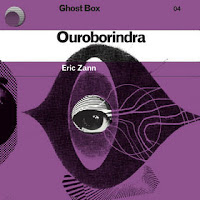

My favourite of their albums is Ouroborindra (2005) by Jim Jupp under his Eric Zann moniker, itself a horror reference to H.P. Lovecraft that somewhat sets the tone - this is a dark, off-kilter album. Hammer horror films form the crux of the album's reference points, and the weird voices and soundtrack samples highlight just how creepy and disturbing the best Hammers were, although much credit has to go to Jupp for highlighting this. Alongside weird sound effects of blowing winds and cawing crows, he creates 5 unsettling tracks of wonky electronica and sophisticated pop, perhaps highlighting "hauntology"'s place not just as a new pop genre, but as an avant-garde pop genre.

Overall, the feeling when listening to the music of the Ghost Box artists, much like Oneohtrix Point Never or Emeralds or even Pocahaunted, is that you are in the presence of the specter of a future that could have happened, but ultimately didn't. It's ectoplasmic music, seeping through into our world via many of the same channels, but distant, elusive and, ultimately, troubling. 


In contrast, Mordant Music's muse is all the more current than that of the Ghost Box clique. Or at least more urban, with the electronica further to the fore, and hints of disco, dub and hip hop polluting his dreamy sampled ambience. Dead Air (Mordant), from 2006, shared a twinge of nostalgia and a taste for layered samples and crackly ghost voices with Ghost Box, but, alongside the Public Service Annoucements and excerpts of disembodied TV voices, also laid down pounding beats and hypnotic grooves, effectively bridging the gaps between Ghost Box and Oneohtrix Point Never; and Ghost Box and retro-technoists like Lindstromm. SyMptoMs (Mordant), from 2009, even added live vocals by Mordant's Ian Hicks, making it something of a cousin to Broadcast's electro-psych (fitting, seeing as the Birmingham duo recorded an EP with The Focus Group last year, to much acclaim), and  showing "hauntology"'s ability to take on ghosts of the more recent past like r'n'b and pop songs. 


In this respect, MM can also claim an affinity (again, like Broadcast) with dubstep's mysterious standard bearer Burial. Burial is very different to most of the dubstep artists currently taking London's club scene by storm. A wealth of twenty-something dubstep and wonky/funky producers, such as Kuedo, Joker, Joy Orbison and Ikonika have mined their 80s childhoods for sounds and references that will also be mirrored in the experiences of their audience, from video games (i.e. Kuedo's excellent "Starfox", named after the Nintendo game) to vintage movies (check out Joker's new "Tron" single). 
But Burial is different. For a start, his music is definitely not there just as a way of getting people on the dance floor. It's not that danceable, really. The tracks on both his seminal debut Burial (Hyperdub, 2006) and its exquisite follow-up Untrue (Hyperdub, 2007) use samples and effects lifted from films and pop songs, as well as crackling vinyl static and hazy ambience, much like other "steppas", but these sounds are distorted and manipulated, until voices become unrecognisable, shifting between picthes and even genders (good luck spotting the Christina Aguilera sample on "Archangel"!) and familiar sounds appear far away and alien. With its strong urban vibe, the music of Burial comes across as a nocturnal drive through an indistinguishable city as the ghosts and spirits of its long-gone inhabitants melt fleetingly into reality through the radio and windows. This conveys a supreme sense of melancholy to Burial's music, taking it above and beyond the best of his peers, even Kode 9.

Coming full circle, it would be a big mistake to sign off a piece on memories and ghosts in music without writing about James Kirby, aka Leyland Kirby, aka The Caretaker (and several other pseudonyms beyond those two). Kirby was born in Stockport in the mid-seventies and developped a fascination for ancient vinyl-edition songs from the 1920s and horror movies. His The Caretaker moniker is a direct reference to Stephen King's seminal The Shining, in which Jack Torrance (famously played by another Jack, Nicholson, in the film adaptation) is hired to be the caretaker of a old mountain-top hotel, only to find himself possessed by the unquiet spirits of deceased guests. Condemned to be the ghostly caretaker for eternity, Torrance is the perfect mirror reflection for Kirby, the latter's music, built from his collection of scratchy 1920s vinyls, which he loops and manipulates into hypnotic dark ambient pieces, seeming to be less actual songs than the echoes through time of a long-ended cocktail party. This approach is similar to that of avant-garde composer Philip Jeck, whose superb Stoke (Touch Records, 2002) and Sand (Touch Records, 2008) albums used old vinyl records to create wildily evocative and sophisticated compositions (Jeck's music is too sophisticated to be best served here, though "Pax" on Stoke is a perfect piece of proto-Caretaker hauntology and a benchmark of memory music). Revenant music by any measure of the term, The Caretaker is best approached on his most recent LP, Persistent Repition of Phrases (History Always Favours The Winners, 2008), in which snatches of music hall tunes, distant orchestras and fading piano and string melodies drift around your senses like a lonely breeze.

But he took things to a particular height on Sadly The Future Is No Longer What It Was (History Always Favours the Winners, 2009), a titanic 3-disk magnum opus recorded under the name Leyland Kirby, one that references both past (it was his grandfather's name) and present (Leyland is his second name), and a guise that allows him to take the best of The Caretaker's universe, and strip it down to its most harrowing bones. There's an absence of sampled voices or strings or melodies, the only non-Kirby sounds on here apparently being ambient noises like klaxons, rain, traffic or wind, by-products perhaps of the recording space, something that therefore evokes Basinski's 92982 (see how we come full circle). As with Basinski or Eno, the music here is sparse, either looped piano chords or delicate waves of mournful synth or dissonant grey noise, and the feeling you get is that this is the artist alone, still, as with The Caretaker, staring into the inner memories of the past, but unwilling this time to try and conjure them back. The ghosts are fading, the future is bleak, no longer the Brave New World vision of old, and the man is alone. It's a harrowing, exhausting listen, but there is no doubt that Sadly The Future Is No Longer What It Was is a stupendous achievement. 

Sadly The Future Is No Longer What It Was by Leyland Kirby
Memory, elusive and deceptive, will always be a favoured domain of musical exploration for singers, musicians and performers of all genres. But, from Ghost Box's hauntologists to drone and ambient masters like Eno, Basinski and LaMonte Young, via the new "hypnagogic pop" of America and Burial's ghostly take on modern dance, there are some disparate artists who are intelligently going beyond the base retro nostalgia that has given us the current wave of uber-trendy NME bands (I'm looking at you, Libertines, Killers, Bloc Party, The Strokes and, blech, Kasabian) and so many endless money-grabbing reunions, to delve into music that is challenging, ecelctic and unpredictable. Ghosts of the past, both individual and collective, seep out of CDs and vinyl and mp3s, making the memories -grasped at, missed, held for a few heart-rending seconds- the centrepiece of the sound, rather than just a tool to gain indy cred. It's an emotionally draining experience to listen to some of this music, as hard to get your head around as that dream you had last night that is already fading, or that long-gone event that impacted your life, however briefly. There are so many phantoms out there, imagined, remembered, forgotten or real. Time to bring them into the musical light.

Wednesday, 3 March 2010

February on my iPod!!!!

Yet more dubstep filled my ears in February, as I did my usual thing and went completely overboard and obsessive over the stuff. 

Not that I'm complaining - dubstep is phenomenal! I truly believe it to be the most modern and timely genre to have emerged in the last few years. The heavy grooves, icy synth lines and sparse sense of melancholy that traverses nearly every dubstep track fit like musical gloves onto most people's daily vistas of urban jungles, council estate towers, illuminated financial districts, bustling and overcrowded public transport services, and all the emotional confusion that these locations automatically conjure up in human souls. It's the music of lonely people in a busy, overflowing world, as true and emotive as a Dylan ballad or the mournful atmosphere of Slowdive's Pygmalion.

Skream is something of the prodigal son of dubstep, at the tender age of 21. He's been a feature of the scene since he was 15 or so, and although his first, eponymous, album was poorly received, his EPs and singles, such as Midnight Request Line/I (single, 2005, Tempa) are considered must-haves among clubbers and journos alike. "Midnight Request Line" is something of an anthem for dubstep fans, and is surely the genre's most famous track. And with good reason - it's infectious, carried by a supreme bass line, with brilliant synth gurgles and jittery effects. The same consistent brilliance can be found on Skreamizm Vol.2 (2006, Tempa), possibly the strongest of his Skreamizm series of EPs. "Blipstream" carries the same nocturnal, futuristic vibe as "Midnight Request Line", with wobbly bass, dark atmospherics and a general aura of drifting nocturnal urbanity. It also -as does the whole EP- reminds me a lot of Burial's debut. It's dark but not necessarily cold. Funky but slow-paced. Great modern stoner music! "0800 Dub" is much more trance-y, close to ambient elctronica or slow-paced IDM, with a fantastic synth hook throughout and ghostly sampled vocals, whilst "Deep Concentration" is pure funky dub and "Morning Blues" is all jittery electronics, hints of hip-hop and dance. It's certainly one of the best EPs out there, and proves the kid has talent.

This is also a good opportunity to re-appraise Burial's self-titled debut album (2006, Hyperdub). I didn't take to it with quite the same speed and enthusiasm that I did Untrue, and I still consider the latter to be the better album, but Burial is still awesome. It has a distinctly conceptual feel, embodied in the artwork with its aerial picture of South London. It feels like a nocturnal trip through the city's dark, damp streets, gazed out through the windows of a near-empty bus (one track is even called "Night Bus"), from the driving rhythms of the opening track "Distant Lights" (again an evocative title) until the effects-laden, mysterious and sparse closer "Pirates". Voices are fleeting, ghostly and distorted, adding to the sense of loneliness and isolation, whilst Burial expertly weaves found-sounds, samples and pulsating grooves together to leave you with a grim, unsettling and deeply emotional whole. No wonder he remains the genre's biggest star. He's a genius, simple as.

Slightly different from your average dubstep, and proof that the genre is evolving and globalising, is American producer Flying Lotus' sumptuous Los Angeles (2008, Warp). It may be nearly 2 years old, but fuck it, it gets ALBUM OF THE MONTH status! On it, Flying Lotus takes apart different aspects of modern electronic music and recombines the separate elements, be they thumping dub bass lines, jittery beats, aggressive breaks or swooping synth lines. Each track is short, but he packs so much into them it's unreal, so they blend into one-another, creating a frantic, ever-shifting and captivating atmosphere that took me completely by surprise. You find yourself lurching from the post-dance grooves of "Beginners Falafel" to the dreamy modern soul of "RobertaFlack", always finding something surprising and unexpected in each track. This is the future of dubstep, hip-hop, IDM and break-beat all rolled into one! And he'll be live at Fabric soon, Londoners!

Last dubstep album for this month was Degenerate (2005, Planet Mu) by Vex'd, one of the very first full-length albums the genre ever produced. Sadly, Vex'd, a duo, have gone their separate ways, with one more album to be released this year as some sort of funky epitaph. But what a legacy! Their output may be slight, but Vex'd were among the biggest innovators of the UK underground, and they show it on Degenerates, a truly forward-thinking album that maintains the massive bass grooves of traditional dubstep, but moves things closer to rave and techno culture. The percussion is harsh and cold, mechanical even and tracks are long. The sonic effects, ranging from highly distorted sampled vocals to freaky surges of synth noise and unexpected bleeps and blurps, are equally aggressive, sharp shards of white musical light that surge out of the industrial mix. But the album still grooves like a motherfucker, "Pop Pop V.I.P" being a particularly infectious stomper. The CD comes with a second disk of singles, which make it quite a lot to sit through, but if you want to take your party to another level, there are few better, more intelligent or more drastic dubstep albums out there.

I did take a breather from dubstep at various points throughout the month (though with albums by Benga, Kode9+Spaceape and Boxcutter winging their way towards me in the post, methinks March will be pretty dubbed up as well!), and returned to my older indulgences in electro and good ole rock.

But let's do some travelling first. Because, apart from dubstep, 2010 has so far been the year of "World" music for me. 

Thanks to the ever-wonderful Wire magazine, I have discovered the lost delight that is Ethiopian music. OK, not that lost, as it has a rave cult following, including director Jim Jarmusch, and this has given us the seminal Ethiopiques series. It was through Jarmusch's Broken Flowers soundtrack that I discovered Mulatu Astatqe, whose Ethiopiques 4: Ethio-Jazz et Musique Instrumentale (1998; Buda Records) is the stand-out of the series, and most popular. It includes the classic "Yèkèrmo Sèw", a masterpiece of subtle, funky jazz. It perfectly encapsulates the Ethiopian sound in its 4+ minutes: smooth, sexy percussion; snappy piano motifs; powerful, chiming horn bursts; and a general atmosphere that is both familiar and delightfully exotic, the soundtrack to a boat cruise down the Nile. Even by African standards (and I'll admit to not being an expert - my knowledge up til now only extended to an adoration of Fela Kuti, and a familiarity of North African "Rai" music that comes from growing up in France), Ethiopian music has a sense of fusion. Where traditional Asian and European music often developed in some form of isolation, Africa was always at a crossroads, and when the sounds of the descendants of African slaves started wafting back across the air waves from the USA and Caribbean, in the form of jazz, be-bop, funk, soul, blues, reggae and even rock, Africa was quick to take note. But there was also influences coming in from a wide range of other areas: salsa and flamenco from Latin America and Spain, chanson from France, traditional singing from Islamic countries. And no country appears to have fused so many influences quite as much as Ethiopia. Ethio Jazz is at times soulful, with keening sax lines and slow, melodic tempos; at others it appears to rage with the same verve and power as the best free jazz (though always more restrained), with guitar solos evoking Sonny Sharrock or even Hendrix. It's smooth jazz with an edge; Western-influenced, but with the sounds of Berber North African drifting into the mix. In other words, it's pretty unique.

Toumani Diabaté sits in another spectrum of African music. His is much more traditional, focusing on lessons and styles that have existed in families like his for generations. He is something of a bard, a "griot" in French, who uses his music as a way of telling stories and evoking imagery that is immediate and intense. Suffice to say that New Ancient Strings (1999, Hannibal), which I discovered by chance through Amazon, is therefore one of the most "true"-sounding records I've heard in a while. Every sound feels authentic and real, steeped in tradition and the wisdom of centuries-old philosophy. It's a sparse album, much more so than his more recent collaborations with the late, great Ali Farka Touré, with Diabaté's kora, a peculiar, and very complicated-looking, traditional west African harp/luth, taking the full centre stage. And it's marvellous. I was left wondering why I'd never heard one before - the shame! It's a graceful, emotional sound, delicate and fleeting, immediately conjuring up visions of the desert sun, of drifting marabout boats and small, mysterious cities of mud and straw. The evocative power of African music, as I mentioned with Mulatu Astatqe, is pretty much unparalleled, and every spin of New Ancient Strings sends me on a journey. Fancy coming along?

But one country that can match those of Africa in terms of musical transportation is, of course, India, and who better to introduce me to the sounds of the subcontinent than Ravi Shankar? The Beatles' mentor is one of the developing world's biggest international stars, and a master of the sitar, the sumptuous, droning "guitar" that has come to define Indian music. His first album, Music of India: Three Ragas (1956, HMV) is a benchmark of Indian, and even "World" music as a whole, bringing the traditional sounds of this massive and mysterious country to a wider, Western audience, and laying the foundations that would eventually lead to Sergeant Pepper's Lonely Hearts Club Band. It was also a certain influence on the likes of LaMonte Young and Tony Conrad, with the long, sustained sitar notes and minimal percussion seem like a template for the New York drone of a few years later. Ragas are perfect at evoking specific times of day, and are named as such (morning or evening, for example), making Three Ragas a dreamy, out-of-body listening experience.

Along with New Ancient Strings and Los Angeles, the biggest contender for Album of the Month was By The Throat by Ben Frost (2009, Bedroom Community), a truly wonderful surprise and a striking and original album featuring some of the most out-there elctronica I'd heard in a while. I've seen Aussie-born Icelandic resident Frost's music described as being "ambient", but this is a far cry from the calm, melodic atmospherics of Eno or Eluvium, or even the heavy drone of Windy and Carl. From the very first track, "Killshot", this is an assault, as rumbling bass synths are overlaid with sheets of white noise; these dark, piercing swirls hit you and then recede, like a cold arctic wind gushing out of an icy night sky. On the immediate follow-up, "The Carpathians" (how's that for a gothic reference?), wolves snarl and growl over doom-like piano and ghostly effects, creating a pervasive sense of unease and fear. Sure, at times decayed piano notes and delicate strings lure you into a false sense of security and you feel this may become a modern-day Discreet Music, but then on "Peter Venkam Pt.1" we're treated to jagged cello and ghostly sampled cries, whilst on "Leo Needs a New Pair of Shoes", dry banjo picking and deep, repetitive piano arpeggios evoke John Carpenter's Halloween soundtrack before more glitchy electronic noise kicks in, and the sense of unease is back, bigger and more pressing than before. This is -and maybe this is a theme today- an evocative, atmospheric album. Images of cold grey skies, lost forests and circling packs of wolves played across my mind as I listened the first time, and there is nothing more seductive in music than an album that takes you away from your banal daily routine and into a new world, even if it is one as disquieting as the world of By The Throat.

Time is pressing, so I may have to leave out the rave review of my latest Skullflower discovery, The Paris Working, and push back my review of Sunn O)))'s latest, and my favourite Six Organs of Admittance album, Dark Noontide. Next month, I guess. I will leave the music of the month with a write up on Swedish DJ The Field's From Here We Go Sublime (2007, Kompakt), which may just be the most exhilarating electro-pop/dance album I've discovered since the first Leftfield album. The Field sounds nothing like Leftfield, mind. From Here We Go Sublime is a delightful collection of dreamy and trance-like dance tunes, all masterfully crafted and unbelievably catchy. At first, I was convinced I would find it samey, but I can't seem to go a day without giving it's heart-warming and melancholic tunes a few spins, with "A Paw In My Face", "Everyday" and "Silent", which have all wormed their way into my dance playlists.

Finally, a little word on a couple of movies. Movie of the month has to be A Single Man by Tom Ford (2010). I have not enjoyed myself at the movies so much in well over a year, which is saying something considering it's a bit of a grim proposition. The scintillating Colin Firth (surely the Oscar-winner?) delivers a career-defining performance as a lonely man still reeling from the death of his (male) partner of 16 years, and plotting his own passage from this life. We follow him over the course of this prospective last day, and he's deals with his drunken best friend (Julianne Moore, excellent as always), his neighbours, a tantalising male prostitute, his job, and the tentative seductions of one of his young students (played with poise by the unbelievably handsome Nicholas Hoult, whose figure, face and body Tom Ford seems to sublimate with his camera). Along the way, Firth's character remembers his lost lover, ruminates on the status of a gay relationship's value in the eyes of society in conservative sixties America, and contemplates the option of returning to his native England. It's a dream-like, graceful film, beautifully filmed and with a marvellous score, and is bound to have you suppressing more than a few sniffles by the end. A stunning debut.

Equally composed and intelligent is Doubt (2008, directed by John Patrick Shanley, adapted from his own play), an excellent drama built around a dour headmistress nun's suspicions about her school's resident priest. Meryl Streep, plays the headmistress with typical intelligence, and perfectly conveys her character’s repression, fussiness and restraint, confirming her status as America’s most accomplished actress today. The doubts, only alluded to, but concerning the priest's (Phillip Seymour Hoffman) relationship with one of the boys, permeate the entire film, creating an atmosphere of increased tension as the action slowly unfolds. Shanley perfectly creates a sense of repression, of things always unsaid, and the fear and resentment that this atmosphere imbues in the school's occupants. The priest's guilt is never proved, and even an intervention with the boy's mother (portrayed by Viola Davis, in a scene-stealing performance) fails to bring Streep's Sister Aloysius closer to the truth. But what if she's right? It's a challenging and troubling film, and one well worth renting.

So, another month gone, as election fever hots up in the UK. Labour has closed the gap, but why are we bogged down in personality politics instead of focusing on issues? Is it because none of the parties really have any clear policies? Or just that they realise they are as supine and fawning as each other? Labour or Conservative, all we'll get is more financial strife, relentless war in Iraq and Afghanistan and bowing down to religious zealots. Vote Green. At least they have principles.

Oh, and RIP Keith Alexander and Michael Foot.